
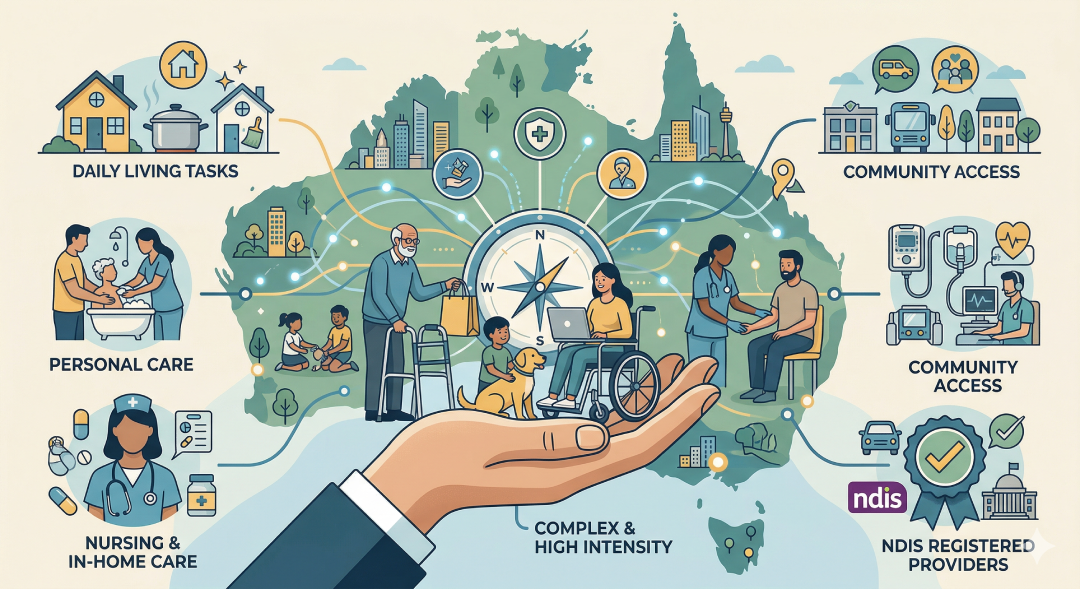
Understanding the National Disability Insurance Scheme, also called the NDIS, can feel confusing at first. There are many types of support, many providers, and many choices to make. For someone new to the system, it can feel like too much information all at once.
But once you break it down, it becomes much easier.
The NDIS is designed to help people with disabilities live more independent and meaningful lives. It provides funding for services that support daily living, health needs, and community participation.
In this guide, you will learn about the different types of NDIS disability support services in Australia. This will help you understand what is available and how to choose the right support for your needs.
What Are NDIS Registered Providers
NDIS registered providers are individuals or organisations that are approved by the NDIS to deliver services.
These providers follow strict rules and quality standards. They are checked regularly to make sure they are providing safe and reliable support.
Many people prefer choosing from NDIS registered providers because it gives them peace of mind. They know the provider meets government standards and has the right training.
However, it is also important to know that not all participants must choose registered providers. If your NDIS plan is self-managed or plan-managed, you may also have the option to work with non-registered providers.
The choice depends on your situation, your plan, and your comfort level.
Understanding Disability Support Services
At the heart of the NDIS are disability support services. These services are designed to help people with disabilities live more comfortably and independently.
These services are usually provided by trained disability support providers who understand the needs of each individual.
Some common disability support services include:
- Help with daily household tasks like cleaning and cooking
- Assistance with shopping and errands
- Support to attend social or community activities
- Help with learning new skills
- Transport to appointments or events
These services are not just about helping with tasks. They are also about building confidence and improving quality of life.
For many people, having the right support can make everyday life much easier and more enjoyable.
NDIS Personal Care Services
NDIS personal care services are one of the most important types of support. These services help people with basic daily activities that many of us take for granted.
Personal care may include:
- Bathing and showering
- Dressing and grooming
- Toileting assistance
- Mobility support
- Meal preparation
These tasks are very personal, so it is important that they are handled with care, respect, and dignity.
A good support worker will not only help with these tasks but will also make the person feel comfortable and safe.
Personal care services play a big role in helping people stay independent in their own homes.
NDIS Nursing Services and In Home Nursing
Some people need more than daily assistance. They may also need medical care at home. This is where NDIS nursing services come in.
These services are provided by qualified nurses who can handle medical needs safely.
NDIS in home nursing may include:
- Giving medications
- Treating wounds
- Monitoring health conditions
- Helping after hospital discharge
- Managing long-term illnesses
Having nursing care at home can reduce the need for hospital visits. It also allows people to recover or manage their health in a familiar and comfortable environment.
This type of support is especially helpful for people with ongoing medical needs.
NDIS Complex Care Provider
Some individuals have more serious health conditions that require advanced care. In such cases, an NDIS complex care provider is needed.
Complex care is for people who need a higher level of medical and personal support.
This may include:
- Support for severe physical disabilities
- Care for neurological conditions
- Use of medical equipment at home
- Ongoing clinical supervision
These providers have specialised training and experience. They know how to handle situations that require extra care and attention.
Choosing the right provider for complex care is very important. It can have a big impact on safety, comfort, and overall well-being.
NDIS High Intensity Supports
NDIS high intensity supports are designed for people who need very specialised and ongoing care.
These supports are more advanced than regular services and are usually provided by trained professionals.
High intensity supports may include:
- Complex bowel care
- Feeding support using medical equipment
- Breathing support
- Managing severe swallowing difficulties
- Behavioural support for complex needs
These services require skill, training, and experience. The support workers must understand both the medical and personal needs of the participant.
High intensity supports help people live safely while managing serious conditions.
How to Choose the Right NDIS Disability Services Provider
Choosing the right NDIS disability services provider is one of the most important decisions you will make.
The right provider can make your life easier, while the wrong one can create stress and confusion.
Here are some simple tips to help you choose:
1. Check Experience and Skills
Make sure the provider has experience in the type of support you need.
2. Look at Services Offered
Not all providers offer the same services. Choose one that meets your full range of needs.
3. Ask About Flexibility
Your needs may change over time. A good provider should be able to adjust their services.
4. Communication Matters
Choose someone who listens to you and explains things clearly.
5. Read Reviews or Feedback
Other people’s experiences can give you a better idea of what to expect.
6. Comfort and Trust
You should feel comfortable with your provider. Trust is very important, especially for personal care.
Taking time to choose the right provider can make a big difference in your overall experience.
Why Understanding Your Options Matters
The NDIS offers many types of support, but not all services are right for everyone.
Understanding your options helps you:
- Make better decisions
- Use your funding wisely
- Get the right level of support
- Improve your daily life
It also helps you feel more confident when talking to providers and planning your care.
Final Thoughts
The NDIS is a powerful system that supports people with disabilities across Australia. It offers a wide range of services, from basic daily help to advanced medical care.
By understanding the different types of support, such as disability support services, NDIS personal care services, NDIS nursing services, and NDIS high intensity supports, you can make better choices for your needs.
Every person is different. What works for one person may not work for another. That is why it is important to take your time, ask questions, and choose support that fits your life.
With the right provider and the right services, it is possible to live a more independent, comfortable, and fulfilling life.