
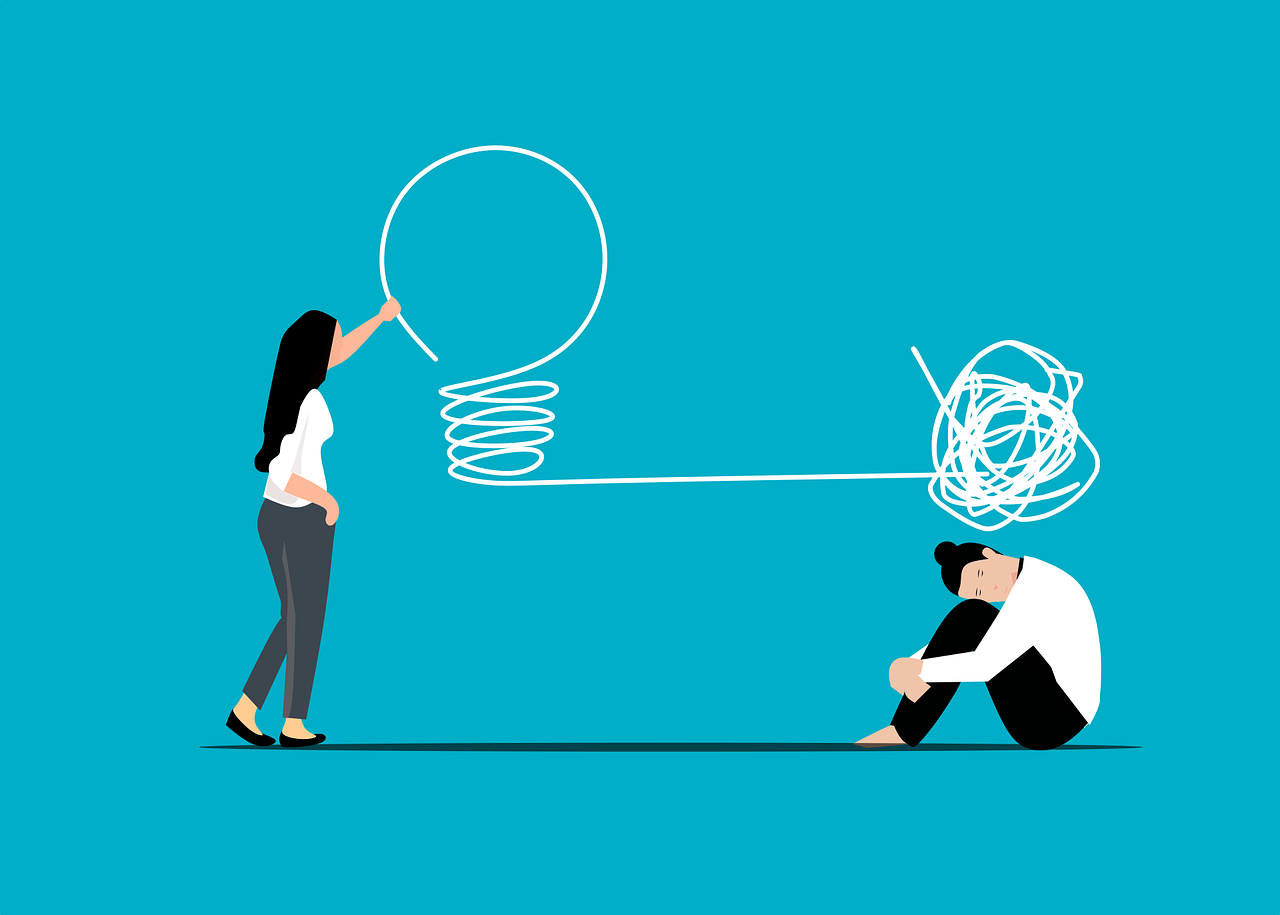
Depression may not be simply the sensation of melancholy that is overwhelming; it will emerge as a persistent problem that impacts your daily routine, relationships, and usual sense of well-being. Depression often prompts humans to seek expert assistance, but can they try self-assist methods to overcome it?
The advantages of each approach are diverse, and the decision to select one is frequently influenced by the severity of your symptoms, personal preferences, or the type of community you have. This article will identify and draw a line between the differences of depression counselling and self-help, how effective these are and which one is right for you.
Understanding Depression: More Than Just Sadness
Understanding depression requires a deeper sense of maturity before we can draw a conclusion between counselling and self-help.
- It's not just a bad mood that can lead to depression; it's also about being persistently sad with a lack of motivation and fatigue or no desire to eat and having trouble concentrating.
- Anyone can undergo depression because it is not influenced by age, gender or heredity.
- People suffer different levels of sadness, with some experiencing mild signs and others experiencing extreme ones that affect all areas of their lives.
The silver lining? Depression is treatable. Choosing the most effective approach is a challenging task. Why? Let's explore.
Empowerment and Independence: The Siren Song of Self-Help
Self-help resources are readily available. Books, podcasts and online courses are intended to educate you on how to overcome depression without assistance. There is a certain allure to being self-sufficient.
- Affordable: Self-help resources are frequently more readily available and less expensive than professional counselling. You have the option to begin right away at your own pace.
- Customisation: You can personalise your journey of self-help by choosing the resources that best suit you.
- Empowerment and Control: Being in charge of your own healing can be extremely empowering and help you gain control and control.
There are boundaries to self-help as it has its own limitations.
Although self-assist materials may provide widespread techniques, they can't provide the personalised guidance and support that a counsellor can. Why?
- Distressedness in implementing: Self-help techniques pose a barrier in terms of staying motivated and using energy in the right direction.
- Probability of Misinterpretation: You may misunderstand information or incorrectly follow techniques without expert guidance.
- Defective accountability: Without everyday sessions, it is easy to fall back into old habits and get stuck in a loop of negative emotions, as there's no expert to keep you heading in the right direction.
The Guiding Light: The Transformative Power of Depression Counselling
Depression Counselling sessions involve an established and supportive environment where you can open-up about your experiences and develop coping mechanisms.
- A counsellor can provide a tailor-made routine and guide to fulfill your particular wishes and challenges.
- Secure and guarded environment: Counseling provides a steady and personal platform to bring out your emotions without judgment.
- Counsellors employ evidence-based techniques, such as Cognitive Behavioral Therapy (CBT) and interpersonal therapy (IPT), to manage symptoms.
- Regular sessions with dedication and motivation can be useful resources in retaining your old peaceful self.
- A counsellor can train you in realistic coping mechanisms for dealing with signs and symptoms and developing resilience.
Nonetheless, counselling necessitates time, cash, and emotional energy dedication.
- With immense dedication, you also need considerable time and money for professional counselling.
- It takes guts to be courageous and develop a relationship with therapists due to the emotional nature of opening up.
- With the above two criteria matching your comfort, finding the appropriate counsellor can be challenging.
The Best of Both Worlds: A Hybrid Approach
Ultimately, the most effective approach could be to combine depression counselling with self-help.
- Begin with Counselling as Foundation: Utilise counselling to build your support system and create a personalised treatment plan with specialised experts.
- Supplementary Resources: Self-Help books, online platforms and communities to keep you motivated with your counselling sessions.
- Collaborate and Discuss: Share with your counsellor the types of self-help materials you are using, complementing your treatment plan.
You don't have to be depressed as you are not alone. 'You can do counselling, or you try self-help, or both, but just take action and live your life with the mindset that you deserve a life full of light and hope in this world.
Remember, you are not alone. Depression is an experience, and help is available. Whether you choose counselling, self-assessment, or a mixture of each, the most essential component is to take action and prioritise your intellectual wellness. You should live a lifestyle packed with mildness and desire.