
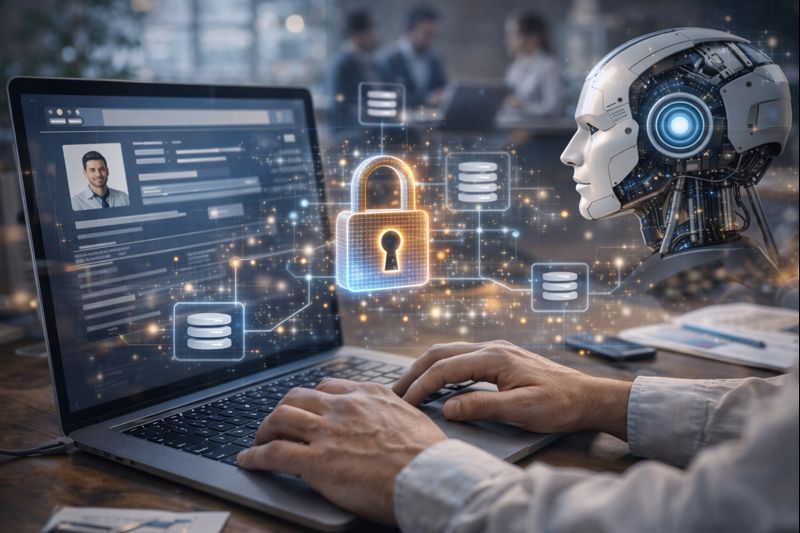
Here's something wild: artificial intelligence touches 83% of hiring decisions at Fortune 500 companies, but recruitment platform breaches jumped 47% last year. That gap? It's telling us something important about how companies are rushing into AI without thinking through the security piece.
Think about what modern recruitment tech actually handles. We're talking millions of data points flying around daily, from resume parsing to automated interviews. The efficiency gains are real, but so are the security headaches that most HR teams just aren't ready for.
What's Really Going on Behind AI Recruitment Platforms
Let's pull back the curtain on how these AI hiring tools actually work. You've got machine learning models crunching candidate profiles across dozens of servers, while NLP engines pick apart interview responses as they happen.
Getting all this to work smoothly requires some serious data routing magic. Companies diving into AI recruitment really need to understand how to see proxy settings in their infrastructure (it's how they keep data moving securely between all these different pieces). Understanding concepts like IP address fingerprint technology becomes crucial when you're dealing with authentication and candidate verification at scale.
And here's where it gets messy: your average enterprise recruitment setup connects to applicant tracking systems, background checkers, communication platforms, you name it. Every single connection? That's another door a hacker might try to kick down.
Why Recruitment Tech Has Unique Security Headaches
AI hiring platforms face threats that your standard cybersecurity playbook doesn't cover. Bad actors can launch adversarial attacks to mess with candidate rankings or poison training data to corrupt the whole system.
Take resume fraud detection. Some candidates have gotten scary good at gaming automated screening systems. They stuff keywords, manipulate formats, whatever it takes. Meanwhile, platforms need to verify real candidates without turning the application process into a privacy nightmare.
Remote hiring threw gasoline on this fire. Video interview platforms now handle biometric data (hello, compliance headaches), and organizations are stuck trying to keep things secure without making candidates jump through ridiculous hoops.
Why Technical Transparency Actually Matters
Candidates aren't stupid; they know AI is making decisions about their careers. Mashable found that 76% of job seekers worry about algorithmic bias. Being transparent about your tech isn't just the right thing to do anymore, it's a competitive edge.
The smartest recruiters are using explainable AI that actually tells you why it made a decision. No more black box nonsense. These systems spit out readable explanations for every screening choice, helping recruiters spot bias or mistakes. Plus, the feedback loop makes the system smarter over time.
Authentication is another big piece of the trust puzzle. Modern platforms use everything from biometrics to device fingerprinting. These security layers keep candidate data locked down throughout applications.
Building Infrastructure That Won't Fall Apart
Running enterprise AI recruitment isn't cheap or simple. Just training language models for resume parsing needs GPU clusters that can handle mind-boggling calculations.
Your network setup matters too. These platforms need to stay lightning-fast while juggling thousands of applications at once. Smart companies spread the load across multiple data centers and build in backup systems. Nobody wants their hiring to grind to a halt because one server decided to take a nap.
Storage gets tricky with recruitment data. Everything needs encryption whether it's sitting still or moving around, plus you need careful controls over who sees what. And thanks to GDPR and friends, you've got to automatically delete stuff after certain periods. Fun times.
Navigating the Regulatory Minefield
The rules around recruitment AI are a complete patchwork depending on where you are. Europe's AI Act slaps a "high-risk" label on hiring systems, which means tons of requirements for transparency and accountability.
In the States? Good luck keeping track. New York City wants bias audits for automated hiring tools. California has its own privacy circus. Try hiring internationally and watch the complexity explode. The Telegraph reported that big companies are dropping £2.3 million yearly just on recruitment tech compliance.
Cross-border hiring adds layers of fun with data transfer rules and contractual requirements. It's enough to make your head spin.
Getting Implementation Right (Without Losing Your Mind)
Smart organizations don't go all-in immediately. Start small, maybe one department or role type, then expand once you've worked out the kinks. This way you catch problems before they become disasters.
Security can't be an afterthought. Regular penetration testing finds holes before the bad guys do. Code reviews catch integration weaknesses. And you need constant monitoring to spot weird patterns that might signal trouble.
Don't forget training. Recruiters need enough tech knowledge to understand what the AI is telling them. IT folks need to get how recruitment actually works. Building bridges between these teams prevents massive headaches later.
Proving Your Security Actually Works
Measuring security in AI recruitment goes beyond typical cybersecurity metrics. You're balancing things like false positives in identity checks (which annoy legitimate candidates) against catching actual fraud.
The best platforms use behavioral analytics to learn what normal looks like. When something seems off, they flag it without disrupting everything else. MIT's research shows that properly set up systems block 89% of fraudulent applications while letting through 97% of real candidates.
These numbers matter when you're justifying spending to the C-suite. Real ROI beats vague promises every time.
Preparing for What's Coming Next
Quantum computing will eventually crack today's encryption, probably within ten years. Smart organizations are already implementing quantum-resistant algorithms to protect long-term data. Better safe than sorry when you're holding candidate info for years.
Edge computing could solve latency issues for real-time interview analysis. Processing video locally means better privacy (biometric data stays in-house) and no bandwidth bottlenecks. Distributed models let you scale globally without performance hits.
Blockchain might give us tamper-proof audit trails for hiring decisions. Smart contracts could automate compliance checks. Decentralized identity systems could hand control back to candidates while making verification easier. The future's looking interesting.
Wrapping This Up
Building AI hiring infrastructure that people actually trust means juggling innovation with serious security work. Companies that nail transparency, lock down their systems properly, and stay on top of regulations become the employers everyone wants to work for.
Sure, AI and recruitment tech together create amazing efficiency opportunities. But those benefits only happen when you build on foundations that protect both your organization and candidate privacy. Skip the security piece, and you're building a house of cards.