
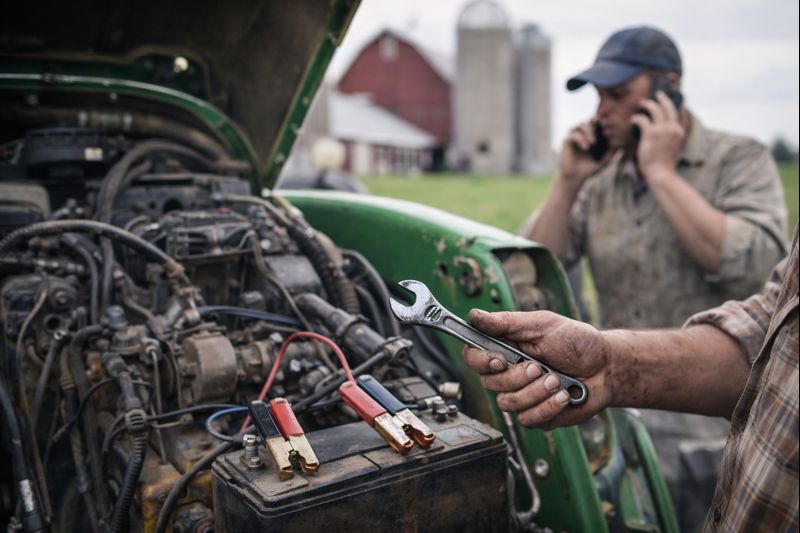
When a tractor refuses to start just as the day’s work is about to begin, frustration can set in fast. A few turns of the key and nothing. In most cases, the problem comes down to a small handful of familiar mechanical or electrical faults.
Knowing what to look for can make the difference between an hour of tinkering and a full day lost. Be it an older model or a newer farm tractor packed with sensors, a bit of troubleshooting knowledge goes a long way.
Battery Problems That Cause Starting Trouble
One of the most common reasons a tractor won’t start can be traced to the battery. A weak or dead battery can mimic serious mechanical failure, but often the fix is simple. Corrosion on the terminals, loose clamps, or frayed cables can interrupt the electrical flow, preventing the engine from turning over. Even a new battery can fail if it has been sitting unused for too long.
Cold conditions make matters worse, slowing chemical reactions and reducing charge. Before diving into deeper repairs, check that the battery holds a solid charge, the terminals are clean, and every connection is snug and secure.
Fuel System Faults That Are Not Easy to Spot
When electrical power is not the issue, the next stop is the fuel system. Dirty or clogged fuel filters can choke off supply, leaving the engine gasping for fuel. Water contamination in diesel, which can happen during storage or refuelling, is another common problem. Some modern tractors include built-in safety sensors that shut off the engine to prevent damage when poor fuel quality is detected.
Air pockets in the lines, particularly after a filter replacement, can also stop fuel from reaching the injectors. Regularly draining water traps, replacing filters, and keeping tanks sealed against moisture can help keep the system running smoothly.
Ignition And Starter Issues That Stop Engines Cold
If the fuel and battery seem fine but the tractor still refuses to start, turn your attention to the ignition system. The ignition switch, glow plugs, and starter motor all play a role in that first spark or, in the case of diesels, that first heat. A faulty ignition switch might not send current to the starter at all.
Glow plugs that fail to warm properly can cause extended cranking or no ignition, especially on cold mornings. Starter motors themselves wear out with time and heavy use, often showing warning signs like slow cranking or clicking.
Engine Problems That Stop The Tractor From Turning Over
Sometimes, the fault lies deeper inside the engine. Low oil levels, seized pistons, or timing failures can all prevent movement entirely. You might hear odd knocking sounds, see smoke, or notice a complete lack of response from the engine when you try to start it.
These mechanical problems are usually more serious and often need a professional mechanic to diagnose. Running low on oil or operating a tractor that is overheated can lead to permanent damage if ignored. Regular oil checks and proper cooling maintenance help prevent these expensive repairs.
Maintenance Habits That Prevent Future Start-Up Issues
While it is impossible to avoid every breakdown, consistent maintenance is your best defence. Inspecting cables, checking fluid levels, and cleaning filters regularly keeps small issues from turning into major setbacks.
Seasonal servicing before long periods of storage, such as draining old fuel and charging the battery, can also make a big difference. Most start-up failures stem from preventable causes, and a little time spent on upkeep often saves far more in repairs later.
Final Thoughts
Knowing the most common reasons a tractor fails to start helps you diagnose problems faster and more confidently. Whether the fault lies in the fuel, the electrics, or deep within the engine, working methodically can quickly rule out the obvious and point you toward the fix.
With a bit of preventive care and an eye for early warning signs, you will spend less time troubleshooting and more time getting real work done.