
Somewhere in almost every home, shed or job site across Melbourne, there is copper quietly waiting to be noticed. Old extension leads tangled up in a drawer. Pipe offcuts left over from a bathroom renovation. A dead appliance nobody got around to throwing out. Most of us walk straight past this stuff without a second thought. But copper scrap is one of the only materials you can clear out of your life and actually get paid for, and once you understand what happens to it after you drop it off, it starts to look a lot less like rubbish and a lot more like a small payday sitting in plain sight.
This guide walks through why copper holds its value so well, the different forms it turns up in, what actually decides the price you get offered, and where all of it ends up once it leaves your hands.
Why Copper Holds Its Value When Other Metals Don't
Not all scrap is created equal. Steel and aluminium are useful and recyclable, but neither comes close to copper on price per kilogram. There are a few reasons for that.
Copper conducts electricity better than almost any other affordable metal, which is why it ends up in wiring, motors, transformers and circuit boards. It also resists corrosion well, so it can sit in plumbing and roofing for decades without breaking down. And unlike plastics or composite materials, copper can be melted down and reused again and again without losing any of its properties. A recycled copper pipe performs exactly the same as one made from freshly mined ore.
That last point matters more than people realise. Global demand for copper keeps climbing because of the shift toward renewable energy, electric vehicles and upgraded power grids, all of which use far more copper than the systems they are replacing. Industry researchers expect overall demand to keep growing sharply over the next couple of decades, with a large share of that growth coming from clean energy technology alone. Mining new copper to keep pace with that demand takes years of exploration and huge amounts of capital, so recycled copper has become an increasingly important part of filling the gap. That is a big part of why scrap yards are willing to pay well for it.
The Many Forms Copper Scrap Takes
Copper doesn't always look like copper. It shows up in different shapes and grades, and it helps to know what you are actually holding.
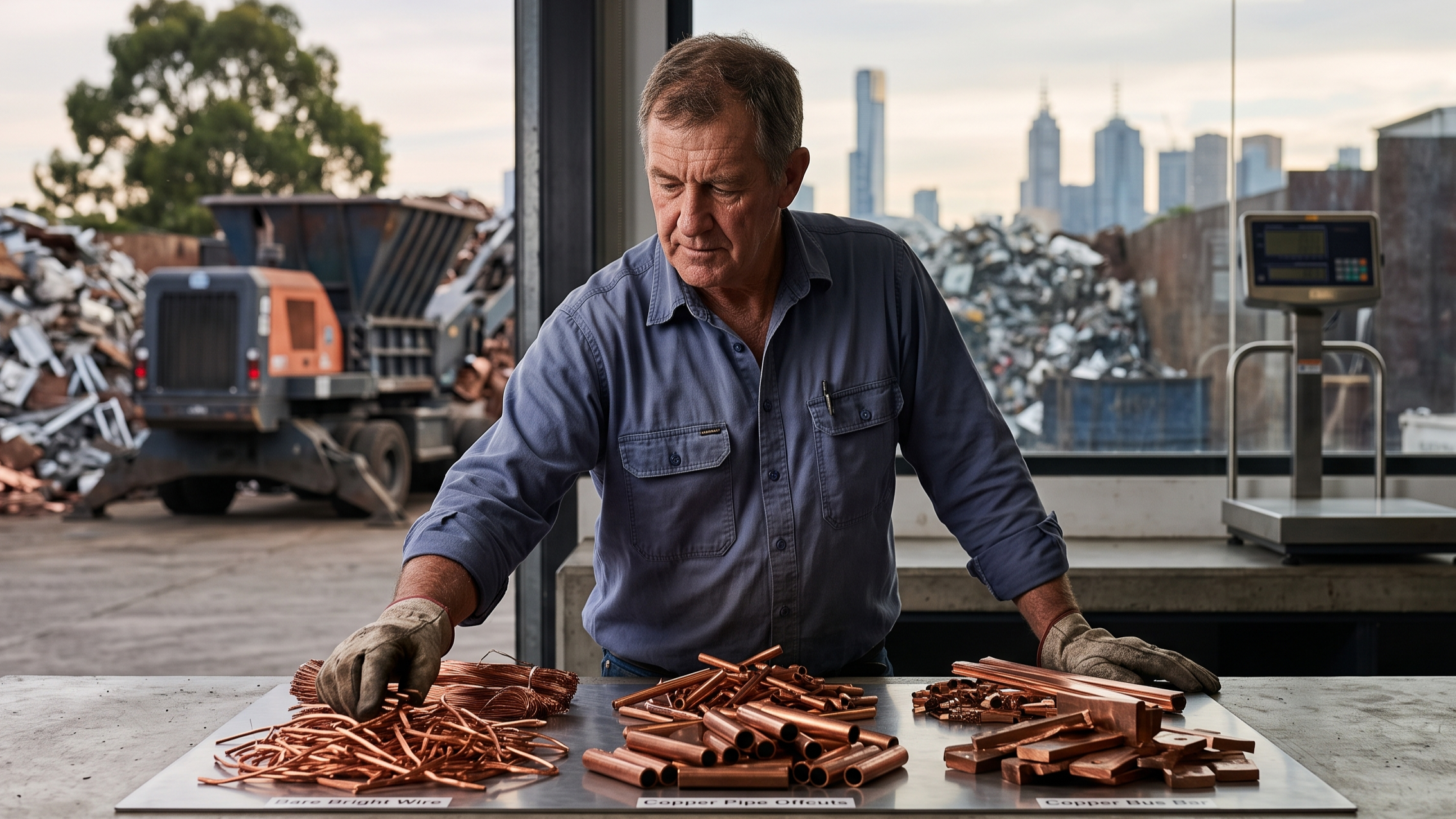
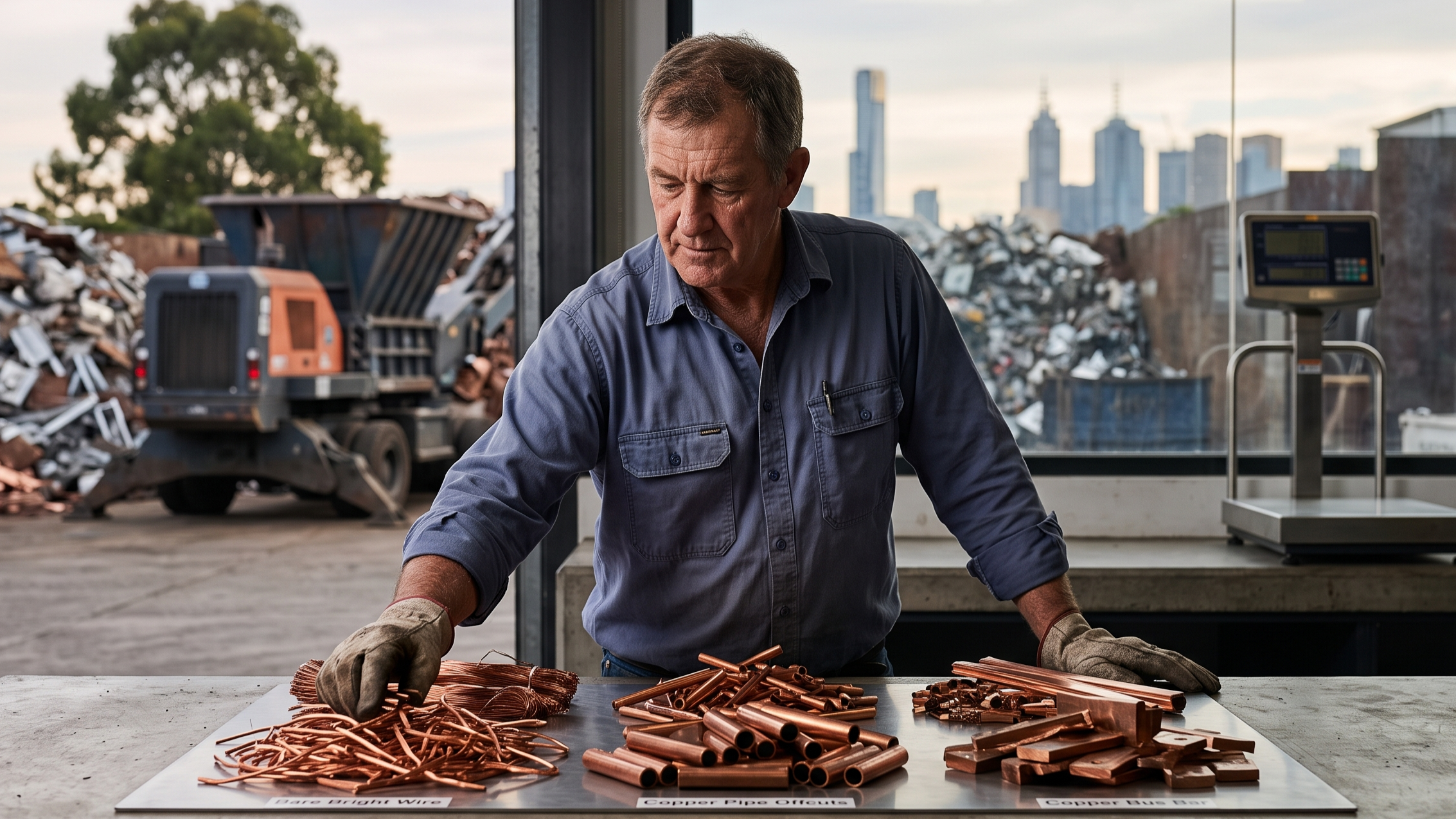
Bare bright wire is the cleanest and most valuable form. It is pure copper with no coating, insulation or corrosion, usually stripped from cable offcuts on an electrical job.
Insulated or coated wire and cable still contains valuable copper underneath, but the plastic sheathing lowers its grade until that coating is removed.
Copper pipe turns up constantly in plumbing work, old hot water systems, guttering and downpipes. It is usually in good condition and easy to identify on sight.
Copper radiators come out of older cars, air conditioners and industrial cooling equipment. These often contain a mix of copper and other metals soldered together.
Copper bus bar is the flat, rigid copper found inside switchboards and factory electrical panels. Businesses tend to generate this in larger volumes than households ever do.
Copper tint and mixed offcuts cover smaller pieces, trims and copper fused with brass or other alloys, which still hold value even in small amounts.
What Actually Decides the Price You Get Offered
Two people can drop off the same weight of copper and walk away with very different amounts, and it usually comes down to a handful of factors.
Grade is the biggest one. Bare bright copper sits at the top of the pricing table, insulated wire sits lower, and copper mixed with steel, plastic or other metals gets priced as a lower grade blend.
Weight matters just as much, which is why reputable yards weigh everything on digital scales rather than estimating by eye.
Market prices move constantly. Copper trades as a global commodity, so prices shift with international supply and demand, and reliable scrap dealers adjust their rates in line with that, sometimes daily.
Contamination brings the price down. Paint, solder, attached plastic and mixed metals all reduce the purity of a load, and that gets reflected in what you're offered.
Getting the Best Return Before You Even Make a Call
A bit of preparation before you take copper in can genuinely change what ends up in your pocket.
Where it's safe and practical, stripping insulation off wire pushes it into a higher paying category. Sorting copper by type rather than throwing wire, pipe and radiators into one pile also helps, since mixed loads are often priced at the lowest common grade rather than assessed piece by piece. Keeping copper dry matters too, since corrosion and buildup can affect both weight and grade. And if a bracket or fitting made from another metal is easy to remove, taking it off beforehand keeps your load closer to pure copper rather than mixed scrap.
Where This Copper Quietly Piles Up
Copper scrap tends to build up in the same handful of places across Melbourne.
Renovation and demolition sites generate huge amounts of old wiring and pipe as walls come down and systems get replaced. Electricians rewiring older homes regularly pull out serious lengths of aging cable that is well worth keeping rather than sending to landfill. Farms often have old irrigation lines and equipment sitting unused for years once systems get upgraded. Car wreckers and appliance repairers deal with radiators and motors on a near daily basis. And factories retiring old machinery or upgrading switchboards can generate real volumes of bus bar and wiring in a single clean out.
If any of this sounds familiar, there is a good chance copper has been sitting untouched somewhere on your property for longer than you realised.
The Legal Side Most People Don't Expect
If you haven't sold scrap metal in Victoria before, a couple of rules can catch people off guard. Since 2018, cash payments for scrap metal have been illegal in the state under the Second Hand Dealers and Pawnbrokers Act. Every transaction has to go through bank transfer instead, and every seller needs to show valid photo identification such as a driver licence or passport, no matter how small the load is. Licensed dealers are also required to keep detailed records of what was sold and by whom.
None of this is about making life difficult for honest sellers. Copper theft from construction sites, vehicles and public infrastructure has been a genuine problem across Australia, and these rules exist to make stolen metal much harder to offload for cash. If someone offers to pay you cash on the spot with no paperwork, treat that as a warning sign rather than a bonus. A properly registered dealer will always ask for ID and pay electronically, and that is exactly what you want to see.
What Happens After It Leaves Your Hands
Once copper scrap is dropped off or collected, it goes through a fairly consistent process no matter which yard handles it.
It gets weighed on digital scales for an accurate starting figure. Trained staff then grade it by type and purity, separating bare bright wire from insulated cable, pipe, radiators and mixed pieces. From there it is sorted and prepared for sale to wholesalers and metal refiners, who melt it down, purify it and turn it back into usable copper stock. That reprocessed copper goes back into the supply chain as new wire, pipe, components or industrial parts, often within months of leaving your shed.
Why This Matters Beyond the Cash in Hand
There is a solid environmental case here too, not just a financial one.
Recycling copper uses roughly 85 percent less energy than mining and refining new copper from ore, and that difference in energy use flows through to a meaningful drop in carbon emissions as well. Mining also disturbs land, uses large volumes of water and creates waste rock that needs managing long after a mine closes. Every kilogram of copper recovered from scrap is a kilogram that doesn't need to come out of the ground, and with global demand for copper only expected to grow as energy systems change, that recovered supply is only going to matter more over time.
Finding a Recycler Worth Dealing With
Not every yard operates the same way, and it is worth being a little selective about where copper ends up.
Look for scrap metal recyclers in Melbourne who weigh everything transparently, explain their grading system clearly, and adjust pricing in line with actual market movements rather than a flat rate that never changes. It also helps to deal with a yard that publishes clear, specific guidance on copper scrap, since pricing for bare wire, insulated cable, pipe and radiators can vary a fair bit, and a dealer who spells that out upfront is usually easier to trust than one who just quotes a single number over the phone.
Copper scrap isn't glamorous, but it is one of the more overlooked forms of value sitting around Melbourne homes, sheds and job sites. Whether it is a box of old wiring, a stack of pipe offcuts from a renovation, or a radiator that has been gathering dust since a car got sold, sorting it properly and taking it to the right place turns a clean out into something that actually pays off, both for you and for the resources it saves from being pulled out of the ground all over again.