
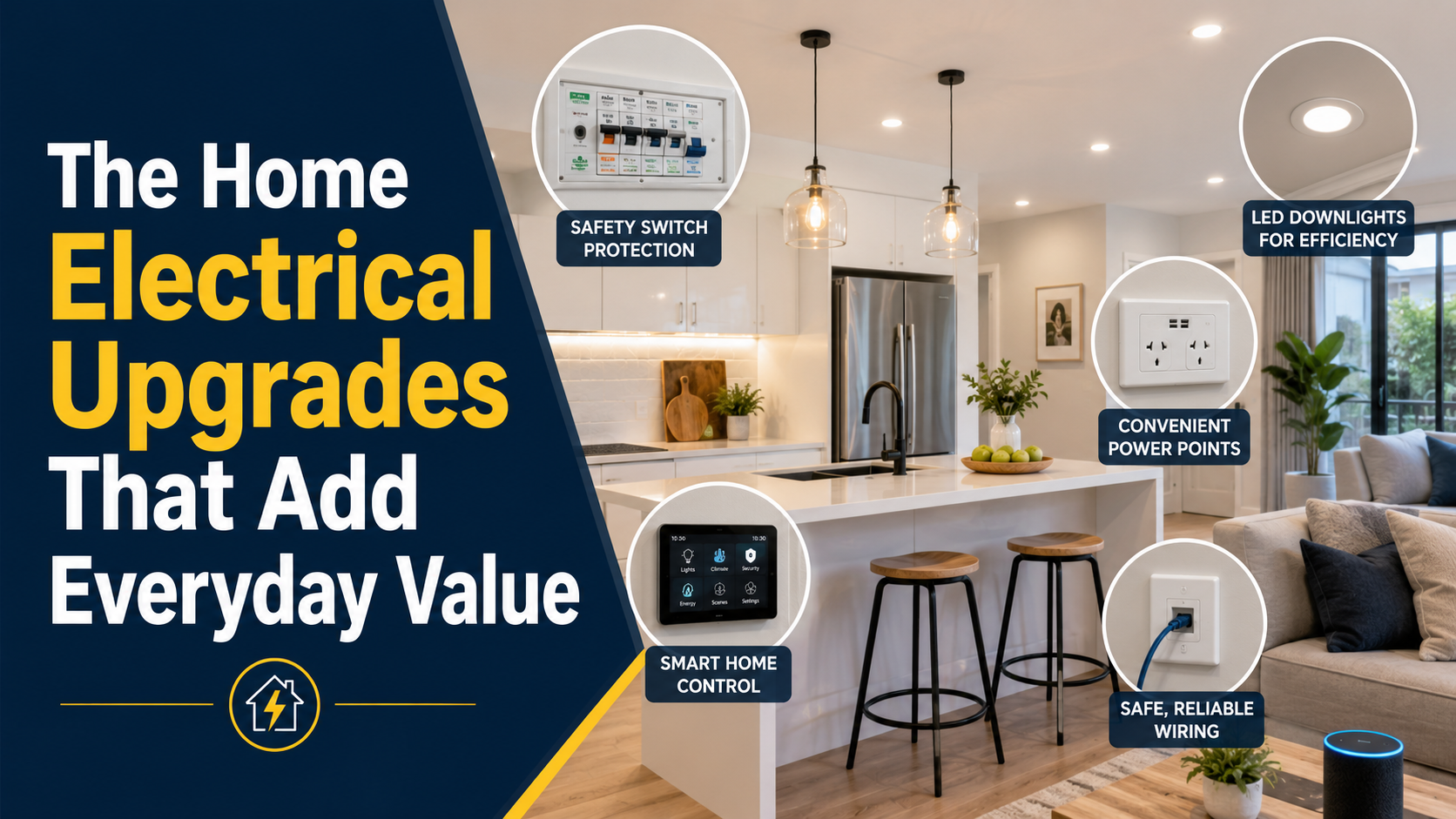
Most people only think about their home's wiring when something stops working. A switch that doesn't respond, a circuit that trips every time the kettle and the toaster run together, a switchboard that looks like it belongs in a museum. These moments tend to trigger a call for a repair rather than a broader look at what the rest of the system might need. That's a missed opportunity, because a handful of targeted upgrades can make daily life noticeably easier, well before anything actually breaks.
Older homes in particular carry electrical systems that were never designed for how we actually use power today. A house wired decades ago wasn't built with laptops, multiple phone chargers, air conditioning units, and a dozen smart devices in mind. Talking to a provider of electrical services in Melbourne or elsewhere that homeowners can trust about a broader upgrade, rather than just patching individual faults, often reveals just how much strain an older system has been quietly under for years.
-
Switchboard Upgrades Are Rarely Glamorous, But They Matter
Old switchboards, particularly ceramic fuse types still found in plenty of Melbourne homes, simply weren't built to handle modern loads. Upgrading to a modern switchboard with proper safety switches reduces the risk of overload and, more importantly, protects against electric shock in ways older systems can't. It's not a visible upgrade like new lighting, but it's arguably the most important one, since it affects the safety of everything plugged into the house.
Buyers and building inspectors also tend to flag outdated switchboards during a sale, which makes this upgrade relevant well beyond day-to-day convenience.
-
LED Lighting Changes More Than the Power Bill
Swapping old incandescent or halogen fittings for LED lighting tends to get framed purely as an energy-saving move, and while that's true, it undersells the change. LED lighting runs cooler, lasts considerably longer, and opens up options for dimming and zoning that older fittings simply can't support.
For rooms used at different times of day, kitchens, living areas, home offices, that flexibility ends up mattering more than people expect once it's actually installed.
-
Extra Power Points Solve a Problem Nobody Plans For
Most homes end up with power points in the wrong places once modern life catches up with them. Extension cords running across floors, double adapters stacked on top of each other, chargers competing for the one outlet near a desk; these workarounds are common, and mildly risky if left unaddressed for long enough.
Adding power points where they're actually needed, near workstations, entertainment areas, or kitchen benches, removes the workaround entirely rather than managing around it.
-
Safety Switches Are a Small Upgrade With Outsized Impact
Safety switches, sometimes called RCDs, cut power almost instantly if a fault is detected, and they're one of the simplest upgrades a home can have that directly reduces the risk of serious injury.
Many older Victorian homes still don't have them fitted across every circuit, which leaves gaps in protection that most homeowners aren't even aware of until it's pointed out. Given how inexpensive this upgrade is relative to the protection it provides, it's one of the easier decisions in any broader electrical review.
-
Smart Home Wiring Adds Convenience Without the Clutter
Smart lighting, video doorbells, and connected appliances all rely on wiring that supports them properly, rather than relying on a patchwork of plug-in adapters and hubs.
Wiring a home with this in mind from the outset, or retrofitting key areas during a broader upgrade, avoids the visual clutter of exposed cables and unreliable Wi-Fi-dependent workarounds. It also tends to future-proof a home for whatever comes next in terms of connected devices, rather than requiring another round of work in a few years. Even something as simple as dedicated wiring for an EV charger falls into this same category of forward planning.
It’s Time to Start Thinking Beyond the Immediate Fix
The pattern across most of these upgrades is the same: they solve problems most homeowners have learned to live around rather than fix outright. A switchboard that's slightly outdated, a power point shortage handled with extension cords, lighting that's serviceable but not quite right. None of these feel urgent individually. But when addressed together, they add up to a home that runs more smoothly day to day, with fewer small frustrations and a meaningfully safer foundation underneath everything else.