
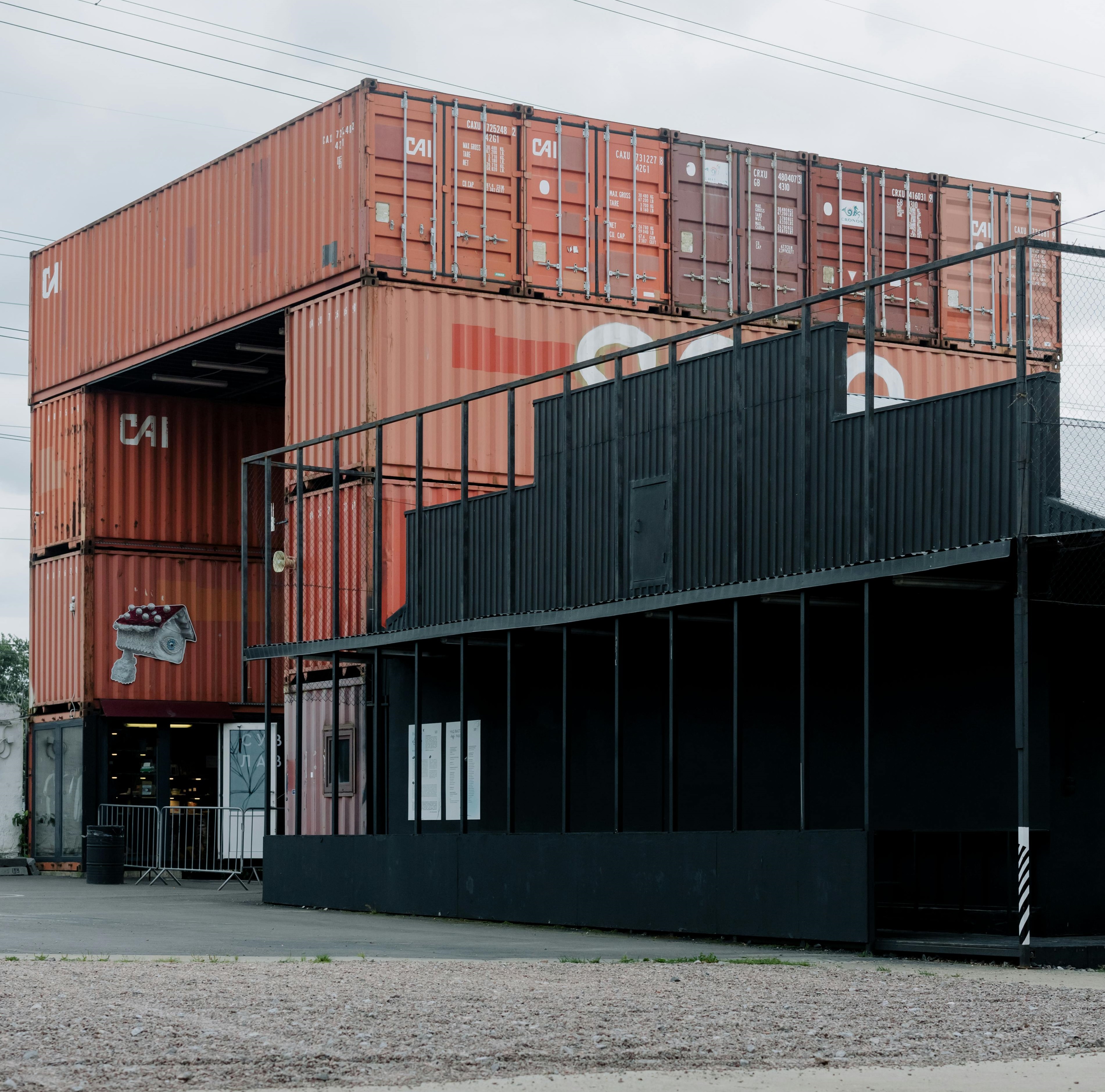
Modular storage has quietly become one of the most flexible tools for Australian businesses that need to adapt quickly without committing to permanent infrastructure. Whether it’s due to seasonal demand, rapid growth, space constraints, or regulatory changes, many organisations now need storage that can move, expand, contract, or be repurposed without disrupting operations.
 Photo by cottonbro studio: https://www.pexels.com/photo/a-shipping-containers-on-the-street-10620467/
What makes modular systems so valuable is not just their physical flexibility, but the way they support changing workflows. Instead of forcing businesses to fit into fixed layouts, they allow layouts to evolve alongside the business itself.
Here are four of the most common and practical ways Australian businesses are using modular storage today.
1. Managing Seasonal Fluctuations
Many industries in Australia experience strong seasonal swings. Retailers ramp up before holidays, agricultural suppliers stock up ahead of harvest periods, tourism-related businesses prepare for peak travel months, and construction companies often operate in cycles.
Permanent storage solutions are rarely well-suited to this kind of variability. When demand is high, space becomes a problem. When demand drops, that same space sits empty while still costing money.
This is often the point where businesses decide to use shipping containers as modular storage units. These containers provide dry, secure space that can be placed exactly where it’s needed without the cost and disruption of constructing new buildings.
Many organisations choose to source these from Boxman, see more about them here - https://boxman.co.nz/containers-for-sale/.
They specialize in quality shipping container sales and hire, giving companies the ability to buy or lease units that are built to withstand tough conditions and can be delivered and installed quickly. Because containers can be added or removed as needed, they allow companies to scale capacity without committing to long-term warehouse expansions or expensive leases.
Containers can be brought in for peak periods and removed once demand normalises.
For businesses operating on tight margins, this kind of flexibility can make a meaningful difference to cash flow, especially when it prevents overbuilding or long-term overheads that only make sense for part of the year.
2. Supporting On-Site Operations
In industries like construction, infrastructure, mining, and event logistics, storage often needs to be located directly where the work is happening.
Transporting tools, materials, or spare parts back and forth from a central warehouse wastes time and increases the risk of damage or loss. On-site modular storage gives teams immediate access to what they need, when they need it. This is another scenario where businesses commonly turn to shipping containers, because they are designed to be moved, placed, and repurposed without complex setup.
These container-based setups are often used to store equipment, safety gear, documentation, or consumables. They can be fitted out with shelving, lighting, and security systems, effectively becoming mobile storage rooms. Because containers are modular by nature, they can be relocated or reassigned as projects move from one phase to another.
This approach reduces downtime, improves accountability, and makes daily operations more predictable.
3. Handling Growth Without Relocating
Many small and mid-sized Australian businesses reach a point where they outgrow their current premises but are not ready to move.
Relocating can be expensive, disruptive, and risky, especially when staff, clients, or suppliers are tied to a particular area. Modular storage offers a way to create extra capacity without changing location. Again, this is where shipping containers are frequently used, because they can be placed on-site or nearby without requiring major construction.
Businesses often use container-based storage to offload archive materials, surplus stock, or infrequently accessed items, freeing up core workspace for revenue-generating activities. Since containers are self-contained and secure, they are well suited to long-term overflow storage.
In this sense, modular storage becomes a buffer that absorbs growth while giving the business time to plan its next step properly, instead of forcing rushed decisions.
4. Improving Organisation and Workflow
Not all storage problems are about space. Many are about structure.
When items are scattered across different rooms, stacked in unsuitable areas, or stored without a clear system, productivity drops. Staff spend more time searching, handling, and reorganising than they should.
Modular storage allows businesses to create defined zones for different functions, and shipping containers are often used as physical boundaries for these zones. Some containers may be dedicated to returns processing, others to spare parts, others to archived files, and others to high-turnover stock. Because they are physically separate units, they help reinforce organisation rather than relying on signage or internal labels alone.
Since these systems are modular, they can be reconfigured as workflows change. Containers can be reassigned, repositioned, or refitted as operational needs evolve. This is particularly useful for businesses that test new processes or regularly adjust how they operate.
Better organisation doesn’t just save time. It reduces errors, improves safety, and lowers stress levels across teams.
Why Modularity Matters More Than Ever
Australian businesses are operating in an environment that is more uncertain than it used to be. Supply chains are less predictable, labour markets fluctuate, and customer expectations shift quickly.
In this context, fixed systems are becoming liabilities.
Modular storage is not just a physical solution. It’s a way of thinking about space as something dynamic rather than permanent.
That shift allows businesses to respond rather than react.