
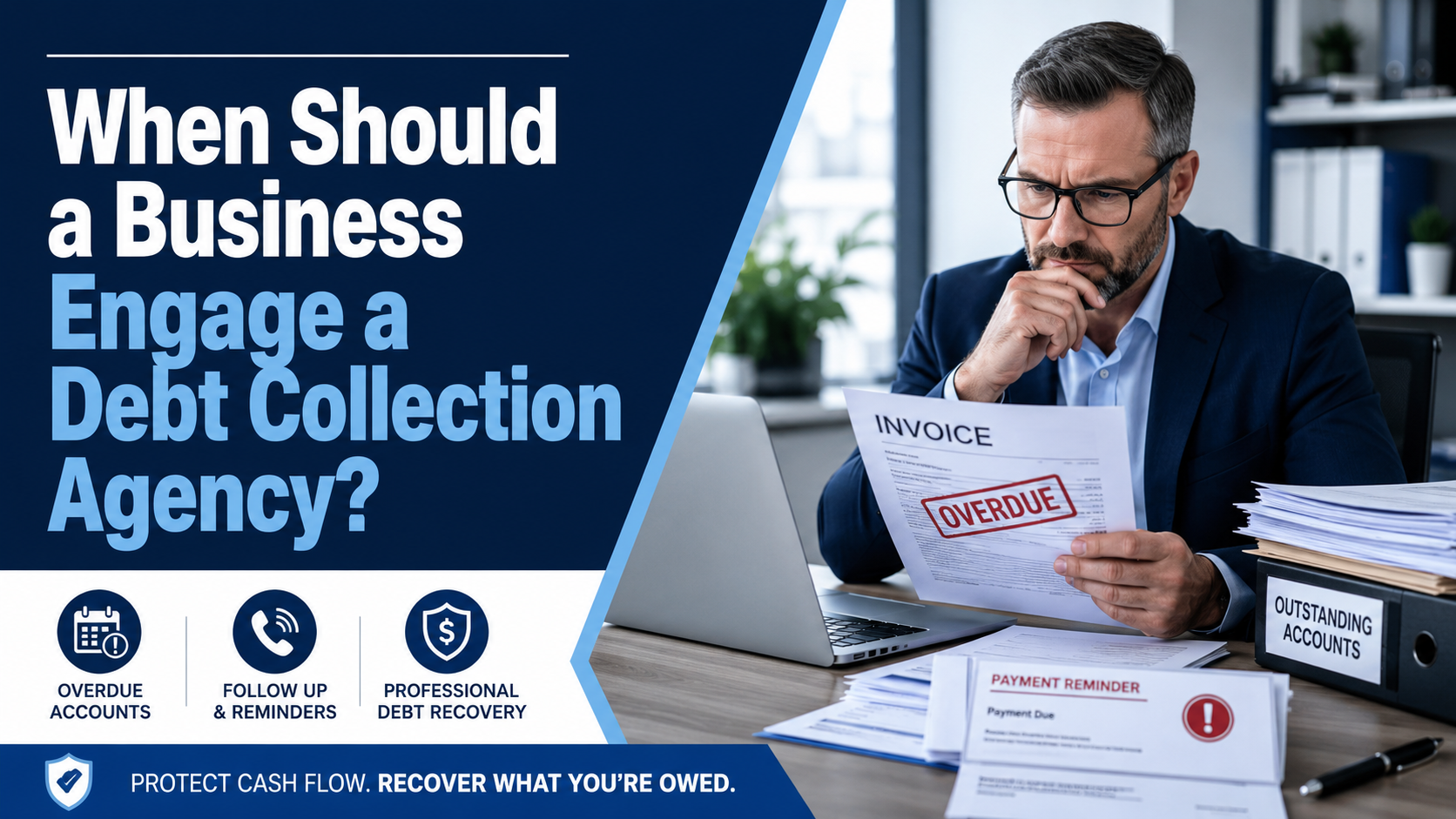
Managing unpaid invoices is one of the most frustrating challenges many businesses face. Late payments can disrupt cash flow, impact operations and place unnecessary pressure on business owners and finance teams. While occasional overdue accounts are common, there comes a point where internal follow-up efforts may no longer be effective. Knowing when to engage a debt collection agency can help businesses recover outstanding payments sooner while protecting valuable time and resources.
One of the first signs it may be time to seek professional assistance is when invoices remain unpaid well beyond agreed payment terms. Most businesses have structured payment expectations, whether that is 7, 14 or 30 days. If repeated reminders and follow-up calls are being ignored, the likelihood of collecting the debt internally often decreases over time.
Another warning sign is when communication from the customer becomes inconsistent or stops entirely. Debtors who avoid phone calls, ignore emails or continuously make excuses without committing to payment may require a more formal recovery process. Debt collection agencies have established systems and procedures designed to encourage engagement and resolve outstanding accounts professionally.
For many businesses, unpaid debts can quickly create cash flow issues. Consistent cash flow is essential for covering wages, suppliers, operating costs and future growth. When overdue accounts begin affecting daily operations, engaging a recovery specialist can help businesses regain financial stability and reduce ongoing stress.
Using professional recovery services can also save businesses significant time. Chasing overdue invoices internally often becomes a time-consuming process that distracts staff from their primary responsibilities. Business owners and accounts teams may spend hours sending reminders, making phone calls and following up with little success. Outsourcing the recovery process allows businesses to focus on serving customers and growing operations instead of managing difficult collections.
Importantly, professional debt recovery agencies understand the legal and compliance requirements involved in collections. Attempting to recover debts without proper processes can sometimes damage customer relationships or create legal complications. Experienced agencies use structured communication strategies designed to recover debts while maintaining professionalism and compliance with Australian regulations.
There is also a misconception that engaging a debt collection agency means immediately taking legal action. In reality, many debts are resolved through communication, negotiation and payment arrangements before legal escalation becomes necessary. Early intervention often increases the likelihood of successful recovery without court proceedings.
Businesses operating in industries with high invoice volumes or extended payment cycles may particularly benefit from ongoing recovery support. Services such as commercial debt collection can help businesses manage overdue accounts more efficiently while improving overall accounts receivable performance.
Another important factor is the age of the debt. The longer an account remains unpaid, the harder it often becomes to recover. Customers may change businesses, relocate or experience financial difficulties that reduce recovery chances over time. Acting early can significantly improve outcomes and reduce the risk of writing debts off completely.
Ultimately, engaging a debt collection agency should not be viewed as a last resort. It is a practical business decision designed to protect cash flow, improve efficiency and support financial stability. By recognising the signs early and working with experienced recovery professionals, businesses can recover outstanding debts more effectively while maintaining focus on their long-term success.