
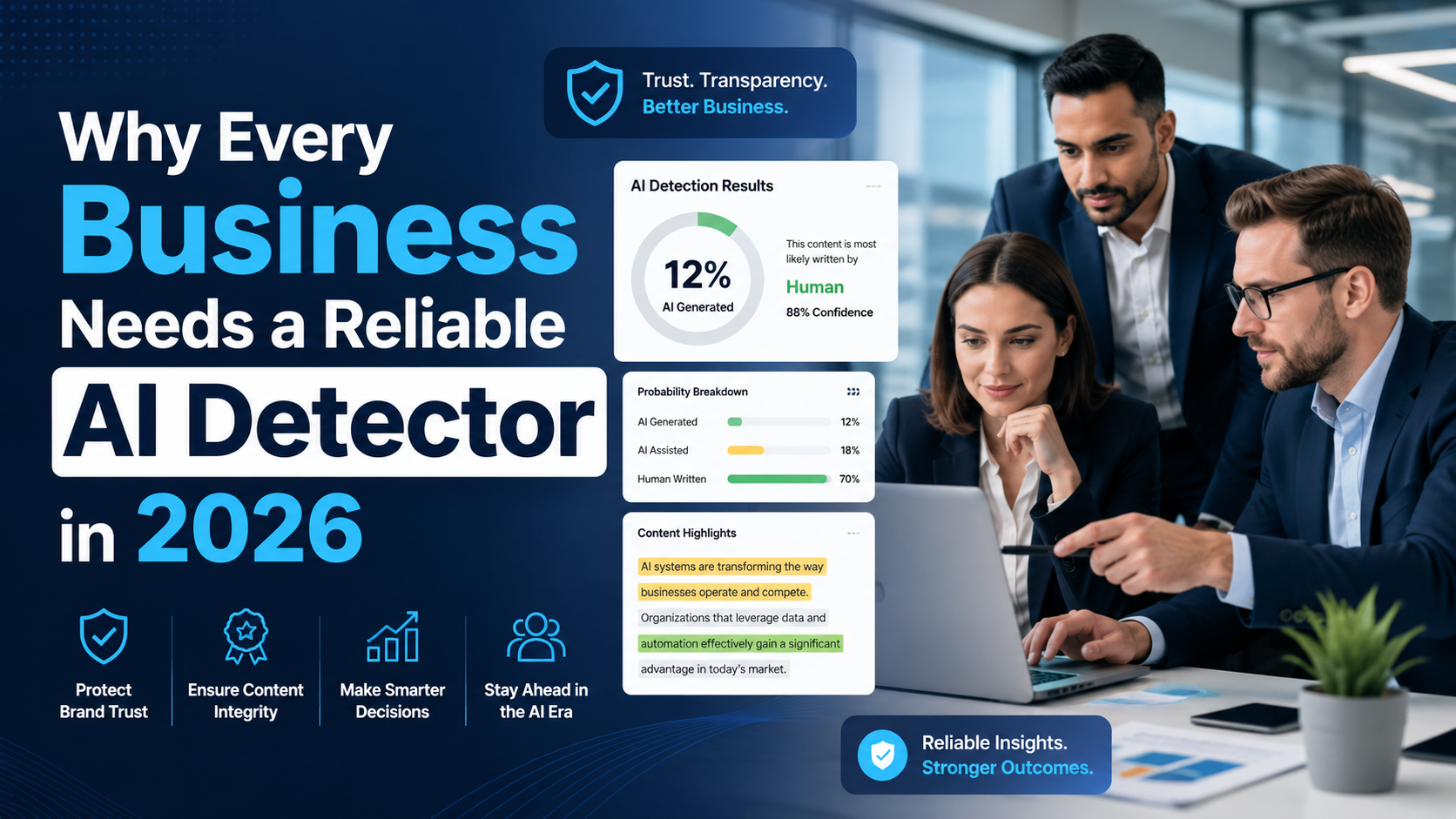
AI text is no longer something businesses occasionally bump into. It can appear in blog drafts, product pages, outreach emails, internal reports, job applications, freelance submissions, and support documents. Some of it is useful. Some texts are edited enough to look almost human, but not enough to feel natural.
That is why businesses need a more careful way to review content. A reliable AI detector for business should help a team see where AI patterns may appear, compare evidence, and decide what needs editing.
The platform Detector io is built around that kind of workflow. It checks text through several detectors, shows sentence-level signals, includes an AI Humanizer, and lets teams review the edited version again.
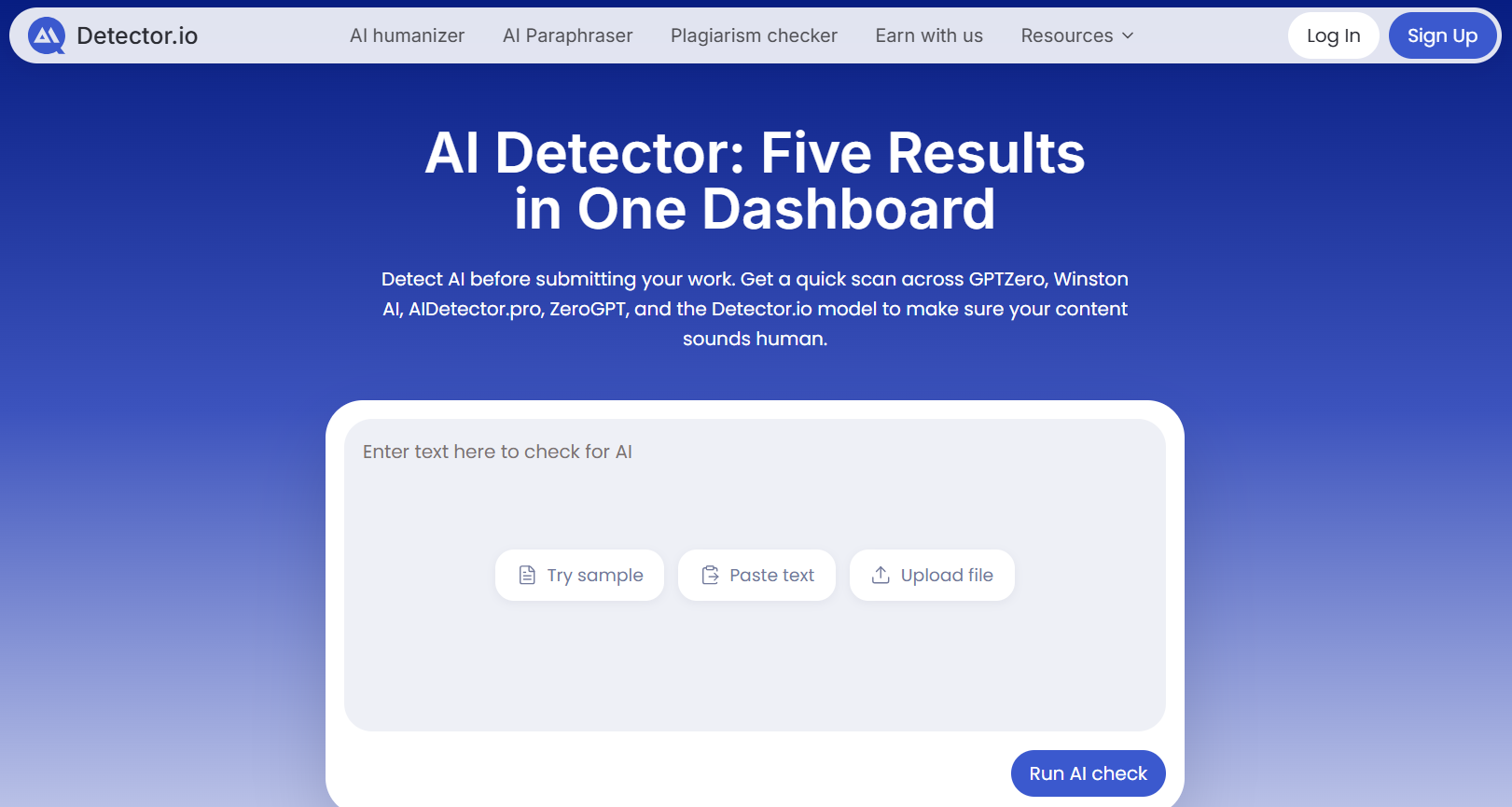
What the platform checks
The main idea is simple: one scan, several detector results.
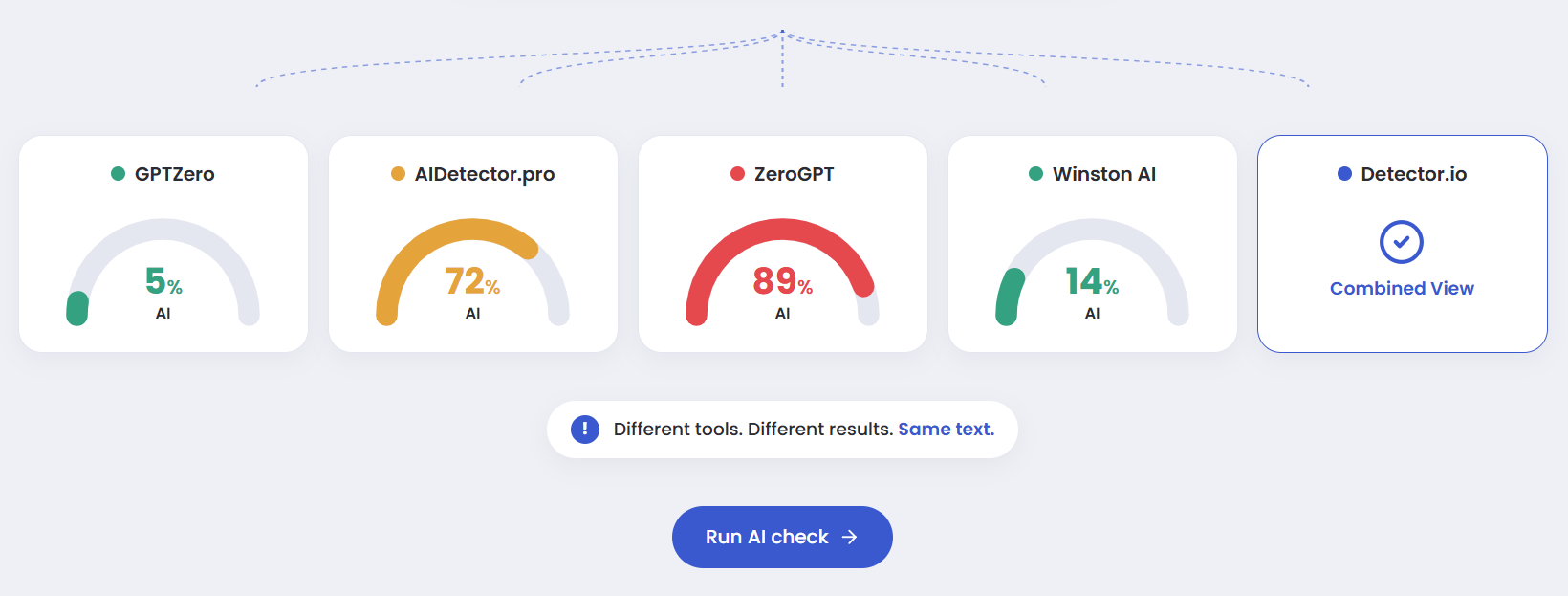
Detector.io brings together checks from GPTZero, Winston AI, AIDetector.pro, ZeroGPT, and its own model. That matters because AI detection is not exact. One AI detector may flag a paragraph as suspicious. Another may treat the same paragraph as mostly human. A third may land somewhere in the middle.
That disagreement is not always a flaw. It can be useful when it is visible. A team gets more context before deciding whether a text needs a closer review, a light edit, or no action.
|
Feature |
What it does |
Why it matters |
|
Multiple detector results |
Compares scores from several providers |
Reduces reliance on one isolated result |
|
Sentence highlights |
Marks lines that may need review |
Helps editors focus on specific sections |
|
AI Humanizer |
Rewrites selected AI-like passages |
Keeps editing inside the same workflow |
|
Protected sections |
Keeps crucial information unchanged |
Reduces the risk of unwanted edits |
|
Re-checking |
Scans the revised text again |
Shows whether the edit changed the result |
Why comparison is useful
A single score can look decisive, even when it should not. A percentage can make a reviewer feel certain about coming across the most reliable AI detector prematurely.
Detector.io’s dashboard is more useful because it shows how different tools respond to the same text. If several detectors flag the same draft, there is probably something worth checking. If only one tool reacts strongly, that is a reason to slow down, not immediately rewrite the whole piece.
This approach fits business content better than a simple pass-or-fail result. Teams often deal with mixed writing: human drafts polished with AI, AI drafts edited by people, template-based pages, outsourced content, and brand-controlled copy. Those categories are messy, so a layered view helps.
Sentence-level review
Overall scores are useful for triage, but they do not tell the whole story. The better question is where the problem appears.
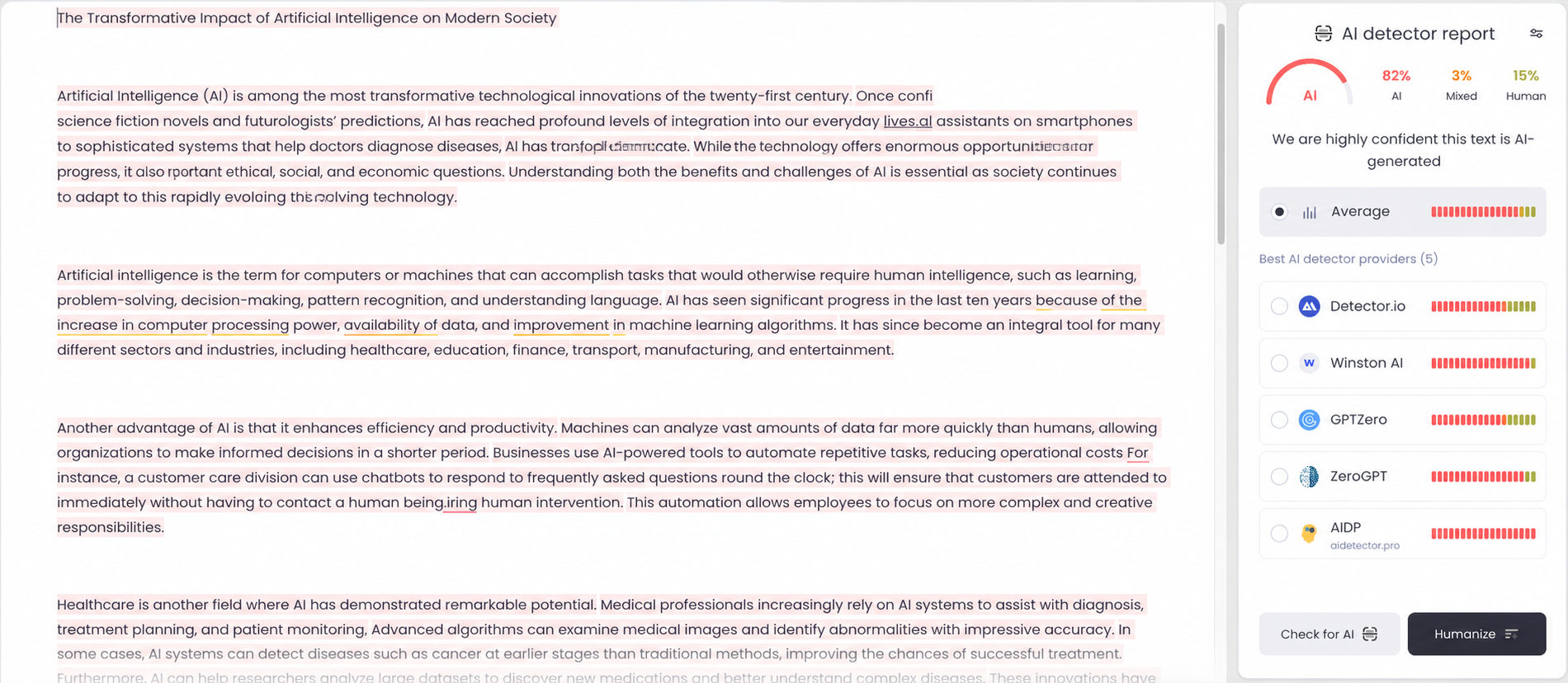
Detector.io’s sentence-level highlights make that easier. Maybe the introduction sounds generic. Maybe one paragraph repeats the same structure. Maybe the conclusion says the right thing in the safest possible way, which is often where AI writing gives itself away.
This is where an AI generated text detector becomes useful for editing rather than only judging. The reviewer can inspect the flagged lines and decide what kind of fix makes sense.
Common fixes are usually small:
-
add a specific example where the text feels too broad;
-
vary sentence length to avoid a mechanical rhythm;
-
remove phrases that do not contribute to the message;
-
restore brand voice where the copy sounds neutral.
That is better than rewriting everything. In business content, over-editing can be as risky as under-editing, especially when the draft already has approved claims, keywords, or structure.
Humanizing and re-checking
Detector.io includes an AI Humanizer, but the feature makes the most sense when used selectively. A rewrite button can be tempting. It can also make content worse if it changes facts, headings, citations, or carefully approved wording.
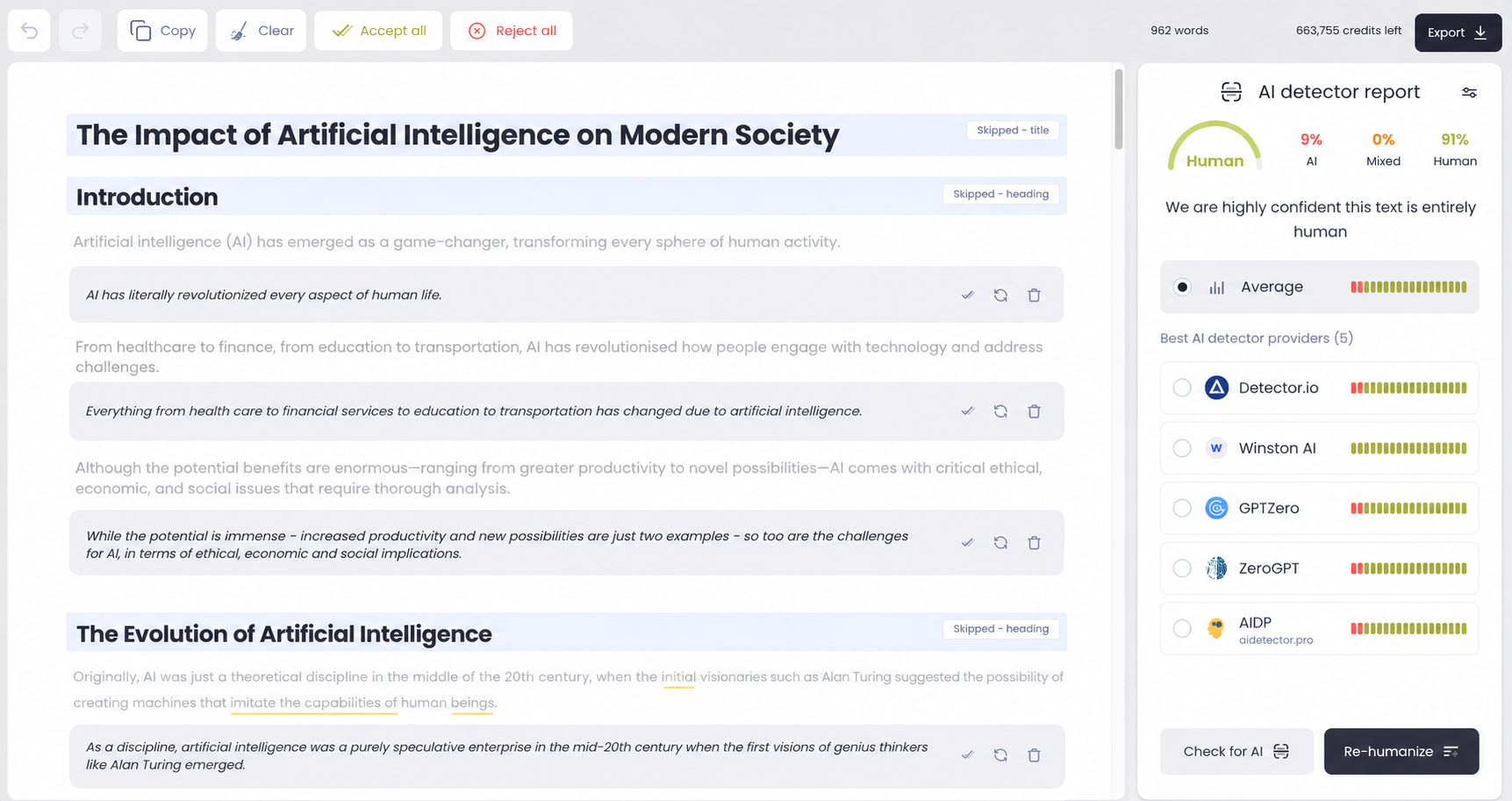
The useful part is that Detector.io allows more controlled editing. Teams can work on flagged sections while protecting parts that should stay untouched. That is relevant for SEO pages, research-based articles, academic content, legal-adjacent copy, product descriptions, and client-approved drafts.
The re-checking step is just as important. In many workflows, someone checks a draft, sees a worrying score, edits a few lines, and then guesses whether the problem is fixed. Detector.io keeps the process more contained: scan the text, review the results, revise selected sections, and check the new version again.
For content managers, editors, and agencies, a clearer record of what changes can save time and reduce messy back-and-forth.
Where businesses may use it
Detector.io is most useful when written content has to pass through review before it goes public or reaches a decision-maker.
Typical use cases include:
-
checking blog posts, landing pages, newsletters, and freelance drafts before publication;
-
reviewing agency or contractor work before client delivery;
-
comparing detector results for SEO content at scale;
-
screening written assignments in hiring, with human review still involved;
-
supporting academic or training-related reviews.
Of course, no detector AI system can prove authorship with complete certainty. Detector.io’s reliability comes from the workflow, not from pretending doubt does not exist.
Limits worth keeping in mind
Detector.io should not be used as an automatic accusation tool. It is better treated as an AI content detector tool for review.
Businesses still need rules for how results are handled. What happens when two detectors flag a text and three do not? Who reviews the highlighted sentences? When is a rewrite necessary? When is a note to the writer enough?
Those decisions still belong to people. The tool can show patterns, but it cannot understand workplace context, writing habits, source material, or the full history behind a draft.
Overall impression
Detector.io is useful because it organizes AI detection into a workflow that businesses can repeat. It combines multiple checks, points to specific lines, supports controlled rewriting, and lets teams verify the edited version again.
That makes Detector.io a worthy choice for businesses already dealing with AI-assisted content. It gives reviewers more to work with before they make a call.