
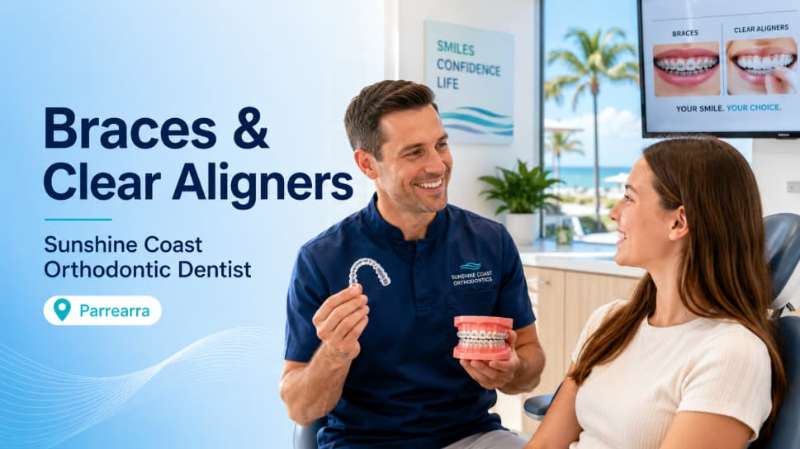
Crooked teeth, spacing issues, or bite misalignment often develop gradually, and many people notice them only when they start affecting daily comfort or appearance. Orthodontic treatment gives you structured options to correct these concerns, with braces and clear aligners being two of the most common approaches used at dental clinics in Parrearra on the Sunshine Coast.
At Oris Dental, treatment planning focuses on what your teeth actually need, rather than a one-size-fits-all approach. Both braces and clear aligners work toward the same outcome, but they differ in how they apply pressure and how they fit into your routine.
How braces work for tooth alignment
Braces use brackets and wires to apply steady pressure on teeth, gradually shifting them into better alignment. They are often recommended when more complex movement is needed, including bite correction or significant crowding.
You may notice braces being used for:
-
Crowded or overlapping teeth
-
Gaps between teeth
-
Overbite, underbite, or crossbite correction
-
Rotated or misaligned teeth
Because braces are fixed in place, they work continuously without relying on daily compliance. Adjustments are made during follow-up visits to guide progress over time.
Clear aligners as an alternative option
Clear aligners use a series of removable trays designed to move teeth in small stages. Each set is worn for a set period before moving to the next stage in the sequence.
This option is commonly used for:
-
Mild to moderate crowding
-
Small gaps between teeth
-
Minor bite adjustments
-
Patients who prefer a removable option
Clear aligners are discreet and can be removed during meals and brushing. However, they require consistent wear time each day to be effective.
Braces vs clear aligners: key differences
Both treatments can improve alignment, but they function differently in daily use and treatment control.
-
Braces: Fixed in place, suitable for complex movement
-
Clear aligners: Removable, suited for lighter adjustments
-
Visibility: Braces are visible, aligners are less noticeable
-
Maintenance: Braces require careful cleaning around brackets, aligners are removed for brushing
Your dentist will assess your bite, tooth position, and treatment goals before recommending an option.
What to expect during orthodontic treatment
Orthodontic treatment is a structured process that typically involves several stages. The goal is to move teeth gradually while monitoring comfort and progress.
A typical treatment pathway includes:
-
Initial dental assessment and imaging
-
Treatment planning based on tooth movement needs
-
Placement of braces or fitting of aligners
-
Regular check-ups or aligner updates
-
Final adjustments and retention phase
The retention phase is important to maintain results after active treatment ends.
Daily care during treatment
Maintaining oral hygiene is important throughout orthodontic treatment. Braces and aligners both require consistent care to prevent plaque build-up and protect gum health.
For braces, you should:
-
Brush carefully around brackets and wires
-
Use interdental brushes if recommended
-
Avoid very hard or sticky foods
For aligners, you should:
-
Clean trays daily with recommended products
-
Remove aligners before eating or drinking anything other than water
-
Brush teeth before reinserting aligners
These habits help support treatment progress and reduce complications.
Treatment suitability and assessment
Not every case is suited to both braces and clear aligners. The choice depends on how much movement your teeth require and how your bite functions.
During your consultation at Oris Dental, your dentist will consider:
-
Level of crowding or spacing
-
Bite alignment and jaw position
-
Oral hygiene and gum health
-
Lifestyle preferences and compliance
This assessment helps determine the most suitable orthodontic approach for your situation.
Why orthodontic care matters
Straightening teeth is not only about appearance. Proper alignment can improve how your teeth function and reduce uneven wear over time. It can also make daily cleaning easier, which supports long-term oral health.
Final thoughts
Braces and clear aligners both offer effective ways to correct tooth alignment, with different approaches depending on your dental needs. A professional assessment helps you understand which option fits your situation best and what results you can expect.
Get in touch with us if you're in search of orthodontic care and clear aligner or braces treatment at Oris Dental: https://www.orisdental.com.au/