
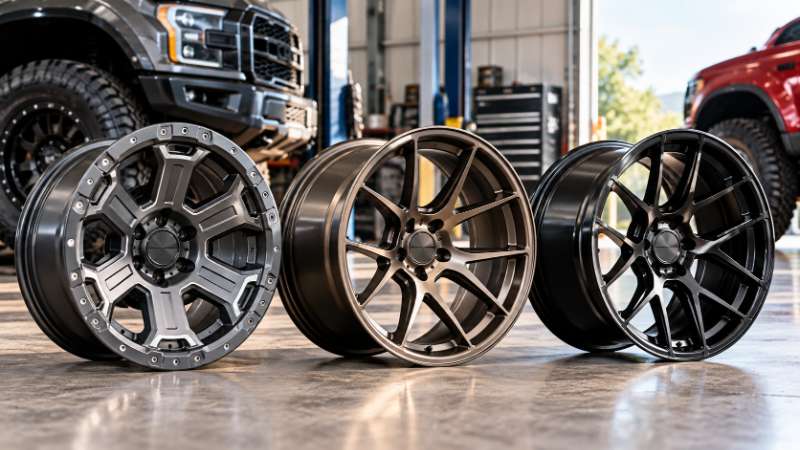
Shopping for aftermarket wheels, you will quickly run into three terms: cast, flow-formed and forged. They describe how a wheel is made, and that affects its strength, weight and price. HPD Wheels products use industry-standard manufacturing methods, including all three. Here is what each one means and how to choose.
Cast wheels
Casting means pouring molten aluminum into a mould and letting it set. It is the most common method because it is efficient and allows a wide range of designs and finishes. For most daily-driven cars, trucks and SUVs, a quality cast wheel is a sensible choice. It is also usually the most affordable option.
Flow-formed wheels
A flow-formed wheel starts as a cast wheel. The barrel is then heated and stretched under pressure while it spins, which compresses and strengthens the metal. The result is a barrel that is lighter and stronger than a standard cast one, at a price between cast and forged. This suits drivers who want a weight saving without paying for a fully forged wheel.
Forged wheels
Forging shapes a solid block of aluminum under extreme pressure. This produces a dense, strong structure, so a forged wheel can be made lighter while handling heavy loads. It usually costs the most, which is why forged wheels are often chosen for demanding uses.
Quick comparison
Which should you choose?
-
Trucks, SUVs and Jeeps: Cast or flow-formed suits most drivers. If you tow, go off-road often or carry heavy loads, a lighter, stronger construction is worth considering.
-
Trailers: Trailer wheels carry load all day. HD Trailer Wheels come in cast and forged options, so match the wheel to your trailer's load needs.
-
Golf carts: Weight matters less here, so style and finish usually drive the choice.
Don't forget fitment
How a wheel is made does not tell you whether it fits. Bolt pattern, diameter, width, offset and centre bore still decide that. Read our guide on what wheels fit your truck, and if you are planning an aggressive stance, see negative offset wheels and how far is too far.
Warranty and care
Whatever construction you pick, check the warranty. HPD offers a 3-year finish warranty and a lifetime limited structural warranty. Details are on the HPD warranty and care page.
Final Thoughts
Cast, flow-formed and forged wheels each have a place. Cast suits most everyday drivers, flow-formed sits in the middle, and forged is for those who want maximum strength. The best choice is the one that fits your vehicle, how you use it and your budget. If you're unsure which construction a wheel uses, ask the HPD team.
Ready to upgrade? Browse the HPD Wheels collection or contact the team at [email protected] to find the right wheel for your ride.
Frequently Asked Questions
What is the main difference between cast, flow-formed and forged wheels?
It comes down to how the wheel is made. Cast wheels are formed from molten aluminum poured into a mould. Flow-formed wheels start as cast and then have the barrel stretched under pressure to add strength. Forged wheels are shaped from solid aluminum under extreme pressure, which generally makes them the strongest and lightest.
Are forged wheels always better than cast wheels?
Not always. Forged wheels are generally stronger and lighter, but they usually cost more. For daily driving and style upgrades, a quality cast wheel is often a sensible choice. The right pick depends on your vehicle, how you use it and your budget.
Is a flow-formed wheel a good middle option?
In general, yes. Flow-formed wheels aim to offer more strength and less weight than a standard cast wheel at a lower cost than forged. They suit drivers who want an upgrade without going fully forged.
Does wheel construction affect whether a wheel will fit?
No. Fitment depends on bolt pattern, diameter, width, offset and centre bore. Construction affects strength, weight and cost, so check both before you buy.