
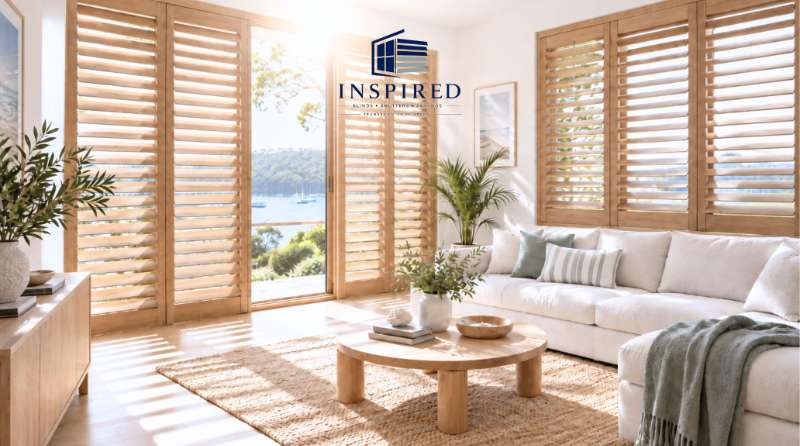
Choosing Timber Plantation Shutters for Your New South Wales Home
Timber plantation shutters have a way of making a room feel finished the moment they go in. There is a warmth to real wood that other materials only imitate, and for New South Wales homes, from the Northern Beaches to the Hills District and everywhere in between, they have become one of the most requested window treatments we install.
If you are weighing up whether timber shutters are the right fit for your home, here is what actually sets them apart, and what to look for before you choose.
Why Timber, Specifically?
Plantation shutters come in a few materials these days, timber, polymer, and aluminium among them, and each has its place. Timber is the one homeowners tend to reach for when the goal is a genuinely elegant, warm finish rather than a purely practical one.
Good timber shutters are made from real hardwood, not engineered wood composite or MDF. That distinction matters more than it sounds. MDF and composite panels can warp over time, particularly in a climate like ours where humidity and temperature swings put real strain on materials. Solid hardwood species, timbers like White Teak, Basswood, Paulownia, and Western Red Cedar, hold their shape and finish far better across NSW’s varied conditions, from coastal humidity to the drier inland heat further west.
Beyond durability, timber brings a couple of practical qualities that are easy to overlook until you notice them: it has genuinely good thermal properties, helping keep a room a little cooler in summer and warmer in winter, and it also has acoustic benefits, taking a small but noticeable edge off street noise or a busy household.
Choosing a Timber Species
Not all timber shutters are the same, and the species you choose changes both the look and the feel of the finished product.
Western Red Cedar brings a natural, warm red-brown tone that suits homes wanting a richer, more traditional look. Paulownia has an open, visible grain that works beautifully in a rustic or Hamptons-style home, especially popular in coastal NSW areas like the Northern Beaches. Basswood offers a straighter, finer grain for a cleaner, more contemporary finish, and White Teak is prized for its light weight, silvery tone, and tight grain, a good option if you want something a little different from the classic painted white shutter.
Colour and finish choice also matters here. A stained finish shows off the timber’s natural grain, which suits homes leaning into a warmer, more textured look. A painted finish gives a cleaner, more uniform appearance and tends to suit contemporary interiors, particularly in North Shore and Hills District homes where a crisp, modern palette is common.
What to Look For Beyond the Timber Itself
The timber species is only part of the decision. A well-made shutter depends just as much on how it is built and finished.
Look for shutters made from sustainably sourced, plantation-grown hardwood rather than timber with no clear origin. It is better for the environment, and well-managed plantation timber tends to be more consistent in quality. Ask whether the paint or stain used is low-VOC and water-based, since this matters for indoor air quality, particularly in bedrooms and living areas where you spend the most time. And check the hardware, since hinges and tracks made from lower-grade materials are usually the first thing to fail, well before the timber itself shows any wear.
Plantation shutters also have a genuine safety advantage worth mentioning if you have young children or pets at home. Unlike blinds with cords, shutters have no dangling parts, which removes a common household hazard entirely.
Where Timber Shutters Work Best in a NSW Home
Timber suits most rooms, but it particularly shines in living areas, bedrooms, and studies, anywhere the warmth of real wood adds to the atmosphere of the room. For bathrooms, laundries, or other high-moisture areas, a polymer shutter is usually the better choice, since it handles humidity without the extra care timber needs.
For homes closer to the coast, from the Northern Beaches down through the Eastern Suburbs, it is worth choosing a finish and hardware combination suited to salt air and humidity. It does not rule timber out, but it does mean the specifics matter more than they would further inland.
Getting the Right Fit for Your Windows
Plantation shutters are made to measure, so the finished result depends heavily on getting that measurement right the first time. Window shape, size, and how you actually use the room, whether you need full access for cleaning and airflow or mostly want light and privacy control, all affect which configuration suits best.
That is exactly why we offer a free in-home measure and quote before recommending anything. We would rather see your windows in person than guess from a phone call or a photo.
Ready to Explore Timber Shutters?
Timber plantation shutters are a long-term investment in how your home looks and feels, not just a window covering. With the right species, finish, and hardware for your specific home and location across New South Wales, they are built to last for decades, not years.
Get in touch with Inspired Blinds, Shutters and Awnings today, and let our team help you find the timber shutter that suits your home and your style. Book a FREE measure and quote to get started.
Frequently Asked Questions
What is the difference between timber and polymer plantation shutters?
Timber shutters are made from real hardwood and offer a warmer, more natural look with genuine grain and texture. Polymer shutters are engineered to resemble timber closely while offering better resistance to moisture, making them a common choice for bathrooms and other high-humidity areas.
Which timber species is best for plantation shutters?
It depends on the look you want. Western Red Cedar suits a warmer, traditional style, Paulownia suits a rustic or Hamptons look with a visible open grain, Basswood gives a straighter, contemporary grain, and White Teak offers a lighter, silvery tone. All are suitable for New South Wales conditions when properly finished.
Are timber shutters suitable for coastal NSW homes?
Yes, provided the finish and hardware are chosen with coastal conditions in mind. Salt air and humidity can affect lower-grade hardware over time, so it is worth discussing hardware options for homes near the coast.
Do timber shutters need much maintenance?
Not much. Regular dusting with a soft cloth is usually enough. For a deeper clean, a slightly damp cloth with mild soap works well, though it is best to avoid excess water and harsh chemicals, which can affect the timber's finish over time.
Are plantation shutters safe for homes with children or pets?
Yes. Unlike corded blinds, plantation shutters have no hanging cords, which removes a common safety hazard for young children and pets.
How much do timber plantation shutters cost?
Cost depends on the timber species, window size, and configuration you choose. Since every shutter is custom made, we provide a free, no-obligation in-home quote so you get an accurate price for your specific windows.
Do timber shutters help with energy efficiency?
Timber has naturally good thermal properties, which can help keep a room cooler in summer and warmer in winter when the shutters are properly fitted. The exact benefit varies depending on window size and orientation.
Can timber shutters be used on all window types?
Timber shutters suit most standard windows and doors, though the ideal configuration, hinged, bi-fold, or sliding, depends on the window's size and how it is used. This is something we assess during your free in-home measure and quote.
Do you install timber shutters across all of New South Wales?
Yes, we service homes across New South Wales, including the Northern Beaches, North Shore, Hills District, and surrounding areas, along with Queensland.