

As the world becomes more technologically advanced, the way in which people commit crimes does too. For years there has been an upward trend in the commission of fraud and cybercrime offences. The more people that tap and go means fewer people with large amounts of cash in their wallets, homes or businesses. Most electronic goods are no longer as valuable as they used to be at resale online or to cash converters. The combination of this and increasing home and business security means to break and enters, and armed robberies are less appealing than they used to be. Instead, we have seen criminals turn to online frauds and cybercrime. Such crimes can be committed from almost anywhere in the world and by just about anyone. The anonymity of the internet coupled with hacking techniques, ransomware campaigns and/or data breaches means crimes are relatively easy to commit and are notoriously difficult to investigate and prosecute successfully. With the world’s economies struggling and more people at home and online during the coronavirus pandemic, cybercriminals and fraudsters have tailored their techniques to take advantage of the situation. There have been numerous reports of COVID-19 related scams and frauds, and we can all expect this to continue.


During these uncertain times, if you're looking for the best lawyer in Sydney CBD, NSW, Jeffrey of JCL Legal is available by mobile phone. Please call him on 0419 233 670.
What Is Cyber Or Online Fraud?
Pursuant to section 192E of the Crimes Act 1900 (NSW), fraud is committed when a person, by way of any deception, dishonestly obtains property belonging to another or obtains any financial advantage or causes financial disadvantage. Some common-related offences include blackmail, embezzlement, false pretences and obtaining credit or money by deception. Common offences for Directors include omitting certain entries, destroying books, publishing false statements, cheating and defrauding. The Australian Federal Police refer to ‘online fraud’ as any type of scheme using email, web sites, chat rooms or message boards to conduct fraudulent transactions and activity.Common COVID-19 Scams Or Frauds
There are many types of cyber fraud. Scammers are using the spread of COVID-19 (coronavirus) to take advantage of people across Australia. Some examples of current COVID-19 scams:Vaccination Scams
Scamwatch is aware of scams relating to COVID-19 vaccines both in Australia and overseas. These include: • requesting payment for vaccines or for early access to vaccines • offers to mail vaccines • offers to pay money as an investment opportunity in the Pfizer vaccine • fake surveys related to vaccines that offer prizes or early access.Government Impersonation Scams
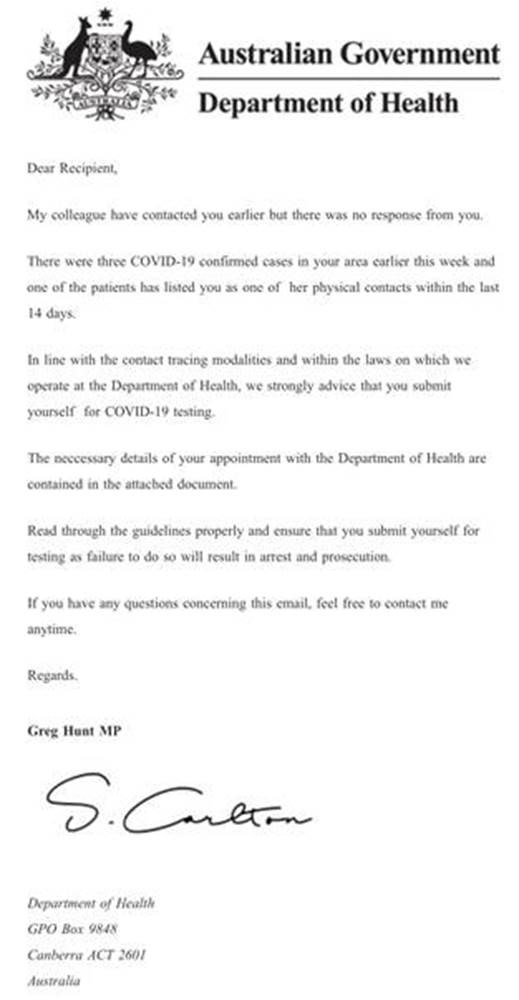
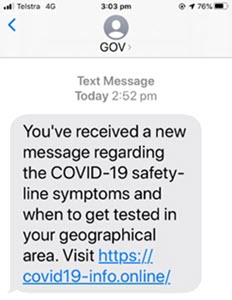
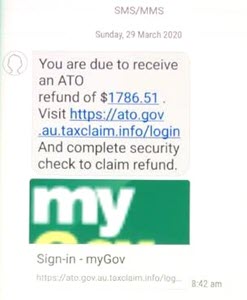
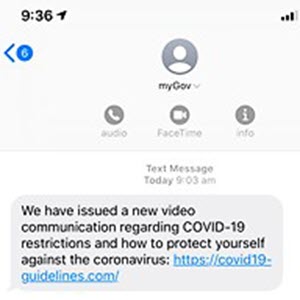
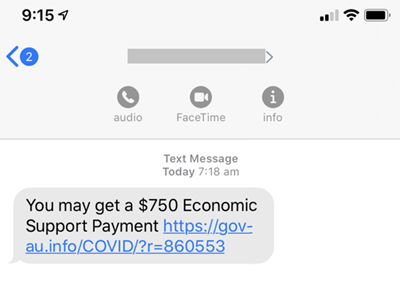
Scammers are pretending to be government agencies providing information on COVID-19 through text messages and emails ‘phishing’ for your information. These contain malicious links and attachments designed to steal your personal and financial information. In the examples below the text messages appear to come from ‘GOV’ and ‘myGov’, with a malicious link to more information on COVID-19.
Applications For Financial Assistance Or Other Payments
Fake emails and application forms for financial assistance or government payments relating to the COVID 19 assistance packages are also being circulated. Such emails and forms are designed to look official and seek that you provide your financial information on the form or online.