
Male Pattern Hair Loss Treatments: Options, Evidence, and Timeline
Hair loss treatment for men works best when it starts early and matches the cause. For most men, that cause is male pattern hair loss: a gradual, genetically driven thinning that tends to progress without treatment. Several non-surgical options can slow it and, in some cases, improve density. Here is how the main ones compare and what the research actually shows.
TL;DR: Key Takeaways
• Male pattern hair loss is common and progressive: roughly 80% of Caucasian men are affected by age 70, though rates vary between populations.
• Minoxidil and finasteride are the most established treatments. Finasteride is prescription-only, so a physician should decide if it is right for you.
• A recent network meta-analysis found finasteride plus minoxidil was the only statistically significant combination in men, adding about 30 hairs per square centimetre over minoxidil alone.
• PRP and microneedling look promising as add-ons, but the evidence base is still modest.
• Results take months, not weeks, and treatment works best while follicles are still active.
Table of Contents
• What Causes Male Pattern Hair Loss?
• What Are the Early Signs in Men?
• What Are the Main Non-Surgical Options?
• Does Combination Therapy Work Better?
• How Long Does It Take, and Who Is a Good Candidate?
• Start With an Assessment
What Causes Male Pattern Hair Loss?
Male pattern hair loss, or androgenetic alopecia, is driven by genetics and sensitivity to the hormone DHT. Over time, affected follicles shrink, producing finer, shorter hairs until some stop growing altogether. That is why early action matters: shrunken follicles respond far better than ones that have stopped producing hair.
Stress, illness, low iron or vitamin D, thyroid conditions and scalp inflammation can add to or mimic pattern loss. Sudden or patchy shedding deserves a medical check.
What Are the Early Signs in Men?
• A receding hairline, often at the temples
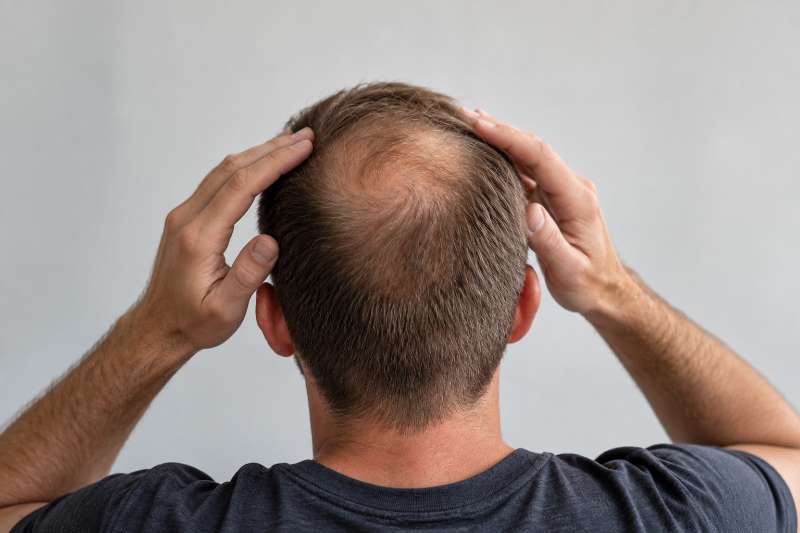
• Thinning at the crown, sometimes with a visible scalp patch
• Finer, shorter hairs where thicker ones used to grow
• More hair than usual in the shower or on your brush
Seeing these in your 20s or 30s is common, and it is the best time to act. Our guide to theearly signs of hair loss covers what to watch for.
What Are the Main Non-Surgical Options?
There is no single best option. The right choice depends on how advanced your hair loss is, your health history and how much commitment you want.
• Minoxidil: The most widely used over-the-counter option, applied topically and working best at the crown. It prolongs the growth phase and increases follicle blood flow. It must be used consistently, results fade if you stop, and some men shed more in the first weeks.
• Finasteride: An oral prescription medication approved for male pattern hair loss since 1997, it reduces DHT. An Annals of Dermatology review, citing a meta-analysis, reports a higher relative risk of sexual side effects (1.66), though most studies described them as mild and reversible after stopping. Whether it suits you is a decision for your physician.
• PRP (Platelet-Rich Plasma): PRP uses a small sample of your own blood, concentrated to deliver platelet growth factors to the scalp. A meta-analysis of nine randomized trials (238 patients) found PRP increased hair density at 3 and 6 months versus placebo, and appeared safe. It found no significant difference in hair count or diameter, the evidence base is small, and protocols vary between clinics. You can read more in this guide to PRP for hair loss.
• Microneedling: Controlled micro-injuries trigger the skin’s repair response and may help topical treatments absorb. The evidence is strongest when it is used alongside minoxidil rather than on its own, as covered in our guide to microneedling for hair loss.
Newer options such as exosome scalp therapy are still early-stage and are best treated as add-ons, not first-line care.

Does Combination Therapy Work Better?
Often, yes. In the male subgroup of a network meta-analysis in Frontiers in Medicine, finasteride plus minoxidil ranked first, adding about 29.7 hairs per square centimetre over minoxidil alone. It was the only combination with a statistically significant difference. PRP plus minoxidil ranked second at about 27.2, but that result was not statistically significant.
The authors also note that many comparisons were indirect and the overall evidence quality was low to very low. Combining treatments looks promising, but nobody should promise guaranteed results.
How Long Does It Take, and Who Is a Good Candidate?
PRP typically starts with at least three sessions, sometimes up to six, about four weeks apart, followed by maintenance every six to eight months. Judge results over several months, not weeks.
Non-surgical treatment suits men with early-to-moderate thinning where follicles are still active, who are comfortable with a series of sessions and ongoing maintenance. If the balding areas are already smooth and shiny, non-surgical options are less likely to restore growth, and a