
Working from home sounds ideal until your home office turns into the hottest room in the house in summer or feels stuffy and uncomfortable by mid-afternoon. When your workspace is too warm, too cold, or poorly ventilated, it can affect your focus, mood, and productivity more than you might expect.
A comfortable home office is not just about convenience. It can help you work better, stay more alert, and avoid that drained feeling that often comes from sitting in an uncomfortable room all day. The good news is that with the right air conditioning setup and a few practical habits, you can create a workspace that feels comfortable year-round.
Why home office comfort matters
When you are working from home, your comfort directly affects how well you perform. A room that feels too hot can leave you distracted and sluggish, while a room that is too cold can make it hard to concentrate. Poor airflow can also make a space feel stale, especially if you are spending long hours in the same room every day.
Unlike a lounge room or open-plan living area, a home office often has different heating and cooling needs. It may be a smaller room, get strong afternoon sun, or contain equipment like monitors and computers that add extra heat. That means the air conditioning that works for the rest of the house may not always be the best fit for your workspace.
Choose the right air conditioning option for your office
The best system for your home office depends on the size of the room, how often you use it, and whether you want to heat or cool just one space or a larger part of the home.
Split system air conditioning
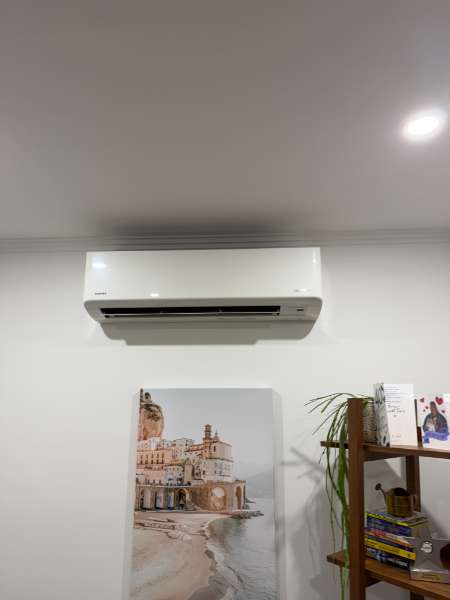
A split system is one of the most popular options for home offices. It is ideal for cooling and heating a single room, which makes it a practical choice if you work in a dedicated office space. Split systems are generally energy efficient, easy to control and able to maintain a steady temperature throughout the day.
They also let you avoid cooling the entire house when you only need comfort in one room. For many people working from home, that can mean better energy efficiency and lower running costs.
Ducted air conditioning
If your home office is part of a larger home climate control plan, ducted air conditioning can be a good option. This is especially useful if multiple people are home during the day or if you move between rooms for work and family life.
Zoning can make a big difference here. A zoned ducted system allows you to cool or heat only the areas you are using, including your office, without wasting energy on empty rooms.
Portable units and fans
Portable air conditioners and fans can offer temporary relief, but they are not always the most efficient or comfortable long-term solution for a daily workspace. They can be noisy, take up floor space and may struggle to keep the room consistently comfortable during very hot weather. They may work as a short-term fix, but a properly sized fixed system is usually a better investment for a true home office.
Portable aircons also only cool, so in winter, you'll need an alternate solution.
Get the temperature right
One of the biggest mistakes people make when cooling a home office is setting the temperature too low. It might feel good for a moment, but it can lead to higher running costs and make the room feel too cold after sitting still for a while.
Aim for a temperature that feels consistently comfortable rather than icy cold. A moderate setting is usually best for long workdays - around 24°C. The goal is to maintain steady comfort so you can focus without constantly adjusting the controls.
If your system has a timer or smart controls, use them. You can start cooling the room shortly before your workday begins and adjust it later in the afternoon if outdoor temperatures change.
Think about airflow, not just temperature
A comfortable home office is not only about cool air. Airflow matters too. If the air is blowing directly on your desk or chair, you may feel uncomfortable even when the room is technically at the right temperature.
Try to position your desk so you are not sitting directly under the indoor unit or in the path of strong airflow. Good air circulation helps the whole room feel balanced and reduces hot or cold spots.
If the room tends to feel stuffy, opening a window for a short period in the morning or using the fan mode on your air conditioner may help freshen the space without overcooling it.
Reduce heat from sunlight
A home office with large windows can quickly heat up, particularly if it gets morning or afternoon sun. Even a good air conditioner has to work harder when direct sunlight is constantly warming the room.
To reduce heat gain, consider:
closing blinds or curtains during the hottest part of the day
- using blockout window coverings
- adding external shading where possible
- positioning your desk away from direct sun
These simple steps can help your system work more efficiently and keep the room more comfortable.
Watch the heat from office equipment
Your computer, monitors, printer and even charging devices all give off heat. In a small room, that extra warmth can build up surprisingly quickly, especially when the door is closed.
If your office feels hotter than the rest of the house, your equipment may be part of the reason. Turning off unused devices, using energy-efficient equipment and keeping cables and electronics tidy can help reduce unnecessary heat load.
Keep your system clean and maintained
A dusty filter or poorly maintained air conditioner can reduce airflow and make it harder for the system to do its job properly. That can lead to uneven temperatures, stuffy air and higher power bills.
Basic maintenance makes a big difference. Clean or check your filters regularly according to the manufacturer’s guidance, and book professional aircon servicing when needed. A well-maintained system will usually perform better, last longer and provide more reliable comfort during peak summer and winter periods.
Use zoning and timers to save energy
If you are working from home regularly, your energy use may rise simply because your air conditioning is running during the day instead of only in the evening. That is where smart usage becomes important.
Some simple ways to manage running costs include:
-
cooling only the room you are using
-
closing doors to keep conditioned air where you need it
-
using timers so the system does not run longer than necessary
-
taking advantage of zoning if you have ducted air conditioning
-
combining air conditioning with blinds, insulation and shading
Small adjustments can make a noticeable difference over time.
Do not forget winter comfort
Home office comfort is not just a summer issue. A cold room in winter can be just as distracting as an overheated one in summer. Reverse cycle air conditioning can be a great solution because it provides both cooling and heating from the one system.
If your home office feels cold in winter, look at draughts around doors and windows, and make sure your system is sized appropriately for the room. A comfortable temperature in winter can make working from home much easier and more enjoyable.
Signs your current setup is not working
Your home office air conditioning may need improvement if:
-
the room is always hotter or colder than the rest of the house
-
you keep adjusting the temperature throughout the day
-
the system is noisy and distracting
-
airflow is poor or uneven
-
your energy bills seem high for the amount of comfort you get
-
the room feels stuffy after a few hours of work
If any of these sound familiar, it may be worth reviewing whether your current system is the right size, type or position for the space.
Final thoughts
A comfortable home office can make a real difference to your workday. The right air conditioning installation helps create a space where you can focus, stay productive and feel comfortable in every season. Whether that means installing a split system for one room, using zoning in a ducted setup or simply improving airflow and sun protection, small changes can have a big impact.
When you work from home regularly, your home office deserves the same level of comfort as the rest of the house. Investing in the right heating and cooling solution is not just about temperature. It is about creating a better place to work every day.