
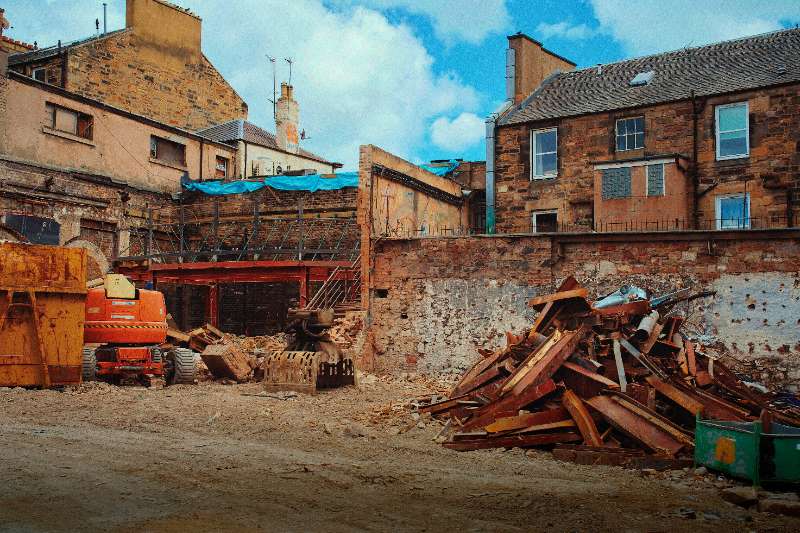
Building projects have enough variables to manage without waste becoming one of them. Most experienced builders have a story about a site that ground to a halt because the skip was full, the wrong bin was ordered, or the collection timing didn't align with the project schedule. Those situations are avoidable, and they're almost always the result of waste management being treated as an afterthought rather than a planned part of the project from the start.
The volume of waste a building project generates consistently surprises people who haven't managed it before. What looks manageable on day one becomes a site safety issue by day five if the right bin isn't in place. Getting waste management right isn't complicated. It just requires thinking about it at the same time as every other project decision rather than after the site is already running.
Why Waste Accumulates Faster Than Most People Expect
The gap between how much waste a building project produces in theory and how much it produces in practice is one of the more reliable surprises for first-time builders. Demolition generates concrete, brick, and timber at a volume that fills bins faster than most people anticipate. Framing and structural work adds off-cuts and packaging daily. Fit-out stages bring plasterboard, insulation, and fixture packaging that adds bulk without necessarily adding weight.
Each stage generates a different type and volume of waste, and a bin that worked for one stage may be completely inadequate for the next. The projects that manage waste well are the ones where someone has thought through each stage in advance and planned the bin size and collection frequency around what that stage will actually produce.
The Skip Bin Decision That Determines How the Site Runs
The choice of bin size and type has a more direct effect on daily site operations than most people expect. A bin that's too small fills quickly, creates overflow that becomes a safety and compliance issue, and requires more frequent collections that interrupt the work. A bin too large for the site footprint creates access problems that affect how efficiently the site runs.
For building projects, the design of the bin matters as much as the size. Larger bins with swing door access make loading heavy or bulky materials considerably faster and safer than top-loading over the side. That difference compounds across a full project into meaningful time savings that experienced builders factor into their selection from the start.
Choosing the right skip bins for building projects also means understanding weight limits. Construction materials like concrete and bricks are heavy relative to their volume and can reach weight limits before the bin appears full, creating collection complications and additional charges that a properly planned selection avoids.
What Goes in and What Doesn't
Understanding what can and can't go into a building skip bin prevents complications that arise when prohibited materials are mixed with general construction waste. General building debris including timber, plasterboard, bricks, concrete, tiles, and metal can go into a standard construction bin. Asbestos, tyres, liquid waste, chemicals, and hazardous materials require separate specialist disposal.
Asbestos is the most important consideration for renovation and demolition projects in older Sydney properties. If there's any possibility of asbestos-containing materials being present, that needs to be assessed and handled by a licensed specialist before any demolition proceeds. Mixing asbestos with general construction waste creates a serious compliance issue that no project can afford.
Separating recyclable materials from general waste at the site level also produces better environmental outcomes. Concrete, bricks, and clean timber are materials that responsible waste providers process for recycling rather than sending to landfill.
How to Time the Hire to Match the Project
Timing is where a lot of the practical value of good waste planning sits, and it's what first-time builders most commonly get wrong. Ordering a single bin at the start and expecting it to cover the full project rarely works because waste volumes and types change significantly across stages.
The more effective approach is to plan bin hire in stages aligned with the project schedule. A demolition bin for the initial clearance, replaced as structural and fit-out stages generate their own waste streams, produces a site that stays clear throughout. Communicating the project timeline to the provider at booking allows collection and replacement to be scheduled in advance rather than arranged reactively when the bin is already full and work is waiting.
Why Planning Early Changes Everything
The building projects that run most smoothly are the ones where every operational detail was thought through before work started. Waste management sits firmly in that category. A site with the right bins in the right places, with a collection schedule that matches the project pace, is one where work proceeds without the interruptions and safety issues that poor waste planning consistently introduces. That outcome is straightforward to achieve with modest upfront planning and a provider whose delivery and collection can be trusted to support the project rather than add to its variables.