
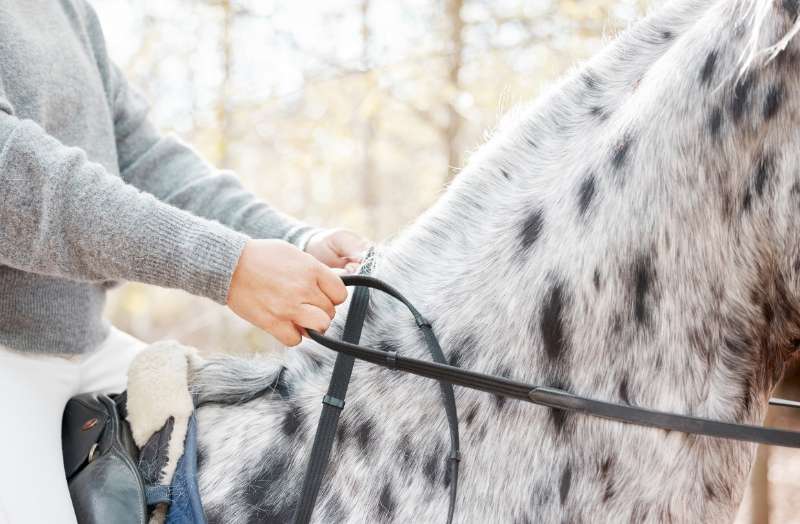
A well-fitting bridle is essential for your horse’s comfort, movement, and overall performance. If you are choosing a custom bridle, taking accurate measurements can help prevent pressure, rubbing, and pinching around sensitive areas of the horse’s head.
This simple bridle fitting guide will show you how to measure your horse correctly before ordering, so you can feel more confident choosing the right fit.
Read Also: 7 Essential Leather Care Steps to Extend the Lifespan of Your Premium Equestrian Tack
Why Bridle Fit Matters
Your horse’s head has many sensitive areas, especially around the poll, nose, cheekbones, and behind the ears. A bridle that is too tight can place constant pressure on these areas. A bridle that is too loose may move around, rub, or sit unevenly.
A properly fitted bridle helps your horse feel more comfortable and allows clearer communication between horse and rider. Whether your horse is used for dressage, jumping, showing, or everyday riding, the right fit can make a big difference.
A custom, anatomically designed bridle is not just about appearance. It helps support comfort, stability, and better performance.
What You Need Before Measuring
Before you begin, prepare the following:
- A soft, flexible measuring tape
- A notepad or phone to record the measurements
- A calm horse standing still
- A headcollar to safely hold your horse
- A helper, if your horse tends to move around
Avoid using a metal tape measure, as it can be stiff and uncomfortable for your horse.
The 5 Key Bridle Measurements
To order a custom bridle, you will usually need five main measurements.
1. Headpiece Length
Measure over the poll, where the crownpiece of the bridle would normally sit. Place the tape from one side of the head to the other, passing over the top of the poll.
Make sure the tape sits flat and follows the natural position of the bridle.
2. Cheekpiece Length
Measure from the browband area down to the bit ring. It is best to measure both sides separately, as many horses are slightly uneven from one side to the other.
Do not assume both cheekpieces will need to be the same length.
3. Noseband Circumference
Wrap the measuring tape around your horse’s nose where the noseband would sit. This is usually about two fingers below the cheekbone.
The tape should be snug, but not tight. It should not press into the skin.
4. Browband Width
Measure across the forehead, from the base of one ear to the base of the other.
The browband should allow enough room so it does not pull the headpiece forward or pinch behind the ears.
5. Throatlatch Circumference
Measure around the throat area where the throatlatch would sit. Leave enough room so that, once fastened, you can comfortably fit three to four fingers underneath.
This helps keep the bridle secure without restricting your horse.
Read Also: 10 Signs Your Horse's Bridle Doesn't Fit (And How to Fix It)
Common Measuring Mistakes to Avoid
When measuring your horse for a bridle, avoid these common mistakes:
- Measuring over a halter or headcollar
- Pulling the tape too tight
- Forgetting to measure both cheekpieces
- Guessing based only on standard sizes
- Using an old bridle as the only guide
- Assuming all horses of the same breed need the same size
Every horse has a different head shape. For example, a fine-boned Arabian and a broad Warmblood may need very different proportions, even if they are similar in height.
Bridle Sizing Guide
Standard bridle sizes can be helpful as a starting point, but they are not always accurate for every horse.
|
Size |
Headpiece |
Noseband |
Cheekpiece |
|
Pony |
58–66 cm |
50–61 cm |
18-25cm |
|
Cob |
63–70 cm |
60–66 cm |
23 -25 cm |
|
Full |
73–74 cm |
65–71 cm |
25-30 cm |
|
Warmblood |
74–78 cm |
70–76 cm |
26-33 cm |
These measurements are only a guide. Measuring your horse directly is always the best way to get an accurate fit.
When Standard Bridle Sizes Do Not Work
Some horses do not fit neatly into pony, cob, full, or warmblood sizes. This is common for horses with sensitive poll areas, broad foreheads, narrow noses, larger cheekbones, or uneven left and right-side measurements.
In these cases, a made-to-measure bridle is often the best choice. A custom bridle is designed around your horse’s actual measurements instead of relying on a general size chart.
Signs Your Current Bridle Does Not Fit
Your horse may need a better-fitting bridle if you notice rubbing, hair loss, pressure marks, head-tossing, mouth opening, resistance to the bit, uneven contact, or the bridle slipping during work.
If you see any of these signs, it is worth rechecking your horse’s measurements.
Final Thoughts
Measuring your horse for a custom bridle only takes a few minutes, but it can make a big difference to your horse’s comfort and performance. Once you have the five key measurements recorded, you can order with more confidence and avoid the guesswork of standard sizing.
Explore our custom bridle range or contact our team if you would like help checking your horse’s measurements before placing your order.
Browse our Mix & Match bridle builder at ffequestrian.com.au or get in touch with our team for help measuring your horse. Every order is backed by our satisfaction guarantee.