
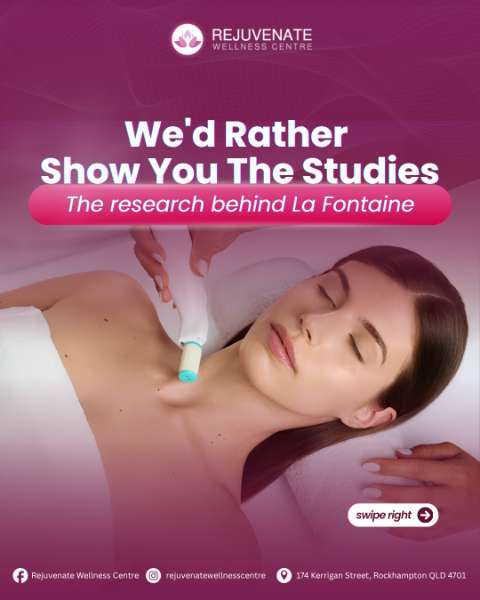
La Fontaine clinical results start with exfoliation. Macro-exfoliation is the first and central stage of the device, and it's what the other two stages, micro-vibration massage and LED therapy, are built around. La Fontaine was developed over a decade by aesthetic surgeons and skin specialists, and it was put through clinical trials before it reached a single clinic, including ours in Frenchville, Rockhampton. Two findings from those studies stand out: an increase in elastin of around 20%, and a measurable smoothing of the skin's surface, both linked back to the exfoliation stage that opens every session. Neither is a promise about what will happen to any one person's skin. Both are what the published research found, and we think that's worth seeing before you book a treatment, not after.
- Macro-exfoliation is the foundation stage of the treatment, and the one the elastin and texture findings are measured against
- Elastin increased by around 20% following treatment
- The stratum corneum, the skin's outermost layer, was measurably reduced, smoothing the skin's surface
- The figures come from La Fontaine's own decade of clinical research, not from individual client outcomes at any one clinic
What are La Fontaine clinical results based on?
Most skin care claims ask you to take a clinic's word for it. La Fontaine clinical results come from a different process, and they're built around exfoliation first. The device was designed and refined over ten years by aesthetic surgeons and skin specialists, then tested through clinical trials before it was released to clinics such as Rejuvenate Wellness Centre in Rockhampton. That research covers three technologies built into the one device, in the order they're applied:
- Macro-exfoliation by oscillation, the primary stage, which lifts away dead surface cells and preps the skin for what follows
- Micro-vibration massage, which stimulates the freshly exfoliated skin
- LED therapy at 633nm, used to support the skin's natural repair process after exfoliation
Each stage was studied on its own and as part of the full 3-in-1 protocol, but exfoliation is what La Fontaine is fundamentally built on. It's an exfoliation treatment first, with massage and light therapy added to support what the exfoliation stage starts.
How does La Fontaine's exfoliation stage actually work?
Macro-exfoliation is a mechanical process, not a chemical peel. Disposable tips oscillate across the skin to lift away built-up dead cells from the surface, smoothing and unifying the complexion before the massage and light stages begin. This is the stage the clinical trials measured first, because it's what makes the skin more receptive to the vibration massage and LED therapy that follow it. It's also why La Fontaine at our Frenchville clinic feels different to a standard facial: the exfoliation is more thorough and consistent than manual exfoliation alone, and it's built into a single-use, hygienic system for every client in Rockhampton.
What do La Fontaine clinical results show about elastin?
The published findings point to elastin, not collagen, as the main driver of skin tightening. Studies show an increase in elastin of around 20% following treatment. Elastin is the protein that gives skin its plasticity and bounce, and it's what allows skin to stretch and spring back into place. Collagen tends to get most of the attention in skin care conversations, but it's elastin loss that shows up as sagging and reduced tonicity as skin ages. That's the change clients in Rockhampton and Frenchville tend to notice first: skin that feels firmer and re-tightens more than it did before treatment.
What do La Fontaine clinical results show about skin texture?
The second finding relates to the stratum corneum, the outermost layer of skin, and it follows directly from the exfoliation stage. Studies recorded a measurable reduction in this layer alongside an overall smoothing of the skin's surface. That combination is why skin feels softer to the touch and looks more even and luminous after a course of treatment. It's a texture change more than a tone change, driven by exfoliation rather than the massage or light stages, and it's one reason La Fontaine is also used for concerns beyond ageing, including scars and stretch marks at our Frenchville clinic.
Elastin or collagen: which one matters more?
It's worth separating the two, because collagen and elastin do different jobs. Collagen mostly gives skin its structure and firmness. Elastin gives skin its ability to stretch and recover its shape, which is what most people describe as bounce or tonicity. La Fontaine's clinical results focus on elastin because that's the protein the studies measured moving, not because collagen doesn't matter. For clients in Rockhampton asking why their skin feels tighter rather than just firmer, elastin is the more accurate explanation.
What happens during a La Fontaine treatment at Rejuvenate Wellness Centre?
A La Fontaine session at our Frenchville clinic opens with macro-exfoliation, then moves into micro-vibration massage and LED light therapy, the same order the clinical studies were built around. Sessions are non-invasive, involve no downtime, and are suitable for most skin types. Results build over a course of treatments rather than a single visit, which mirrors how the clinical trials were structured. Individual results vary, and our therapist Rossana will talk you through what to expect for your skin during a free assessment before you book in.
Why does Rejuvenate Wellness Centre publish this research in Rockhampton?
Most skin care promotion in Rockhampton doesn't link back to a manufacturer's clinical study. We do, because we'd rather a client compare the published figures than take a description on faith. The elastin and stratum corneum findings referenced on this page come from La Fontaine's own manufacturer research, not from Rejuvenate Wellness Centre's individual client outcomes. La Fontaine clinical results are the starting point for that conversation, and what we can add from running the treatment in Frenchville is how clients describe the change afterwards: firmer, smoother, and more even, which lines up with what the published studies measured.
Frequently Asked Questions
What is the clinical evidence behind La Fontaine?
La Fontaine was developed over a decade by aesthetic surgeons and skin specialists and tested through clinical trials before release. The published studies measured two main outcomes: an increase in elastin of around 20%, and a reduction in the stratum corneum alongside an overall smoothing of the skin's surface.
Does La Fontaine increase collagen or elastin?
The published clinical results focus on elastin, which increased by around 20% in studies. Elastin is the protein responsible for skin's plasticity and bounce, and it's a bigger factor in tightening and tonicity than collagen alone.
How many La Fontaine sessions are needed to see results?
Results build over a course of sessions rather than after one visit, in line with how the clinical trials were structured. Your therapist at Rejuvenate Wellness Centre will recommend a schedule after a free skin assessment, since this depends on your skin and your goals.
Is La Fontaine mainly an exfoliation treatment?
Yes, at its core. Macro-exfoliation is the first and primary stage of every La Fontaine session, and it's what the micro-vibration massage and LED therapy stages are built on top of. The clinical trials measured exfoliation as the starting point for the elastin and skin-texture findings referenced on this page.
Is La Fontaine the same as a facial peel or microdermabrasion?
No. La Fontaine's exfoliation stage uses oscillating disposable tips rather than a chemical peel or abrasive crystals, and it's combined with micro-vibration massage and LED therapy at 633nm in the same session. A standard facial or single-step exfoliation treatment doesn't combine all three, which is part of why the clinical trials tested it as one protocol.
Can La Fontaine help with scarring or stretch marks as well as ageing?
Yes. The same clinical findings around skin texture and the stratum corneum are part of why La Fontaine is also used for scars and stretch marks, alongside its use for skin tightening and tonicity.
Where can I see La Fontaine's published clinical studies?
The figures referenced on this page come from La Fontaine's manufacturer, and you can review the device's clinical background directly through their published material. Our therapist can also walk you through what the research means for your skin during a free assessment at our Frenchville clinic.
The takeaway
La Fontaine clinical results show two consistent findings: elastin increasing by around 20%, and a measurable smoothing of the skin's surface through a reduction in the stratum corneum, both traced back to the exfoliation stage that opens every session. Neither is a guarantee about your own skin, but it's the research the device is built on, and it's why Rejuvenate Wellness Centre shows clients the studies before they book. If you're in Rockhampton or Frenchville and want to know whether La Fontaine suits your skin, book a free skin assessment with our therapist Rossana at Rejuvenate Wellness Centre, 174 Kerrigan Street, Frenchville, or call 0448 110 267.