
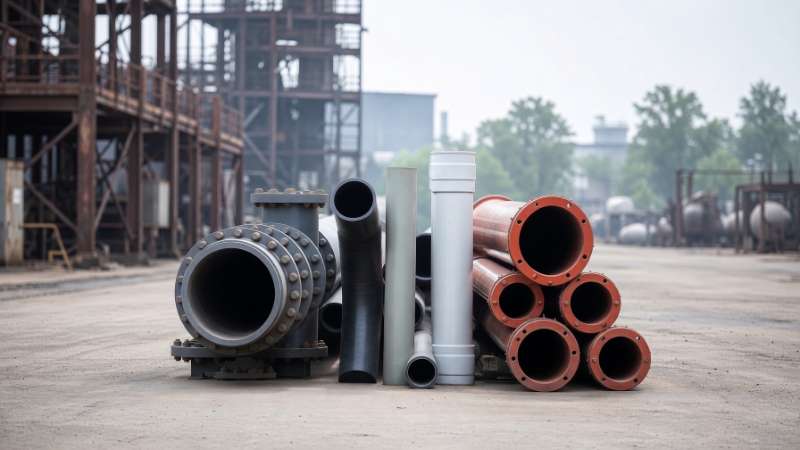
There is no best pipe material for every project. Ductile iron, GRP and steel are usually chosen for high‑pressure trunk mains and tough ground conditions. PVC‑U and HDPE are used for reticulation, sewer and irrigation networks across Australia because they resist corrosion and are lighter when installed. The right pipe material depends on pressure class, design life, ground and water conditions and the Australian Standard that each application must follow.
This guide gives a decision framework, a comparison of the five materials and the Australian Standards that apply to each. It helps engineers and specifiers to shortlist a water main pipe material with more confidence, before detailed design starts.
Decision Framework for Pipe Material Selection
Key questions to answer before specifying
Before comparing materials, it helps to define the project against a small set of fixed requirements. These usually decide the shortlist before cost or supplier preference come into it:
-
What is the operating pressure and the surge (water hammer) allowance?
-
Is the pipe conveying potable water, recycled water, sewage, or an industrial fluid?
-
What is the required design life, and does the asset owner have a stated replacement horizon?
-
What are the soil and groundwater conditions, including sulphate levels and soil resistivity?
-
What diameter range and depth of cover does the route need?
-
Does the water authority or asset owner have an approved products list that limits the choice?
Design life, pressure class and environment checklist
Once those questions are answered, run the shortlist against a short checklist: confirm the pressure class covers both static pressure and surge events, confirm the material is compatible with the soil and water chemistry on site (particularly sulphate resistance and corrosion risk), confirm jointing methods suit the installation method (open trench, thrust boring, or trenchless), and confirm the product holds the relevant Australian Standard certification and, where the line carries drinking water, AS/NZS 4020 approval for contact with potable water.
Comparison Matrix: DI, HDPE, GRP, PVC & Steel
Pressure range, lifespan, corrosion, weight, jointing and cost
The table below summarises how each material performs against the factors that usually drive a water pipe material decision. Lifespan figures are general industry ranges rather than guarantees. Actual service life depends on soil conditions, water chemistry, installation quality and ongoing asset management.
On installed cost, larger-diameter ductile iron and GRP generally carry a higher material cost than PVC-U and HDPE of an equivalent diameter, though installation method, ground conditions and jointing labour usually have a bigger effect on total project cost than the pipe material price alone. Current pricing should always be confirmed with Viadux directly, as it moves with global steel, iron ore and resin markets.
Australian Standards reference per material
Each material is manufactured and tested to its own Australian Standard, and most water-contact products also need certification to AS/NZS 4020. As a quick reference:
-
Ductile iron pipe is manufactured to AS/NZS 2280, with water contact approval to AS/NZS 4020.
-
PE100 (HDPE) pressure pipe is manufactured to AS/NZS 4130.
-
PVC-U pressure pipe is manufactured to AS/NZS 1477.
-
GRP pipe systems in Australia are generally specified to AS 3571 (Parts 1 and 2), which covers drainage, sewerage and water supply GRP pipe respectively.
-
Steel pipe for water and wastewater is manufactured to AS 1579, with cement mortar lining to AS 1281 and fusion-bonded polyethylene coating to AS 4321.
Selecting Pipe Material by Application
Potable water mains: recommended materials
In Australia, there are three main pipe materials approved for drinking water distribution networks and trunk mains: ductile iron pipes, PVC-U, and PE100 polyethylene. Ductile iron is the default choice when it comes to big bore sizes and high-pressure ratings, especially on routes crossing roads or other utilities requiring greater physical resilience. The preference for either PVC-U or PE100 lies in reticulation lines, where resistance to corrosion and light weight speed installation significantly.
Sewer: DI, GRP and PVC options
Gravity and pressure sewer applications need a material that can handle hydrogen sulphide gas and other corrosive conditions found in wastewater. GRP is widely used for gravity sewer mains because it is naturally resistant to these conditions without extra lining. Ductile iron for sewer applications is available with linings and coatings suited to sewage conditions, and PVC-U pressure pipe is common for smaller-diameter pressure sewer rising mains.
Irrigation: HDPE and PVC
Rural and irrigation schemes generally use HDPE (PE100) and PVC-U because both materials are supplied in long coil or pipe lengths, are easy to handle in open paddocks, and resist the fertilisers and chemicals found in rural water. HDPE's flexibility also suits directional drilling and trenchless installation under roads, waterways and existing infrastructure.
Industrial: HDPE, GRP and steel
Industrial applications, including mining slurry lines, effluent transport and process water, often call for HDPE for its chemical and abrasion resistance, or GRP where a wider diameter range or higher chemical resistance is needed. Steel pipe is generally reserved for applications needing very high structural strength or where a specific project or asset owner's specification calls for it. Viadux's own stocked range does not currently extend to steel pipe. For industrial systems outside HDPE, PVC-U and GRP, Viadux also supplies ABS and Schedule 80 uPVC/cPVC pipe and fittings for chemical process and mechanical services applications.
Water Supply Pipe Sizing Reference
Water supply pipe size chart for specifiers
Once a material is shortlisted, the next step is confirming the diameter against the project's flow and pressure requirements. Viadux publishes a downloadable Pipe Comparison Chart that lists dimensions across its pipe range for quick reference during concept design.
Water supply pipe diameter selection by flow demand
Water supply pipe diameter is generally sized against peak instantaneous flow, fire flow requirements where applicable, and an acceptable head loss over the pipeline length. Viadux's Flow Calculator is available to support this stage of design.
Water supply pipe sizing calculator methodology
Viadux's design calculators, including the Economic Pipeline Sizing tool and its Water Hammer and Buried Pipeline Structural Design tools, are built primarily around ductile iron pipeline design. They take pipe size, pressure class, material strength, flow and ground conditions into account and provide a starting reference for pipeline sizing, rather than a substitute for full hydraulic and structural design.
Downloadable Pipe Selection Matrix
PDF: material vs application decision table
The comparison matrix and Australian Standards table above can be used as a starting decision table when shortlisting a water pipe material type for a project. For dimensional detail once a material is shortlisted, the Pipe Comparison Chart and the Chemical Resistance Guide are both available to download from Viadux.
Quick-reference Australian Standards table
Getting Specification Support from Viadux
Pre-design material consultation
Viadux supplies ductile iron, HDPE, PVC-U and GRP pipe systems across the full range covered in this guide, backed by the technical data sheets, design calculators and case history behind each product range. Engineers working through material selection for a specific project can contact their nearest Viadux branch for pre-design support.
Water supply pipe types: Viadux range overview
For a full view of the products behind each material discussed here, see the Ductile Iron Pipe, Plastic Products (HDPE), PVC Products and GRP Systems ranges, or download the full Product Range Guide for technical specifications across the entire Viadux catalogue. For examples of these materials in service, Viadux's civil engineering case studies cover completed pipeline projects across Australia.