
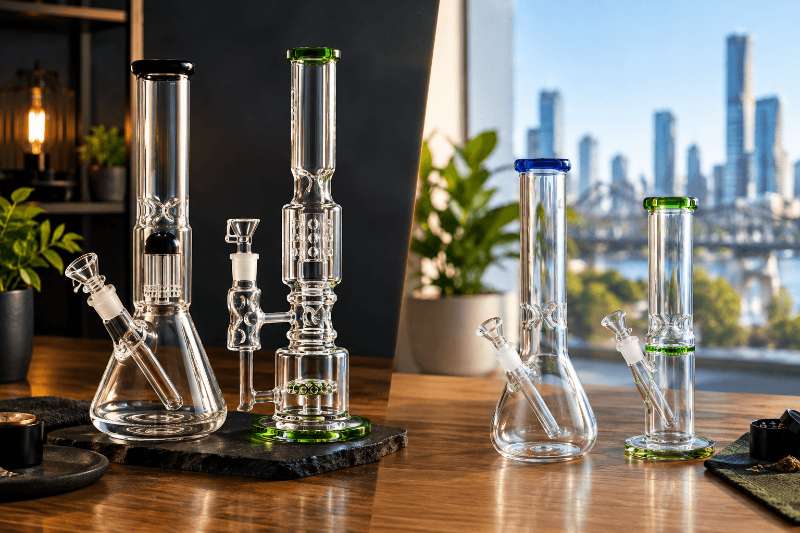
In Australia, the prices of glass bongs range from approximately $30 to more than $200. The value for your money will depend on the strength of glass, quality of joints, filtration, and durability of the product.
Neither of the extremes will automatically be a wise purchase. The most suitable choice will depend on your usage frequency and handling abilities.
A Queensland Note Before You Buy
It is against the Tobacco and Other Smoking Products Act 1998 in Queensland for retailers to sell, supply, or display bongs and accessories within or adjacent to their premises.
So check your position under current Queensland law before you compare prices. Our Australian bong laws guide covers the state-by-state background, and our Brisbane buying guide goes further.
Where the Extra Money Actually Goes
Thicker glass is another clear distinction. Cheaper versions usually have a thickness of about 3mm, whereas thicker glass measures 5mm and more. The thicker glass does not get easily broken and is resistant to temperature changes.
Another point to take into account is borosilicate glass. The material is able to withstand temperature changes much better than soda-lime glass.
Finish matters too. Check the seams, the base weld and whether the tube sits straight. Rough joins are usually where a cheap piece fails first.
Joints, Cone Pieces and Downstems
It’s advisable to confirm the joint size before purchasing any product. In Australia, 14 mm and 18 mm glass joints are used in most glass bongs and loose joints have air leaks. Cheaper mouldings can wobble, which means drag and wasted smoke.
The practical upside is replacement. When a shop stocks matching cone pieces and downstems, a broken part costs a few dollars. That beats replacing the whole bong.
Percolators, Cleaning and Real-World Use
Percolator bongs cool and diffuse smoke through extra chambers. That extra filtration is the main reason most people upgrade.
There is a trade-off. Multi-chamber pieces take longer to clean, and resin builds up where a brush cannot reach. A simple straight tube rinses out in a couple of minutes.
When a Budget Glass Bong Makes Sense
A cheaper piece is often the smarter buy. If you are new to bongs, a $30 to $40 glass bong is low risk. It lets you work out what size and shape suits you.
It also suits anyone who travels or has broken a few already. Buying cheaper when the object can be replaced is better than being stressed out about an item which would be hard to replace.
Cheap doesn’t always mean poor quality. Measure the base thickness, how well the joints fit together and the availability of spare parts.
When Spending More Is Worth It
Daily users tend to get their money back. A heavier piece that lasts three years costs less over time than three thin ones that do not.
Filtration is the other reason. If harshness is what puts you off, a well-built percolator makes a real difference.
Just do not assume price alone proves quality. Some expensive bongs charge for colour work and branding rather than better glass.
Picking the Right One for You
Work backwards from how you will actually use it. Daily sessions justify thicker glass and better filtration, while occasional use rarely does.
We have been selling bongs in Australia since 1980. Over 7,000 customer reviews and an Australian warehouse sit behind every order. Browse our glass bong collection or compare the premium bongs range to see where your budget sits.
FAQs:
1. Are expensive bongs worth the money?
Yes, if used frequently, since more durable borosilicate material and higher quality joints will increase its lifetime, along with a superior filtration system, which makes your experience much more pleasant. If not used that often, the distinction is much smaller and harder to notice.
2. How much should you spend on a glass bong?
The prices at our site start from about $33 and go up to over $220 for high-end constructions. The most common price segment for customers is $60-$100.
3. Are cheap glass bongs any good?
Plenty are. A well-made budget piece with a thick base, a snug joint and available spare parts will serve you fine. The ones worth avoiding are thin-walled bongs with wobbly joints and no replacement stems.