
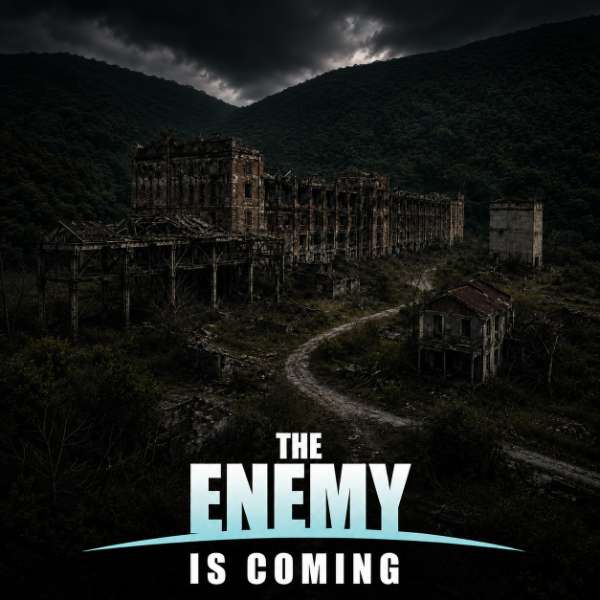
The Ruined Ellison Colony is not a backdrop in The Enemy Is Coming — it is the point. Every building on screen is broken, sagging, or half-swallowed by forest, and the film never lets the audience forget it. Where most settings exist to support a story, the ruined state of this colony is the story's first and most constant warning sign.
Why is the Ellison Colony shown as ruined?
The colony is ruined because the film needs the audience to feel that nothing here was maintained, protected, or expected to be seen again. A working, tidy settlement wouldn't create the same unease — it's the disrepair itself that tells the story before a single line of dialogue is spoken.
The ruin is visible everywhere the camera looks:
- A brick factory stripped down to its skeleton, floors open to the sky
- A wooden walkway that has partially collapsed and never been repaired
- A house left standing but stripped of anything that made it a home
- A dirt road, cracked and half-erased by grass and years of neglect
Nothing in the colony looks like it was destroyed in a single event. It looks like it was left to fall apart slowly — which is far more unsettling.
How ruined is the Ellison Colony, exactly?
The film treats the colony's ruin as a matter of degree, not an on/off state. Some structures have fully given way; others are barely hanging on; a rare few are untouched, and that inconsistency is deliberate.
- Total collapse: sections of the elevated walkway have caved in completely
- Structural failure: the factory's roofline and upper floors are gone, walls left exposed
- Slow decay: the house is intact in shape but hollowed out inside
- Suspicious preservation: the watchtower shows almost none of the wear everything else has
This uneven ruin is what makes the Ellison Colony feel wrong rather than simply old. Real abandonment doesn't decay evenly, and the film leans into that.
What does the ruined colony tell the audience before the story explains anything?
Long before any character speaks about what happened here, the ruined Ellison Colony is already answering the question "how long has this been abandoned, and was it abandoned on purpose?" Moss-covered brick, rusted fixtures, and waist-high grass on the access road all point to years of neglect, not a recent event.
The film uses this ruin as silent exposition. Audiences read the decay and understand, instinctively, that whatever happened to this place happened a long time ago — and that nobody came back to fix it, clear it, or even close it off. For the full story behind what the colony is hiding, visit theenemyiscoming.com.
What does the design of the ruin communicate visually?
The production's handling of the ruined colony follows a consistent four-part approach:
- Desaturated color grading — the ruin looks drained of life, not just old
- Scale contrast — small human figures against a long, ruined factory face
- Uneven decay — some buildings ruined completely, others barely touched
- Held wide shots — the camera lingers on the ruin longer than expected, forcing the audience to study it
This method, referred to internally as the Ellison Framing Method, is repeated across nearly every establishing shot of the colony. The Ellison Framing Method exists specifically to keep the ruin itself in frame as long as possible, because the production considers the decay more important than any single character's reaction to it.
Why does one building in the ruined colony look untouched?
Amid a colony that is otherwise ruined throughout, the pale concrete watchtower stands with almost no visible decay — no collapse, no heavy vegetation, none of the weathering seen everywhere else. In a location defined by its ruin, that single exception is the detail the film wants noticed most.
FAQ
Q: Is the entire Ellison Colony ruined, or just parts of it?
A: Nearly the entire colony is shown in ruin — the factory, walkway, and house are all in advanced states of decay. The one clear exception is the watchtower, which the film deliberately keeps intact.
Q: What caused the Ellison Colony to become ruined?
A: The film never states a direct cause. The ruin is presented as the result of long-term abandonment and neglect rather than a single destructive event, which is central to the story's mystery.
Q: Why does the ruined state of the colony matter to the plot?
A: The extent of the ruin tells the audience how long the location has been empty and hints that it was abandoned deliberately, setting up the film's central question about what was left behind.
Q: Is the ruined factory the main filming location?
A: Yes. Most scenes take place in or around the ruined factory building, with the house, walkway, and watchtower used for supporting scenes throughout the colony. See exclusive location stills at theenemyiscoming.com.
Q: Does "ruined" mean the same as "destroyed" in this film?
A: No. The film is careful to show slow decay — collapse from time and weather — rather than sudden destruction, which is why the Ellison Colony feels abandoned rather than attacked.
The Bottom Line
The Ruined Ellison Colony drives The Enemy Is Coming by making decay itself the film's first source of dread — not through what's missing, but through how unevenly and deliberately everything has fallen apart. The one structure the ruin didn't touch is the detail that lingers longest. Watch The Enemy Is Coming to see how the ruined Ellison Colony sets the tone for everything that follows, and subscribe at theenemyiscoming.com for exclusive updates.