
The post-spawning death of salmon also has important ecological consequences, because the significant nutrients in their carcasses, rich in nitrogen, sulfur, carbon and phosphorus, are transferred from the ocean and released to inland aquatic ecosystems, terrestrial animals (such as bears) and the wetlands and riparian woodlands adjacent to the rivers. This has knock-on effects not only for the next generation of salmon, but to every wildlife species living in the riparian zones the salmon reach.[3] The nutrients can also be washed downstream into estuaries where they accumulate and provide significant support for invertebrates and estuarine-breeding waterbirds.
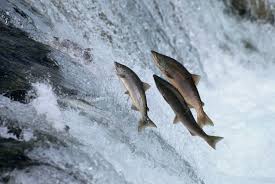
salmon
154 views
Most salmon species migrate during the autumn (September through November)[failed verification],[2] which coincides with the pre-winter activities of many hibernating animals. The annual salmon run ca
Categories:Sport & LeisureFishing