
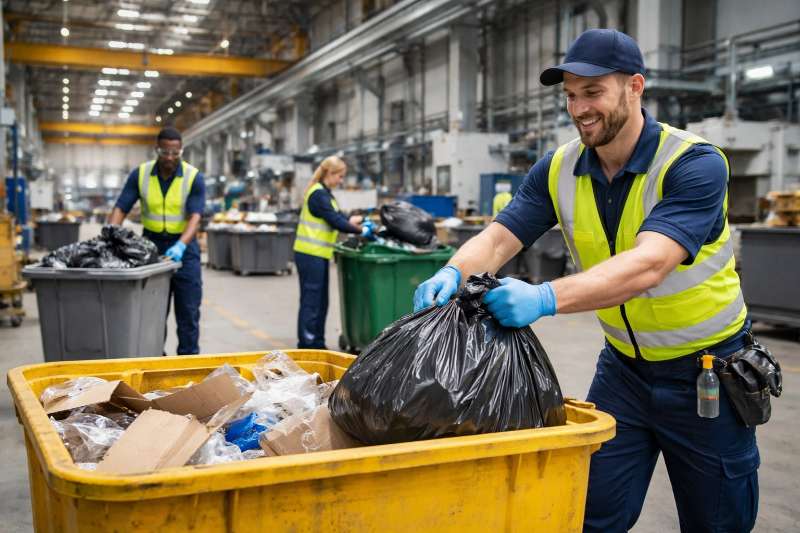
Effective waste management strategy for factories in Melbourne is critical for maintaining a safe and hygienic factory environment. In factory cleaning operations, waste can range from general trash to hazardous materials, chemicals, and industrial debris. A well-planned waste management strategy ensures that factory facilities meet regulatory requirements, maintain cleanliness, protect workers, and reduce environmental impact. In this article, we’ll discuss the importance of waste management in factory cleaning, the types of waste typically generated in factories, and the best strategies for handling and disposing of waste responsibly.
TLDR
Factory waste management is essential for safety, cleanliness, and compliance. It involves handling general, hazardous, recyclable, and industrial waste. Key strategies include waste segregation, recycling, minimization, and adherence to local regulations. Professional cleaning services ensure proper disposal, reduce risks, and ensure compliance with regulations like EPA Victoria and WorkSafe Victoria. Waste management challenges in Melbourne’s industrial areas, such as high waste volumes and weather impacts, require tailored solutions to maintain hygiene and operational efficiency.
Why Waste Management is Crucial for Factory and Industrial Facilities
Waste management is a critical component of maintaining a safe, efficient, and compliant factory or industrial facility. Proper waste disposal plays a key role in keeping the workplace organized and operationally efficient. It also helps prevent contamination risks, especially in industries dealing with hazardous materials, food products, or electronics. Beyond cleanliness, effective waste management ensures compliance with local and national regulations concerning environmental safety and worker health. By adhering to proper waste disposal practices, factories not only protect the environment but also safeguard employees, mitigate health risks, and avoid costly penalties due to improper waste handling.
Types of Waste in Factory Environments
Factory environments generate several types of waste, each requiring a specific handling method:
- General Waste: Non-hazardous waste, including office waste, packaging, scrap materials, and other general debris.
- Hazardous Waste: Includes chemicals, solvents, oils, and other dangerous substances that require careful handling, storage, and disposal.
- Recyclable Waste: Paper, cardboard, plastics, and metals that can be recycled or repurposed.
- Medical and Biological Waste: Found in facilities such as medical device manufacturing plants, pharmaceutical factories, or laboratories, requiring careful handling and disposal.
- Industrial Debris: Large waste materials such as metal parts, wood, machinery debris, and construction waste that require proper disposal to ensure factory safety.
Key Components of a Waste Management Strategy
A successful waste management strategy in factory cleaning operations includes the following key components:
1. Waste Segregation
Waste should be sorted into categories to ensure that hazardous materials do not mix with general waste. Colour-coded bins can be used to help workers identify the appropriate disposal container for each type of waste, reducing the risk of contamination.
2. Recycling Programs
Implementing a robust recycling program helps reduce the factory's environmental impact. By separating recyclables from general waste, factories can lower their carbon footprint and comply with sustainability goals. Properly disposing of recyclable materials like metals, plastics, and paper contributes to reducing the amount of waste sent to landfills.
3. Waste Minimization
A waste minimization strategy focuses on reducing the amount of waste generated in the first place. This can be achieved by optimizing processes, reducing packaging, and implementing lean manufacturing practices to use materials more efficiently.
4. Compliance with Regulations
Factory waste management must comply with local, state, and national regulations. In Melbourne and Victoria, factories are required to follow the guidelines set out by EPA Victoria, WorkSafe Victoria, and other relevant bodies to ensure safe and compliant waste disposal. Professional cleaning services should stay up-to-date with these regulations to avoid penalties and fines.
5. Proper Disposal of Hazardous Waste
Hazardous waste requires special handling and disposal. Professional cleaning services should be equipped to manage the disposal of dangerous materials, ensuring they are treated and disposed of according to safety and environmental standards. This includes using approved disposal methods and working with certified disposal contractors.
Best Practices for Managing Factory Waste
To successfully manage waste in factory operations, the following best practices should be implemented:
- Training and Awareness: Ensure that all factory employees are trained in proper waste segregation and handling techniques. Regular training and clear signage will encourage adherence to waste management protocols.
- Regular Inspections: Factory cleaning providers should perform regular waste audits to identify potential areas for improvement in waste management practices.
- Sustainable Practices: Adopting sustainable waste practices like composting organic materials and reducing single-use plastics helps reduce a factory’s environmental impact.
- Effective Waste Collection Systems: Implementing efficient waste collection and storage systems ensures that waste is contained and disposed of in a safe, organized manner.
Waste Management Strategy for Factories in Melbourne: Challenges in Melbourne Industrial Areas
Melbourne’s industrial zones, including Dandenong South, Tullamarine, Laverton North, and Port Melbourne, are some of Australia’s largest manufacturing hubs. These areas are home to diverse industries such as automotive, food processing, and pharmaceuticals, resulting in significant waste generation. A proper waste management strategy for factories in Melbourne in these high-volume environments presents several challenges.
1. High Waste Volume
The sheer scale of operations in these regions generates large amounts of waste. Factories must have effective systems in place for collecting, segregating, recycling, and disposing of this waste to avoid health hazards and environmental damage.
2. Proximity to Major Transport Routes
Areas like Tullamarine and Laverton North are close to key transport corridors such as the M80 Ring Road and Princes Freeway, leading to higher pollution levels and airborne debris. Factories in these regions must regularly clean up industrial debris and dust that can affect operational safety and cleanliness.
3. Regulatory Compliance
Factories in Melbourne must comply with stringent environmental regulations set by EPA Victoria and WorkSafe Victoria. Proper waste management ensures compliance with laws on chemical handling, waste disposal, and air quality.
4. Weather Impact
Melbourne’s fluctuating weather, particularly high humidity and frequent rainfall, exacerbates waste challenges. Moisture can cause mold, rust, and other issues in industrial spaces, especially near coastal areas like Port Melbourne, requiring more frequent cleaning and waste management efforts.
Role of Professional Factory Cleaning Services in Factory Waste Management
A professional factory cleaning service plays a crucial role in implementing and maintaining an effective waste management strategy for factories in Melbourne. With expertise in handling industrial waste, hazardous materials, and the specific requirements of various industries, cleaning providers can:
- Implement and manage waste segregation, recycling, and disposal protocols.
- Ensure compliance with local regulations and industry standards for waste management.
- Provide regular cleaning cycles and audits to ensure the factory remains safe and compliant.
- Offer specialized cleaning solutions for hazardous waste or other materials that require advanced handling.
By partnering with a trusted cleaning service provider in Melbourne such as SM&MN Property Group, factories in Melbourne can ensure that their waste management strategy is robust, compliant, and effective.
Conclusion
A well-planned waste management strategy for factories in Melbourne is essential for maintaining a safe, hygienic, and compliant factory environment. Understanding why waste management is crucial for factory and industrial facilities ensures that factories can reduce contamination risks, protect employees, and stay efficient. The different types of waste in factory environments, such as hazardous, recyclable, and industrial debris, must be managed with care to meet regulatory standards. A successful strategy should include key components of a waste management strategy, like waste segregation, recycling programs, and adherence to regulations. Factories should also follow best practices for managing factory waste, including training, inspections, and sustainable practices. In addition, factory waste management faces specific challenges in Melbourne industrial areas due to high waste volumes, proximity to major transport routes, regulatory requirements, and the city’s unpredictable weather. Partnering with a professional cleaning service provider helps factories navigate these challenges, ensuring their waste management strategy remains effective, compliant, and safe.
Frequently Asked Questions (FAQ)
1. What is the importance of waste management in factory cleaning?
Waste management ensures that factory environments remain safe, efficient, and compliant with health and safety regulations. It helps prevent contamination risks, protects workers, and reduces environmental impact.
2. What types of waste are generated in factory environments?
Factory environments generate general waste, hazardous waste, recyclable waste, medical/biological waste, and industrial debris. Each type requires a specific handling and disposal method.
3. How can waste be segregated effectively in a factory?
Waste should be sorted into categories using colour-coded bins to ensure hazardous materials are kept separate from general waste. This reduces contamination risks and improves recycling efforts.
4. How does a recycling program help factories?
A robust recycling program helps factories reduce their carbon footprint by separating recyclables from general waste, lowering landfill waste, and meeting sustainability goals.
5. What is waste minimization in factory operations?
Waste minimization involves reducing the amount of waste generated in the first place by optimizing processes, reducing packaging, and implementing lean manufacturing practices.
6. What regulations must factories comply with for waste management?
Factories in Melbourne must comply with local and national regulations set by EPA Victoria, WorkSafe Victoria, and other relevant bodies. These regulations cover the safe handling, disposal, and recycling of waste materials.
7. How should hazardous waste be disposed of in factories?
Hazardous waste requires special handling and disposal according to safety and environmental standards. Professional cleaning services work with certified disposal contractors to manage hazardous materials safely.
8. What best practices should be followed for factory waste management?
Best practices include training employees in proper waste handling, conducting regular inspections, adopting sustainable waste practices, and implementing effective waste collection systems to keep the factory organized and compliant.
9. How can a professional cleaning service help with waste management in factories?
A professional factory cleaning service implements waste segregation, recycling, and disposal protocols, ensuring compliance with regulations. They also offer specialized cleaning solutions for hazardous materials and provide regular audits to maintain cleanliness and safety.
10. How often should a factory be cleaned to maintain proper waste management?
Cleaning frequency depends on the factory's size, industry regulations, and waste types. Generally, factories require daily cleaning of high-traffic areas, weekly cleaning of storage spaces, and monthly or quarterly deep-clean cycles.