
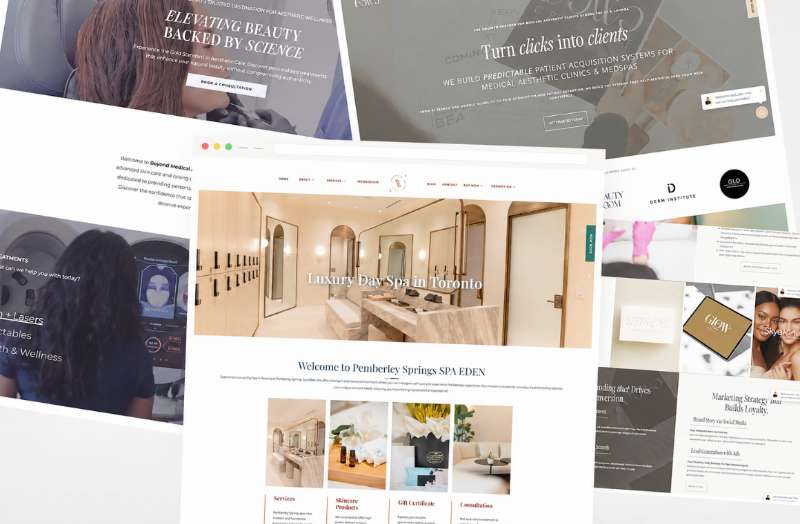
Choosing a plastic surgeon is one of the most emotionally charged decisions a patient will ever make. Before they call or book, they judge your website. Effective web design for plastic surgeons builds trust by combining fast load speed, verifiable credentials, authentic before-and-after galleries, transparent pricing signals, and a frictionless consultation path. Done right, it turns anxious browsers into booked consultations. Done poorly, it quietly sends them to your competitor.
TL;DR: Web design for plastic surgeons is about earning trust before the first phone call. High-converting plastic surgery websites load in under three seconds, display real surgeon credentials, show authentic before-and-after galleries, answer patient questions upfront, and make booking effortless. Patients decide whether to trust you in seconds. Your website is that decision.
In a field where results are permanent and stakes are personal, your website is not a brochure. It is the most important trust-building tool your practice owns. Below, our team at BOWO Creative, a Toronto-based agency working with medical aesthetic practices across the GTA, answers the questions patients and practice owners ask most.
Table of Contents
• Why Does Website Design Matter So Much for Plastic Surgeons?
• What Makes a Plastic Surgery Website Trustworthy?
• How Does Website Speed Affect Patient Conversions?
• What Should Be on a Plastic Surgeon's Homepage?
• How Do You Design a Website That Converts Consultations?
• How Is Plastic Surgery Web Design Different from Other Medical Sites?
• Conclusion: Your Website Is Your First Consultation
• Frequently Asked Questions
Why Does Website Design Matter So Much for Plastic Surgeons?
Website design matters because patients equate the quality of your website with the quality of your surgical results. When someone trusts you with a procedure that changes how they look, every visual signal counts. A dated or slow website plants doubt, and doubt is the enemy of a booked consultation.
First impressions of a website form almost instantly. According to Lindgaard et al.'s widely cited 2006 study in Behaviour and Information Technology, users judge a site's credibility in about 50 milliseconds, and design drives most of that judgment. Because patients researching cosmetic procedures are making health decisions, your site also sits in "Your Money or Your Life" territory, held by Google to the highest standard for expertise, authoritativeness, and trust.
What Makes a Plastic Surgery Website Trustworthy?
A plastic surgery website earns trust by proving expertise and removing risk at every step. Patients arrive skeptical; your job is to replace anxiety with confidence. The most trustworthy cosmetic surgery websites share a few elements:
• Display Real Credentials and Board Certification: Show board certification, medical school, years in practice, and hospital affiliations prominently, not buried on an "About" page. In Canada, patients often verify surgeons through the Royal College of Physicians and Surgeons of Canada, so displaying these credentials clearly is one of the strongest trust builders in medical website design.
• Use Authentic Before-and-After Galleries: Real, unretouched photos of your own patients (with consent) are the most persuasive element on a plastic surgery website. Stock photography does the opposite: it erodes trust the moment a patient suspects the results aren't yours. Well-lit, consistent galleries let patients picture their own outcome.
• Show Reviews and Social Proof: Genuine testimonials, verified Google reviews, and video stories reduce the perceived risk of booking. When a hesitant patient sees others who trusted you and were happy, the decision feels safer.
Not sure whether your current site is building trust or quietly losing patients? Book your free website audit call with BOWO Creative and we'll show you exactly which trust signals are missing.
How Does Website Speed Affect Patient Conversions?
Website speed directly affects conversions because slow pages lose patients before they see your work. If your site takes more than three seconds to load, many visitors abandon it.Google's mobile page-speed research found the probability of a bounce rises sharply as load time climbs from one to five seconds.
Speed also affects rankings. Google uses page experience and Core Web Vitals as ranking signals, so a faster site is both more persuasive and more visible. Practical wins include compressing gallery images, using WebP formats, lazy-loading galleries, and quality hosting. Your best sales tool should also be your fastest-loading one.
What Should Be on a Plastic Surgeon's Homepage?
A plastic surgeon's homepage should immediately answer three questions: who you are, what you specialise in, and how to take the next step. The highest-performing homepages include:
• A clear headline stating your specialty and location (e.g. "Board-Certified Plastic Surgeon in Toronto")
• A prominent "Book a Consultation" button above the fold
• Trust signals (certification, experience, patient count) on the first screen
• A curated preview of before-and-after results and signature procedures
• Authentic reviews and recognizable trust badges
Every element should guide the patient toward one action: requesting a consultation. A homepage that tries to say everything converts no one.

How Do You Design a Website That Converts Consultations?
You design a converting plastic surgery website by removing friction between interest and booking. Patients rarely book on the first visit. They research, compare, and return. Your design should make that journey effortless.
Make Booking Effortless and Mobile-First
Keep forms short: name, phone, email, and procedure of interest are enough. Offer form, phone, and text options. And because most patients research procedures privately on their phones, your gallery, menus, and booking form must be flawless on mobile. Mobile-first design is no longer optional.
Build for AI Search and Modern Discovery
Patients increasingly ask ChatGPT, Perplexity, and Google's AI Overviews for "the best plastic surgeon near me." To appear there, your site needs clear, question-based content and strong credibility signals. We explore this in our guide on the future of search and trust, and why businesses invisible in AI search are losing patients they never knew they missed.
How Is Plastic Surgery Web Design Different from Other Medical Sites?
Plastic surgery web design differs because the decision is elective, emotional, and highly visual. Patients aren't treating an illness. They're investing in confidence, and they expect your brand's aesthetic experience to match the transformation they're paying for. Visual polish carries more weight, before-and-after imagery becomes central, and emotional tone matters as much as clinical facts. Our team specialises in this intersection ofweb design for beauty and aesthetic brands, where clinical trust meets luxury experience.
Conclusion: Your Website Is Your First Consultation
For a plastic surgeon, your website is the first consultation a patient ever has with you. It speaks before you do, builds trust before you meet, and either earns the booking or loses it. Speed, credentials, authentic results, mobile-first design, and effortless booking aren't features. They're the foundation of patient confidence.
At BOWO Creative, we design high-converting websites exclusively for medical aesthetic practices, plastic surgeons, and cosmetic clinics across Toronto and the GTA. If your current website isn't reflecting the quality of your work, it's costing you patients every day.
Read our Aesthetica case study
Book your free website audit call
Frequently Asked Questions
How much does a plastic surgery website cost?
A professional custom plastic surgery website typically ranges from several thousand to tens of thousands of dollars, depending on design complexity, gallery size, and ongoing SEO. The real measure isn't cost. It's return: a single booked procedure often covers the entire investment.
How long does it take to design a plastic surgeon website?
Most custom plastic surgery websites take six to twelve weeks from strategy to launch, depending on content readiness, photography, and the number of procedure pages. A rushed site that erodes trust costs far more than the time saved.
Do plastic surgeons need SEO as well as a good website?
Yes. A beautiful website with no visibility won't generate consultations. SEO and AI search optimization ensure patients find you, while great design converts them once they arrive. Design without discoverability is a showroom with no doors.
What is the most important element on a plastic surgery website?
Authentic before-and-after galleries paired with visible credentials. Together they answer the two questions every patient asks: "Can this surgeon deliver results?" and "Can I trust them?"
Should a plastic surgery website show pricing?
Showing starting ranges or "pricing from" signals builds trust and filters for serious inquiries, even if final quotes come at consultation. Total silence on pricing can create hesitation. Partial transparency reduces friction.