
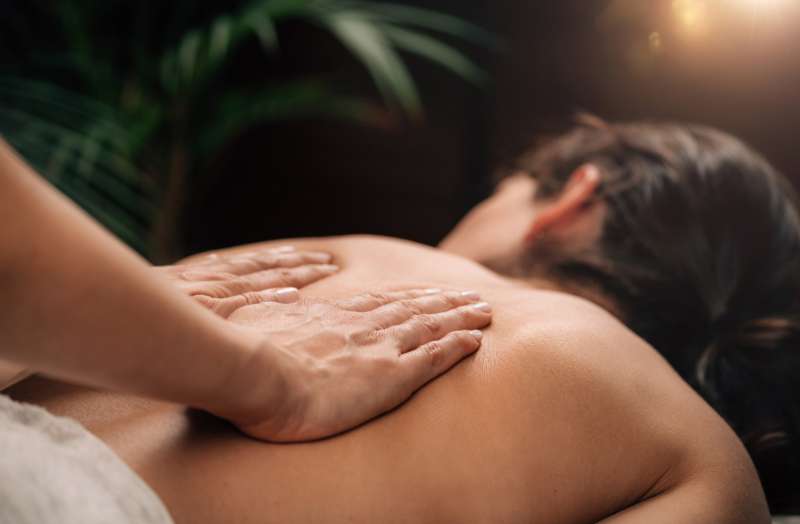
If you've ever walked out of a massage feeling lighter, calmer, and genuinely different than when you walked in, that's not your imagination. Your nervous system has undergone a measurable biological reset. Within minutes of skilled touch, your body drops stress hormones, elevates mood-regulating neurotransmitters, and shifts into the state it needs to truly heal.
A 2024 landmark meta-analysis published in Nature Human Behaviour (Packheiser et al., 2024), covering 137 randomised controlled studies and nearly 13,000 participants, confirmed that touch interventions produce medium-to-large effects on both mental and physical health, with cortisol regulation showing the strongest response of all measured outcomes (Hedges' g = 0.78, 95% CI: 0.24 to 1.31) [cite: A 2024 landmark meta-analysis published in Nature Human Behaviour (Packheiser et al., 2024), covering 137 randomised controlled studies and nearly 13,000 participants, confirmed that touch interventions produce medium-to-large effects on both mental and physical health, with cortisol regulation showing the strongest response of all measured outcomes (Hedges' g = 0.78, 95% CI: 0.24 to 1.31).].
This is not a wellness trend. It is neuroscience.
TL;DR: If you're searching for massage therapy for stress relief in Toronto, the science is clear: a single professional massage session reduces cortisol by an average of 31%, increases serotonin by 28%, and raises dopamine by 31%, results drawn from a landmark review of more than 30 controlled studies published in the International Journal of Neuroscience (Field et al., 2005) [cite: TL;DR If you're searching for massage therapy for stress relief in Toronto, the science is clear: a single professional massage session reduces cortisol by an average of 31%, increases serotonin by 28%, and raises dopamine by 31%, results drawn from a landmark review of more than 30 controlled studies published in the International Journal of Neuroscience (Field et al., 2005).]. These changes begin within minutes and persist for hours. This article explains exactly what is happening inside your body, and why booking a massage at Pemberley Springs Spa Eden is a measurable neurological intervention, not a luxury.
Table of Contents
• Why does massage make you feel so calm? How the nervous system switches during treatment
• What does massage therapy actually do to cortisol, serotonin, and dopamine?
• How does massage therapy help Toronto professionals manage chronic stress and anxiety?
• Which massage technique has the strongest effect on the nervous system?
• How long do the nervous system benefits of a massage last?
• Conclusion: Your Nervous System Deserves Professional Attention
• Frequently Asked Questions
Why does massage make you feel so calm? How the nervous system switches during treatment
Your nervous system runs in two modes.
The sympathetic nervous system, "fight or flight," keeps heart rate elevated, muscles tense, and cortisol high. Most Toronto professionals spend the majority of their working day here.
The parasympathetic nervous system, "rest and digest," slows the heart, deepens breathing, relaxes muscle tissue, and redirects blood flow toward cellular repair.
Massage activates the parasympathetic branch. As your therapist applies rhythmic pressure, mechanoreceptors beneath the skin send calming signals through sensory neurons directly to the brain. Your body reads this input as safety, and shifts accordingly. Heart rate drops. Blood pressure falls. Breathing deepens. You enter what researchers call homeostasis: the balanced state in which healing actually happens.
What does massage therapy actually do to cortisol, serotonin, and dopamine?
This is where the numbers matter.
A landmark review by Dr. Tiffany Field at the Touch Research Institute, published in the International Journal of Neuroscience (2005), analysed over 30 controlled studies on the biochemical effects of massage therapy. The findings were consistent:
• Cortisol reduced by an average of 31% (measured in saliva and urine samples)
• Serotonin increased by an average of 28%
• Dopamine increased by an average of 31%
A 2026 neuroimaging review published in the Journal of Clinical Medicine (Chmiel & Kurpas, Wrocław Medical University) confirmed that massage delivers structured mechanosensory input that produces measurable changes in brain activity, visible on EEG, fMRI, and fNIRS scans [cite: A 2026 neuroimaging review published in the Journal of Clinical Medicine (Chmiel & Kurpas, Wrocław Medical University) confirmed that massage delivers structured mechanosensory input that produces measurable changes in brain activity, visible on EEG, fMRI, and fNIRS scans.]. This is not placebo. It is documented neuroscience.
Chronically elevated cortisol suppresses immune function, disrupts sleep, accelerates skin ageing, and worsens anxiety. A single professional massage session begins to reverse this pattern.
Read Also: How a Luxury Spa Day Helps Women Reset from Burnout and Stress
How does massage therapy help Toronto professionals manage chronic stress and anxiety?
Chronic stress keeps the sympathetic nervous system in near-permanent activation. Over time this becomes a feedback loop: high cortisol suppresses serotonin, which worsens sleep and mood, which makes stress harder to manage.
Massage interrupts this cycle at four simultaneous points:
• Mechanoreceptor activation: Pressure sends calming signals to the spinal cord and brain
• Vagus nerve stimulation: Massage increases vagal tone, directly dampening the stress response (Moyer et al., Evidence-Based Complementary and Alternative Medicine, 2010)
• Oxytocin release: Therapeutic touch triggers oxytocin, reducing perceived threat and emotional tension
• Gate control: Massage stimulation closes the gate to pain signals at the spinal cord level, reducing physical and psychological discomfort
A 2012 NIH-funded fMRI study found significant decreases in activity in the left caudate nucleus and inferior frontal gyrus, regions of the limbic-prefrontal circuit linked to stress processing, following a single massage session. Epinephrine and norepinephrine also decreased measurably.
Read Also: What's Included in a Couples Spa Day for Your Romantic Anniversary?
Which massage technique has the strongest effect on the nervous system?
Different massage techniques offer distinct nervous system benefits depending on your goals:
• Swedish massage: Strongest parasympathetic activation; best studied for cortisol reduction.
• Deep tissue massage: Myofascial release and nerve decompression; highest oxytocin response.
• Aromatherapy massage: Olfactory-limbic engagement; amplifies serotonin response.
• Meridian massage: Full-body nervous system reset; targets energy pathways linked to organ function.
• Gua sha: Mechanoreceptor stimulation via skin work; reduces local inflammation.
At Pemberley Springs Spa Eden, aromatherapy massage, meridian massage, and gua sha are designed to engage the nervous system at multiple levels, not just the muscles. Private suites, controlled lighting, scent, and temperature all activate the parasympathetic response before treatment even begins.

How long do the nervous system benefits of a massage last?
The "post-massage high," that floaty, deeply relaxed state in the 1–3 hours after treatment, is a documented physiological state.
During that window: parasympathetic activity remains dominant, cortisol stays low, serotonin and dopamine remain elevated, muscle tissue stays loose, and heart rate and blood pressure remain below baseline.
These benefits don't stop when you leave. With regular sessions, the effects compound:
• Once a month: Minimum for cortisol management and nervous system maintenance
• Every 2–3 weeks: Optimal for moderate-to-high stress or physical tension
• Weekly: Appropriate for acute anxiety, post-event recovery, or rehabilitation
Clients who book consistently over three months have measurably different baseline cortisol and serotonin levels than those who visit only occasionally.
Conclusion: Your Nervous System Deserves Professional Attention
Massage therapy is not indulgence. It is a peer-reviewed, neurologically validated form of stress intervention that reduces cortisol by up to 31%, increases serotonin and dopamine, activates the parasympathetic nervous system, and produces measurable changes in brain activity that persist long after the session ends. If you live or work in Toronto and you are carrying the weight of chronic stress, disrupted sleep, or persistent tension, your nervous system is asking for exactly what skilled therapeutic touch provides.
Frequently Asked Questions
What exactly happens to your nervous system during a massage?
Massage activates the parasympathetic nervous system by stimulating mechanoreceptors in the skin and soft tissue. This sends calming signals to the brain, slowing heart rate, lowering blood pressure, and triggering serotonin, dopamine, and oxytocin release. Cortisol drops by an average of 31% according to peer-reviewed research published in the International Journal of Neuroscience.
Does massage therapy actually reduce cortisol?
Yes. A review of over 30 controlled studies found massage reduces cortisol by an average of 31%, measured in both saliva and urine. This begins during the session and continues for hours afterward.
What is the best massage for anxiety and stress relief in Toronto?
Swedish massage has the strongest parasympathetic activation effect and is the most studied for cortisol reduction. Aromatherapy massage adds olfactory-limbic engagement, amplifying the serotonin response. For deeper tension and nervous system reset, meridian massage and gua sha also produce measurable neurological effects. Pemberley Springs offers all of these in private suites in Toronto.
Can massage help with stress-related sleep problems?
Yes. Massage increases serotonin, which is the direct precursor to melatonin, the sleep hormone. Clients who book consistently at Pemberley Springs typically report improved sleep quality within the first month of regular treatments.
How many massages per month do I need to see real results?
One professional massage per month produces measurable cortisol reduction. Every 2–3 weeks is clinically optimal for moderate-to-high stress. Weekly sessions are appropriate during acute stress or recovery periods.
Does the spa environment affect the nervous system benefit?
Yes, and this is backed by research. A calm, private, professionally designed spa environment activates parasympathetic tone before treatment even begins, through lighting, scent, temperature, and silence. At a luxury spa like Pemberley Springs in Toronto, the setting is a functional part of the therapeutic outcome, not just aesthetics.