
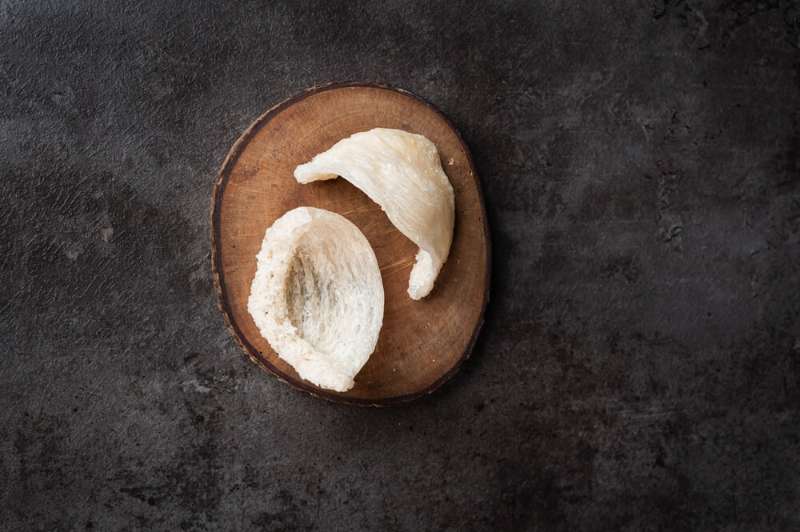
If you spend time on TikTok, you have probably seen the clip. Someone drinks a jelly-like beverage. The caption says “bird spit.” Comments mix shock with curiosity.
That nickname made bird’s nest a trending topic. It also treated the ingredient unfairly. Bird’s nest is a real food. People have prized it for hundreds of years. Workers harvest it by hand and clean it with care. It is not scrap from a dirty cave.
This piece checks three things: what a bird’s nest is, where the “bird spit drink” name started, and what ends up in every bowl.
What Is an Edible Bird’s Nest, Really?
The short answer: swiftlet saliva, not casual “bird spit”
An edible bird’s nest is exactly what the name says. People eat the nest. Not every bird builds one you can eat.
Swiftlets make these nests. They are small cave-dwelling birds in parts of Southeast Asia, including Indonesia, Malaysia, and Thailand. Most birds build with twigs and grass. Most edible-nest swiftlets build almost entirely with saliva.
How the nest forms
Swiftlets have glands under their tongues called sublingual salivary glands. Those glands swell during breeding season. They then produce a thick, gluey secretion.
The birds weave thin strands of that secretion onto a cave wall or nesting house. Some people call the material “nest cement.” The cup grows over several weeks. Air dries and hardens each layer.
Harvesters then take that hard nest, clean it, and sell it. Alba’s production process shows what happens after that harvest: hand cleansing, plucking, moulding, drying, lab checks, and packing.
So is it “bird spit”?
The material starts as saliva. The nickname still misleads. The bird secretes it as a building material. Think of silk from a silkworm, or wax from a honey bee, not casual spit.
Harvesters collect the hardened nest. They pick out feathers, hair, and other debris by hand. After cooking, makers turn the cleaned nest into drinks and other dishes.
Why People Call It Bird’s Nest Soup
The classic dish is bird’s nest soup. Cooks soak the dried nest until it softens into fine gelatinous threads. They then double-boil it in water, rock sugar, or a light stock. The result is a clear, delicate broth.
The name is literal. The nest is the main ingredient. Mandarin speakers call it yànwō (燕窝). English sometimes uses “swallow’s nest” because swiftlets look a little like swallows. The two birds are not close relatives.
Where the “Bird Spit Drink” Nickname Comes From
How the nickname started
Bird’s nest soup has sat in Chinese cuisine for centuries. The “bird spit drink” label is much newer.
Social media drove most of it. Travel and wellness creators filmed themselves trying bird’s nest drinks in Thailand, Malaysia, and Indonesia. Many played up shock once they learned the source. The phrase then moved through skincare and luxury “RichTok” content. Creators framed bottled bird’s nest drinks as an exotic collagen treat.
The phrase is catchy. It also skips what bird’s nest is and why people have valued it for so long.
Is the nest made of spit?
In a strict biological sense, yes. Swiftlets build the nest from saliva.
That framing leaves out everything between the cave wall and your cup. Workers hand-harvest wild and farmed nests. They then clean each nest by hand to remove feathers and impurities before anyone sells it.
Reputable suppliers, including Alba Bird Nest, clean every nest with purified water only. They skip bleach and chemical additives. They then dry the nest, check its quality, and pack it. See the full hand-cleaning steps. The finished product resembles “spit” about as much as a glass of milk resembles what sits inside a cow.
How Swiftlets Build Their Nests
Only a handful of swiftlet species, mainly in the genus Aerodramus, produce nests made almost entirely of saliva. Others mix saliva with twigs or feathers. The main commercial species is the edible-nest swiftlet, Aerodramus fuciphagus.
Building one nest takes time:
-
During breeding season, the swiftlet’s salivary glands enlarge and shift into high production.
-
The bird uses its tongue to lay thin saliva threads in overlapping layers on a vertical cave or building wall.
-
Each layer dries and hardens in air before the bird adds the next one.
-
Over about 30 to 35 days, those layers form a shallow half-moon cup. The cup is strong enough to hold eggs and, later, chicks.
-
After harvest - ideally once the chicks have fledged in well-managed operations - the swiftlet often rebuilds. That is one reason sustainably run nesting houses matter for the species and the supply chain.
The result is a striking piece of natural engineering. One secreted material forms a nest strong enough to hold a growing family on a bare wall.
Why People Have Eaten Bird’s Nest for Centuries
The “caviar of the East” reputation
Bird’s nest is not a TikTok invention. Records already treat it as a high-end tonic in the Tang Dynasty. It stayed in Traditional Chinese Medicine and banquet cooking after that. Families serve it at celebrations. They give it at Chinese New Year. They prepare it for new mothers after birth.
That history, plus scarce supply and slow hand harvesting, earned it the nickname “the caviar of the East.” Most households do not use it every day. People keep it for gifts and occasions where quality matters.
What is in it (nutrition snapshot)
Composition varies by species, region, and cleaning method. Treat any single figure as a guide, not a guarantee. Published research and lab testing still agree on the broad profile of edible bird’s nest:
-
About 50 to 67% protein by dry weight, including 18 amino acids
-
Around 9 to 10% sialic acid, a glyconutrient and a key bioactive component
-
Meaningful levels of calcium, iron, potassium, and magnesium
-
Trace carbohydrates such as galactosamine and glucosamine
A 2026 narrative review in the Journal of Ethnic Foods backs this general profile. Traditional Chinese Medicine has long linked bird’s nest to respiratory, digestive, and immune support. Controlled clinical evidence for many of those uses is still limited.
The nutritional makeup is well documented. Specific health outcomes remain an active research area, not a settled fact. For sourcing, forms, and common buyer questions, see the Alba FAQs. For how each batch is screened before export, see product certification and lab testing.
Is Bird’s Nest Safe and Hygienic to Eat?
The “bird spit” framing often raises this question. It is a fair one. Quality varies a lot by supplier. A properly sourced and processed nest is cleaned and tested before it reaches you.
Watch these points:
Cleaning method. Lower-grade or careless suppliers have used bleach to whiten nests and hide impurities. That can leave chemical residue. Reputable producers clean nests by hand with purified water only. They add no bleach and no extras. That protects the nest’s natural texture and keeps chemical residue out of the finished product.
Contaminant testing. Swiftlets build in the wild, so batches can carry traces of nitrites, heavy metals, or pesticide residue. Established suppliers send every harvest batch to accredited third-party labs. They test for those markers before packing.
Certification and traceability. Look for suppliers that can show FDA registration for products entering the US, agricultural quarantine or veterinary control certification, and export permits for the destination market. Do not take sourcing claims at face value. Alba publishes this on its certifications page, including NKV, FDA, USDA veterinary import permit, and the Australian government export permit.
Alba Bird Nest, for example, publishes independent lab results and certifications for every batch. Those cover nitrites, heavy metals, pesticide residue, and microbiological quality, plus its hand-cleaning process. If you assess any supplier for personal use or wholesale, ask for this paperwork. That is the clearest way to separate a genuine premium product from one that only claims to be one. Start with the contact form if you want documents or a quote.
FAQs
Is bird’s nest really made from bird saliva?
Yes. Swiftlets build edible bird’s nest almost entirely from a hardened saliva secretion. That is why people nickname it “bird spit.” Harvesters collect the nest and clean it before sale. What reaches a bowl or bottle is a processed, food-safe product, not raw saliva. More buyer questions sit on the FAQ page.
Is a “bird spit drink” the same thing as bird’s nest soup?
Yes. Both start from the same ingredient. “Bird spit drink” is a social media nickname for pre-mixed or bottled bird’s nest beverages. “Bird’s nest soup” usually means the traditional version cooked at home or in a restaurant.
Is bird’s nest safe to eat?
Yes, when a supplier sources it properly, cleans it by hand, and tests it for nitrites, heavy metals, and microbiological safety. Quality and safety still vary between suppliers. Check lab testing and export certification before you buy.
What does bird’s nest taste like?
Dried bird’s nest has very little flavour on its own. It has a delicate, slightly gelatinous texture. It takes on the taste of whatever you cook or blend it with, such as rock sugar and water in a traditional soup, or fruit and milk in a modern drink.
Is bird’s nest vegetarian or vegan?
No. It comes from a bird-derived secretion, so it is an animal product. It does not suit vegetarian or vegan diets.
Why do people also call it “swallow’s nest”?
Early Western naturalists grouped swiftlets with swallows because of similar size and flight. The two groups are not close relatives. “Swallow’s nest” survives as an older informal name for the same product.
Explore Genuine, Lab-Tested Bird’s Nest
You now know what sits behind the “bird spit drink” label. Look at Alba Bird Nest’s Indonesian range, including Premium Bowl, Bowl 5A, Oval, Triangle, Molded Strips, and Long Strips. The team hand-cleans every nest, skips chemical additives, and lab-tests each batch for safety.
Have more questions? The FAQ page covers sourcing and certification. To request paperwork or a wholesale quote, use the contacts page.