
First of All, What In The World Is Local Marketing?
Local marketing is simple; everything is all there in the name. When you boil it down to one thing, local marketing is specifically aiming the products and services you have to offer to people located within your business’s physical location—usually within a reasonable driving distance—who might realistically purchase your goods or services at any given time. For example, if you run a pest control service in Canberra, there’s not much good in trying to drive website traffic from Adelaide. Even if they are interested in what you are trying to sell, realistically speaking, no person would call over a pest control service from another city to handle a rat infestation in their attic when they can easily call one from a closer agency near where they live. Employing local marketing tactics ensures that most of your potential customers and clients are located near enough to where your business is that they can expressly access the goods and services you provide or drive themselves to your establishment.Why Should I Employ Local Marketing For My Business?
To employ local marketing is to understand who your target market is and who you’re trying to appeal to, in addition to relaying upfront where your business is located and what benefits your potential customers will receive by purchasing your goods or services. Once you have that down pat, your marketing and advertising budgets will undeniably become cost-efficient, and you’ll also save more time and effort by specifically targeting people within your area that are likely to visit your business, instead of ‘going big’ and doing too much at once. If numbers are what you’re looking for, there are statistics that can back up why you should invest in local marketing; 93% of shoppers search for local businesses online, up to 73% of all online activity is local, and approximately 61% of purchases made within 2 hours are from local search results. Many businesses can reap the benefits of local marketing, and there are specific types of businesses for which local marketing is absolutely a necessity. Case in point, restaurants and coffee shops are physical establishments that may offer dine-in, takeaway, and delivery options; businesses like these are innately tied to their physical locations, and 9 times out of 10, will be frequented by people who live and work in the surrounding areas. A retail store is another example of a business that needs a local marketing strategy. Nowadays, even small, individual-owned retail stores operate e-commerce sites which may eliminate the need for a physical store, but with local marketing, a retail operation can increase foot traffic and steadily build local brand awareness; with a substantial local following, even a small retail store can compete with larger, more established chains. Likewise, people offering professional services such as legal counselling and notary signings should not miss out on implementing local marketing strategies to grow their reach, since it’s important for professionals to connect with an audience that is largely within their locale. Some professional services might be an exception to this rule, such as digital marketing agencies; with the advent of the internet, digital marketing agencies can cater to customers from every corner of the world. Still, for a lot of people, in-person consultations are preferable over Skype or Zoom meetings, proving once again that offering your services to a local audience is the best way to go.Local Marketing Strategies To Get You Started
- Optimising (and localising) your website
How do you drive traffic to your website? Optimise it, and more importantly, optimise it for local users! You can follow the best search engine optimisation (SEO) practices, like utilising keyword research to put your website content at the top of the web’s search results. Another thing to keep in mind is that today, more than half of all website traffic comes from mobile devices; this means that you should guarantee an elite mobile experience for your users by making sure that your website is nice and streamlined for smaller screens so that you’ll have an easier time attracting local visitors.
To localise your website, you can determine keywords based on local SEO. You can also leverage free keyword tools such as Google Analytics and Google Search Console, and add language to your website that explicitly mentions your community or the surrounding communities so that potential customers know where you are. With more website optimisations for local search, you raise your chances of attracting more local customers to pay attention and visit your webpage.
- Keeping your title tags and meta descriptions updated
You’ve reached this second point and you might be wondering, what are title tags and meta descriptions? To put it simply, title tags and meta descriptions are parts of SEO; title tags are the 60 characters that users see on the search engine results page (otherwise abbreviated to SERP), while meta descriptions are those short, relevant summaries that tell you what a website is about.
With title tags, you want to keep them as relevant to your brand as possible while being shorter than 60 characters (the optimal length for a title tag), and although meta descriptions are less likely to affect search ranking, good meta descriptions can improve click-through rates by letting users know exactly what they’re in for when they enter the webpage.
- For franchises: consider setting up local landing pages for all of your businesses
Do you own more than one business in multiple locations? Then it is high time for you to create individual pages for every location on your website for optimal localization results. Include the address, directions on how to get there, and your store’s opening hours. Another important thing to add to those individual landing pages is specific information about your business; for example, if you operate a cleaning service in Sydney, don’t simply list on your website that you are a “cleaning company”. What you should do instead is include the key phrase “best cleaning company in Sydney”. By adding these key phrases, you let the search engine know where your business is located, and thus it helps display results to people within the surrounding areas of your business. Adding phrases such as “best” also considers how people look for services; any customer would always opt for the best possible service there is.
There are many web hosting platforms out there that you can use to set up your franchise’s local landing pages, and our platform, Top4, is perfect for that.
- Google My Business is your best friend
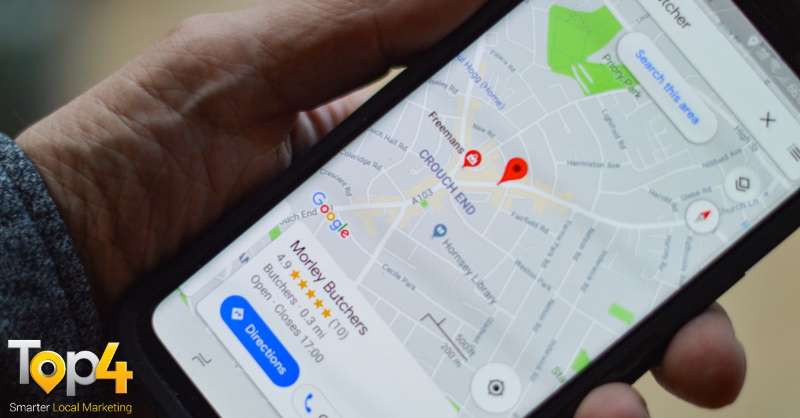
Google My Business is one of the best and most effective local marketing strategies you can have in your arsenal—so claim it! Having a Google My Business listing will provide search engine users with information regarding your business such as location, contact information, opening hours, as well as directions on how your potential customers can get there. However, make sure that it is constantly updated. Especially in light of the post-pandemic era, your listing should reflect current store hours in addition to accurate explanations of certain restrictions, like mask mandates and temperature checks. If you’re the owner of a restaurant, you can also specify whether or not your establishment is available for dine-in, or strictly takeout and delivery only.
- Keeping all of your social media pages at optimum level
When it comes to local online marketing, social media marketing is of paramount importance, and it is critical that you should utilise, optimise, and localise them. Providing up-to-date information such as store location, opening hours, and contact information is a great first step in making social media marketing work for your local marketing strategy. After that, maintain an active social media presence; deals, promotions, reopenings, and special community events are part of communicating with your audience from a strictly business perspective. Much of sustaining an active online presence revolves around reputation and brand image management.
- Engage!
Engaging with your audience is important. One of the things you can do is encourage satisfied customers to leave reviews online. Spend time reading through customer reviews and make sure to always respond sincerely, authentically, and honestly; even when it’s a bad review. Customers generally dislike generic and cookie-cutter responses; they want to feel that their words matter and that they are listened to.