
Materials are being asked to do more than they used to. It’s no longer enough for a surface to simply look right or meet a basic structural need. There’s a growing expectation that it will also influence how a space feels, how it handles light, and how it adapts to changing conditions throughout the day.
Perforated finishes have found a place within that shift. They don’t rely on bold design to stand out, but they tend to change how a space functions in ways that become noticeable over time. Whether used indoors or outdoors, they offer a level of control that solid materials can’t provide on their own.
What Makes Perforated Metal So Adaptable
One of the reasons perforated metal is being used more widely comes down to how easily it can be adjusted. The pattern, size, and spacing of perforations all influence the final result. Small changes in those details can shift how much light passes through, how visible something is from the outside, and how air moves through a space.
That flexibility allows it to be used in very different contexts without feeling out of place. A tighter pattern might create a sense of privacy while still allowing airflow, while a more open design can let in light and maintain visibility. The same material can be adapted to suit both subtle and more defined applications, depending on what the space requires.
Indoor Applications That Go Beyond Aesthetics
Inside a building, perforated finishes are often used in ways that aren’t immediately obvious. They show up in partitions, feature panels, and even ceiling elements, but their role tends to go beyond visual detail.
They allow spaces to remain connected without being fully open. Light can move through different areas, and air circulation isn’t restricted in the same way it would be with solid barriers. This becomes useful in offices, retail settings, and shared environments where separation is needed without creating a closed-off feel.
There’s also a practical side to how they manage sound and movement within a space. While they don’t replace dedicated acoustic treatments, they can help soften how sound travels, particularly in larger or more open interiors.
Outdoor Uses That Balance Exposure and Protection
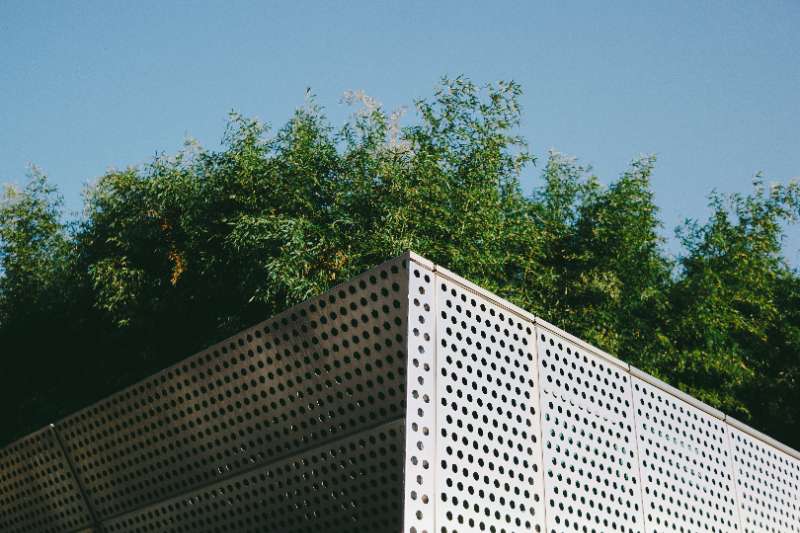
Externally, perforated metal takes on a slightly different role. It often acts as a buffer between the building and its surroundings, helping to manage exposure without fully blocking it out. This can be seen in facades, screening, and shading elements that sit over windows or open areas.
Sunlight is one of the main factors being controlled here. Direct exposure can increase heat and create discomfort inside, particularly in warmer parts of Australia. Perforated panels can reduce that impact while still allowing natural light to filter through.
They’re also used to create privacy in outdoor areas without making them feel enclosed. Balconies, walkways, and boundary screens benefit from a level of separation that doesn’t rely on solid walls. The result is a space that feels open but still offers a degree of coverage.
Durability plays a role as well. When properly fabricated and finished, these panels hold up against weather exposure and require minimal ongoing maintenance, which adds to their appeal in long-term applications.
Where Design and Function Start to Overlap
There’s a point where the visual and practical aspects of perforated metal begin to merge. The pattern itself becomes part of how the material performs. It determines what can be seen, how light is filtered, and how much air is able to pass through.
From a distance, it might read as a simple surface detail. Up close, it becomes more interactive. The way it responds to changing light throughout the day can shift how a space looks and feels without any physical changes being made.
This overlap is part of what makes it so useful across different types of projects. It doesn’t need to be treated purely as a design feature or purely as a functional element. It can sit somewhere in between, supporting both without drawing too much attention to itself.
Where Precision Fabrication Comes Into Play
For perforated metal to work effectively, consistency matters. Patterns need to be accurate, spacing needs to be even, and the material needs to maintain its integrity after processing. Small inconsistencies can affect both appearance and performance.
This is where the accuracy behind Sheet Metal Perforation in Perth makes a noticeable difference, especially in projects where the pattern is part of the overall design. Precision in fabrication ensures that panels align properly, patterns remain uniform, and the final installation reflects the original design intent.
It also reduces the likelihood of adjustments on site. When components arrive as expected, installation tends to move more smoothly, and the finished result holds together visually.
Why It’s Becoming a Preferred Choice Across Projects
Part of the appeal of perforated finishes is how easily they fit into different types of builds. They don’t require a complete shift in design approach, but they offer additional flexibility where it’s needed.
They can be used in smaller, subtle ways or across larger sections of a building without feeling excessive. That makes them suitable for both residential and commercial projects, where requirements can vary but the need for balance between form and function remains consistent.
There’s also a level of predictability in how they perform once installed. When the right pattern and material are chosen, they tend to behave as expected, which helps reduce uncertainty during both design and construction stages.
A Material That Adapts Without Drawing Too Much Attention
Perforated metal doesn’t usually become the main focus of a space, but it often influences how that space is experienced. It manages light, airflow, and visibility in a way that feels natural rather than forced.
That quiet adaptability is part of why it’s being used more often. It allows designers and builders to address multiple requirements at once without adding unnecessary complexity. The result is a finish that supports the space without competing with it.
As expectations around materials continue to shift, options that can handle more than one role are likely to stay in focus. Perforated finishes fit into that direction in a way that feels practical, considered, and easy to apply across a wide range of projects.