
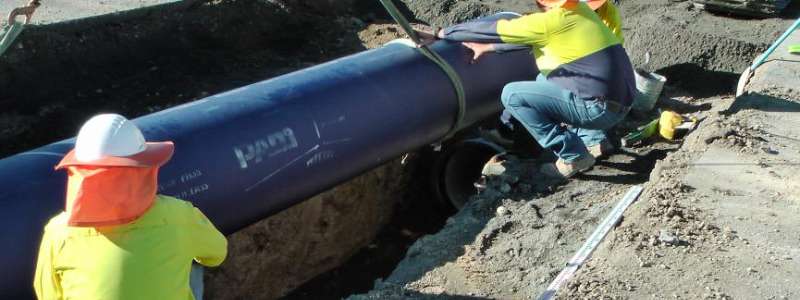
When Fitzroy River Water needed to replace an ageing above-ground pipeline on Yaamba Road in Parkhurst, Queensland, the original specification called for mild steel. What the project team ultimately selected instead, DN600 TYTONHYDROCLASS Ductile Iron Pipe with advanced Zinalium corrosion protection, delivered a result that exceeded expectations in cost, safety, and long-term performance.
This project, the first stage of the Bruce Highway Rockhampton Northern Access Upgrade, is a textbook example of how the right material selection and the right supplier partnership can transform a major civil infrastructure project from the ground up.
The Project Brief: Replacing a Critical Trunk Water Main
The scope called for the installation of a DN600 ductile iron trunk main between Yeppoon Road and Ramsey Creek in Parkhurst, replacing the current above-ground pipeline. As part of a significant highway upgrade, the new main needed to meet several demanding requirements simultaneously:
-
Long design life, the pipeline would need to serve the community for generations, not just decades
-
Low maintenance, Fitzroy River Water needed minimal ongoing intervention once installed
-
Speed of installation, construction timelines were tight, and community disruption had to be minimised
-
Future capacity, the selected solution needed to accommodate potential increases in water demand without requiring replacement
The original specification for mild steel was reviewed collaboratively by Viadux and Saint-Gobain PAM in consultation with Fitzroy River Water. It became clear early in the process that a better solution existed.
Why Ductile Iron Was Chosen Over Mild Steel
Ductile iron pipe has a design life of over 100 years and a well-established track record of providing reliable, low-cost service in Australian water infrastructure applications. For a trunk main intended to serve Rockhampton's growing northern corridor, this longevity was decisive.
Beyond the design life, the renowned TYTON push-fit jointing system offered two further advantages that directly addressed the project's timeline requirements:
Faster installation. The TYTON system features a quick push-fit jointing method that significantly reduces the time required per pipe joint compared with flanged or welded alternatives. On a project involving hundreds of large-diameter pipes, this saving compounds quickly.
High deflection capability. The joint's ability to accommodate angular deflection means installers can navigate gradual changes in alignment without additional fittings, reducing complexity and the potential for installation errors.
These characteristics made TYTONHYDROCLASS Ductile Iron Pipe the clear frontrunner, but there was still the question of corrosion protection to resolve.
The Zinalium Advantage: Eliminating Sleeving Without Compromising Protection
One of the most significant decisions on this project was the move away from traditional polyethylene sleeving. Normally, ductile iron pipe installed in aggressive soil conditions requires sleeving, a protective wrapping applied in the field, as a barrier against external corrosion.
Saint-Gobain PAM conducted a detailed assessment of soil conditions at the Parkhurst site. The finding: with TYTONHYDROCLASS pipe featuring Zinalium coating technology, sleeving was not required. Zinalium is an active zinc-aluminium-based coating system that provides superior corrosion protection while being factory-applied and independently tested, not reliant on correct field installation by the laying crew.
The project team selected TYTONHYDROCLASS with Zinalium for the following verified reasons:
-
Australian Standards compliance, pipes manufactured to Australian standards for Australian soil conditions
-
No sleeving required, installation is faster, simpler, and more cost-effective
-
Eliminated a major handling step, reducing labour requirements and on-site complexity
-
Factory-applied corrosion protection, quality is controlled at manufacture, not in the trench
-
Active protection system, robust enough to allow coarser bedding materials without compromising effectiveness
-
Locally sourced bedding, crusher dust, a locally available by-product of road base manufacture, was approved for bedding material, generating additional cost savings
This decision shifted corrosion protection from a field-dependent process to a factory-quality-controlled outcome, a meaningful risk reduction for a long-life trunk main.
Installation Underway: The Results in Numbers
As of mid-May 2017, installation was well advanced. Fitzroy River Water representatives noted they were "more comfortable" installing ductile iron pipe without sleeving than they had anticipated, a reflection of the clarity and confidence that came from the Zinalium system's documented performance.
The time saving was significant and measurable. The project team estimated approximately 12–14 minutes saved per pipe by eliminating the sleeving process.
To understand the cumulative impact, consider a conservative scenario: a project involving 600 pipes, with sleeving taking 10 minutes per pipe and requiring three workers (two installers plus a mobile lifting equipment operator). That calculation produces a total saving of 300 person-hours, before accounting for reduced equipment time or the elimination of sleeving material costs.
For Fitzroy River Water, that number translated directly into improved project economics, a shorter construction programme, and reduced disruption to the Rockhampton community during a significant highway upgrade.
Training Investment: Ensuring Quality at Every Stage
Fitzroy River Water didn't leave the quality outcome to chance. All installers and supervision staff attended the Viadux Century Plus Ductile Iron Pipe Handling and Installation Workshop before work began.
This training programme goes beyond basic installation technique. Participants receive comprehensive guidance on pipe handling, jointing procedures, bedding and backfill requirements, and quality assurance documentation. Critically, the workshop equips installation crews with a Quality Management System for pipeline installation, a structured approach to ensuring every pipe is installed correctly, every time.
This investment in upfront training reflects an understanding that on a long-life infrastructure project, the quality of installation determines the quality of the outcome for the next century. For a trunk main serving a growing regional city, that matters.
To learn more about ductile iron pipe handling and installation, or to discuss training support for your project team, speak with a Viadux technical specialist.
What This Project Demonstrates
The Yaamba Road Trunk Water Main project is a clear illustration of several principles that Viadux brings to every major infrastructure engagement:
Material selection matters. Moving from the original mild steel specification to TYTONHYDROCLASS Ductile Iron Pipe with Zinalium coating delivered better performance across every measure, longevity, installation speed, corrosion protection, and total cost.
Collaboration adds value. The outcome was the result of a genuine three-way technical collaboration between Viadux, Saint-Gobain PAM, and Fitzroy River Water. The soil assessment, material selection, and bedding specification were all developed together, not imposed as a standard solution.
The right pipeline product for the right conditions. Viadux's range of ductile iron pipes and fittings, valves, and repair and joining products means that civil engineers and water authorities have access to complete, specification-ready pipeline solutions from a single source.
Specify Viadux for Your Next Water Infrastructure Project
Whether you're delivering a trunk water main, a water authority reticulation upgrade, or a major civil infrastructure project with demanding material requirements, Viadux has the product range, technical expertise, and project support capability to help you specify with confidence.
Explore our full ductile iron pipe range or contact your nearest Viadux branch to discuss your project requirements with a specialist.